
Koko
- Medium:
- Mokuhanga (Japanese woodblock)
- Image courtesy of
- Saru Gallery
Description
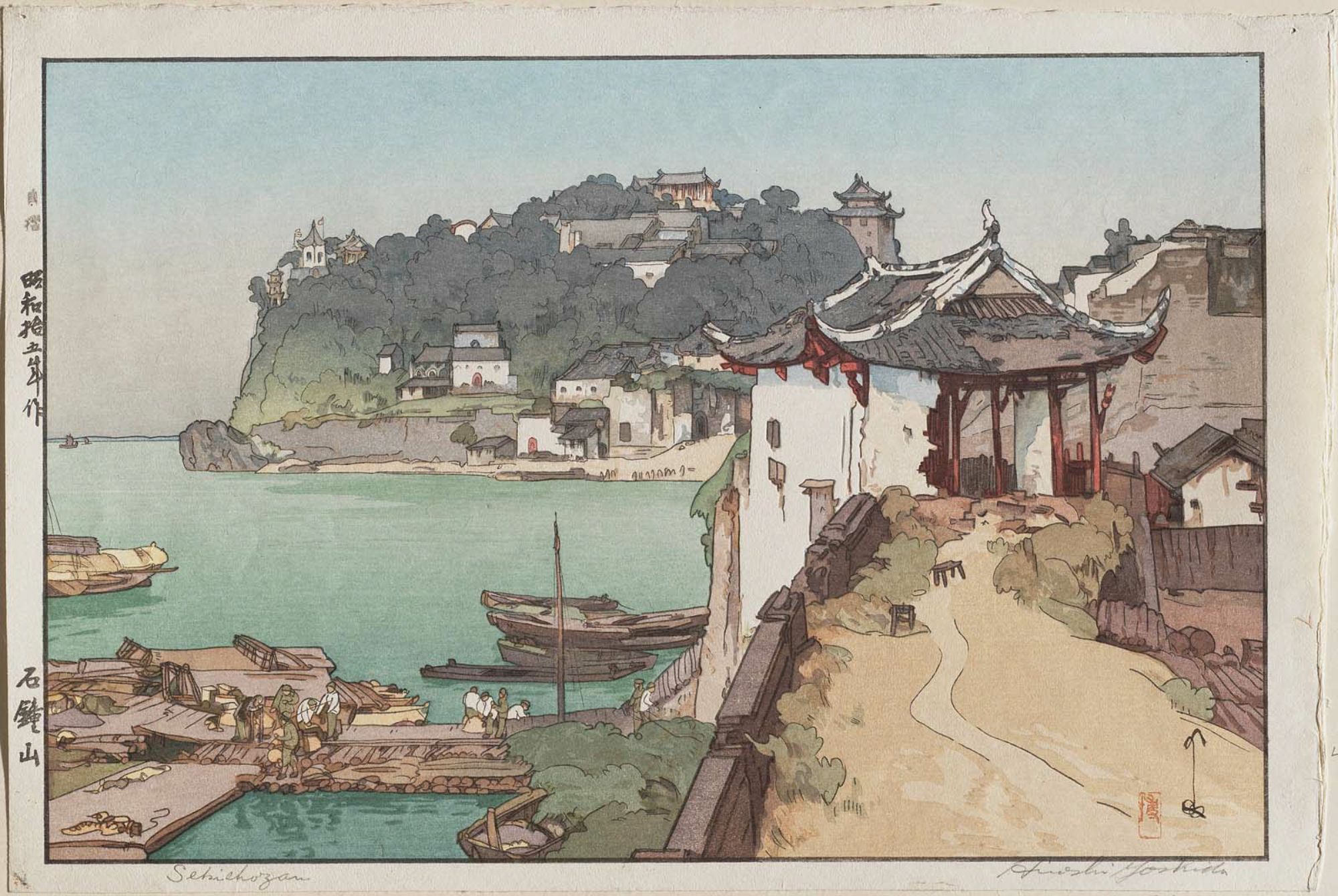
Koko is one of Yoshida's prints derived from his travels in southern China, where he sketched extensively during the 1920s, producing a group of designs depicting West Lake at Hangzhou, the Yangtze gorges, and other Chinese subjects. Yoshida's Chinese prints typically translate riverscapes, junks, and lakeside pavilions into the same multi-block mokuhanga vocabulary he used for Japanese meisho-e, with bokashi water and atmospheric distance carrying much of the pictorial weight. The technical challenge in such works is sustaining the impression of wet humid air and reflective water surface across what may be twenty or more impressions, while keeping the small staffage figures and architectural silhouettes legible. Issued through his jizuri studio, the print exemplifies how shin-hanga extended the geographic range of Edo-period landscape printmaking, treating non-Japanese subjects with the same deliberate sequence of carving, sumi key impression, and progressive colour blocks while reserving the artist's pencil signature in Roman characters in the bottom margin.
More Prints by Hiroshi Yoshida
Featured in Collections
Curated cross-cuts that include this print.
Frequently Asked Questions
Koko was created by Hiroshi Yoshida (吉田博).