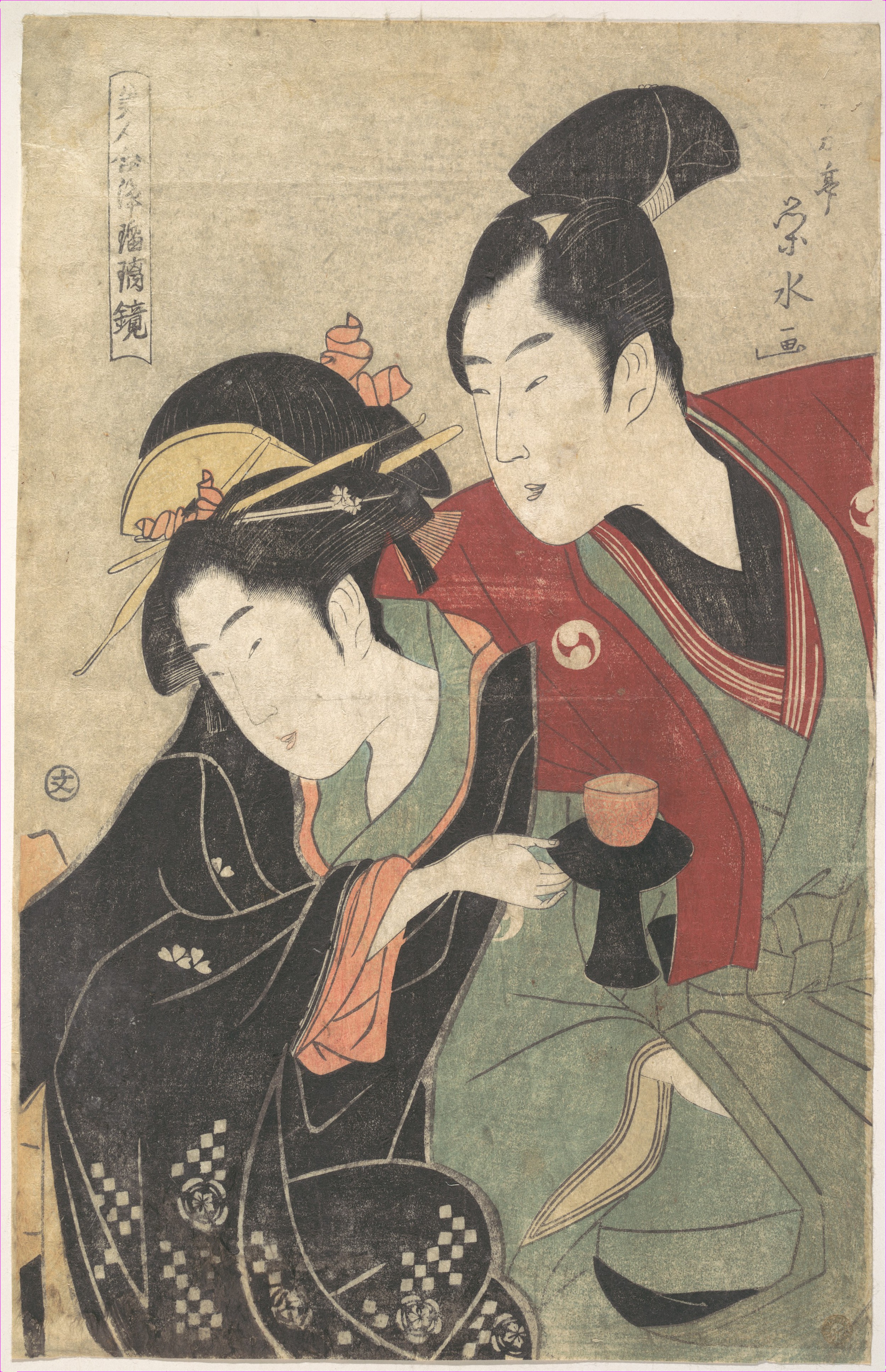
Scene from the "Chushingura" Drama
- Date:
- ca. 1797
- Medium:
- Woodblock print; ink and color on paper
- Source:
- Metropolitan Museum of Art
Description
Ichirakutei Eisui's Scene from the Chushingura Drama, a woodblock print in ink and color on paper held by the Metropolitan Museum of Art and dated to about 1797, takes its subject from the dramatized history of the forty-seven loyal retainers, the long-running theatrical and printed cycle that recounted the avenging of the daimyo Asano Naganori by the former samurai of his suppressed household. The Chushingura cycle was a perennial source for ukiyo-e in the late eighteenth and nineteenth centuries, allowing print designers to combine portraiture, costume study, and dramatic incident in a single sheet. Eisui's print departs from his more familiar idiom of single-figure Yoshiwara portraits to engage a narrative scene, but it preserves the elongated figural type and restrained color of the Chobunsai Eishi school. The Metropolitan's impression makes clear that the print's interest lies in its careful handling of multiple figures within a compressed pictorial field, the costume detail, and the discreet allusions to the published versions of the Chushingura narrative familiar to contemporary buyers. The sheet provides important evidence of Eisui's range beyond the okubi-e of named courtesans for which he is most often remembered.
More Prints by Ichirakutei Eisui

The courtesan Hinazuru of the Chojiya
1790/1823
Color woodblock print; oban

The Courtesan Senzan of the Chojiya, from the series "Beauties of the Five Festivals (Bijin gosekku)"
c. 1795/1800
Color woodblock print; oban

The Courtesan Hanahito of the Ogiya and attendants Sakura and Momiji, from the series "Beauties of the Five Festivals (Bijin gosekku)"
c. 1795/1800
Color woodblock print; oban

Shirai Gonpachi and Komurasaki, from the series "Beauties in Joruri Roles (Bijin awase joruri kagami)"
c. 1795
Color woodblock print; oban
Frequently Asked Questions
Scene from the "Chushingura" Drama was created by Ichirakutei Eisui (一楽亭栄水) in ca. 1797.