
Asuka Village
by Ido Masao
- Medium:
- Mokuhanga (Japanese woodblock)
- Image courtesy of
- Saru Gallery
Description
Asuka, in southern Nara Prefecture, is the rural valley considered the cradle of Japanese statehood — the seat of the imperial court during the late sixth and seventh centuries and the site of the earliest Buddhist temples, ancient burial tumuli, and carved stone monuments scattered across rice paddies and low hills. A print of Asuka village would draw on these layered associations, likely framing thatched minka farmhouses and terraced fields against the rounded silhouettes of the surrounding mountains, with one of the kofun mounds or a lone stone Buddha indicated as a small punctuating element. The composition would rely on Ido Masao's characteristic flat color blocks defining the geometry of cultivated land, with bokashi gradient skies and the soft greys of distant ridges creating spatial recession. The subject sits within his broader project of documenting traditional Japanese landscape beyond Kyoto's city limits, treating Asuka as the historical and visual antecedent of the temple architecture he recorded throughout the ancient capital.
More Prints by Ido Masao


More Village Scenes Prints

A Farmhouse in Autumn, Ayashi, Miyagi Prefecture (Noka no aki (Miyagi ken Ayashi)
Noka no aki (Miyagi ken Ayashi
1946
Color woodblock print
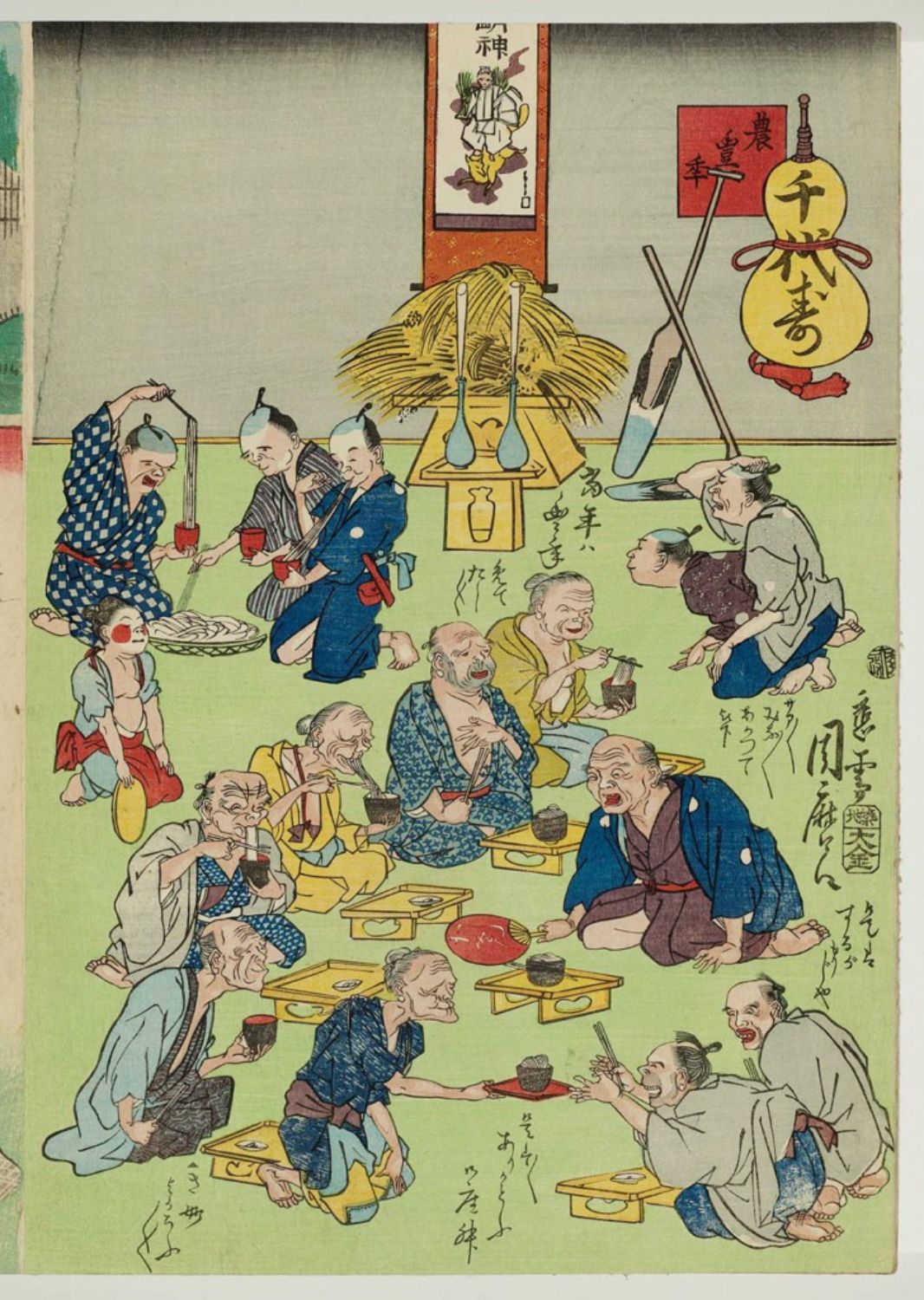
Celebrating the Good Harvest: Felicitations for a Thousand Ages (Nôhônen, Chiyo no kotobuki)
Woodblock print

Eastern Hamlet, Horyu Temple (Horyuji higashi sato)
1956
Color woodblock print
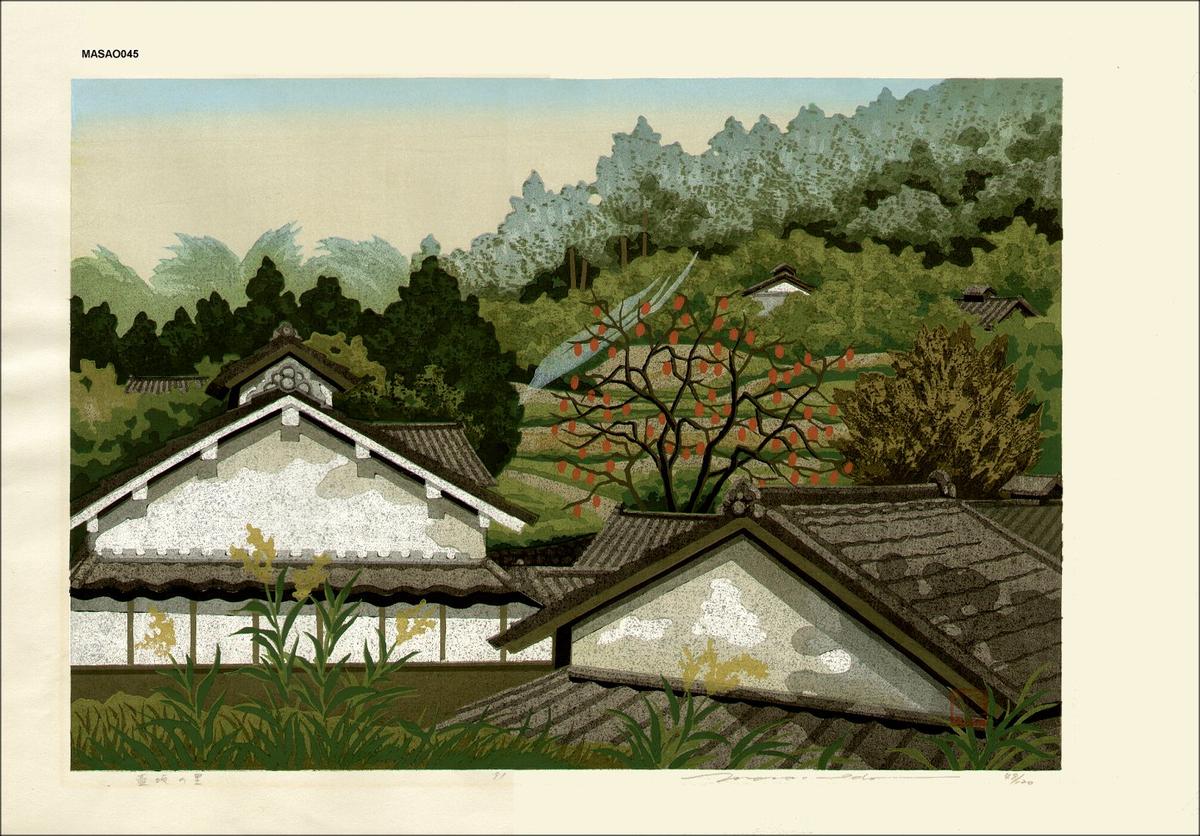
Village Scene in Nara
Woodblock print
Frequently Asked Questions
Asuka Village was created by Ido Masao (井堂雅夫).
Asuka Village depicts village scenes.