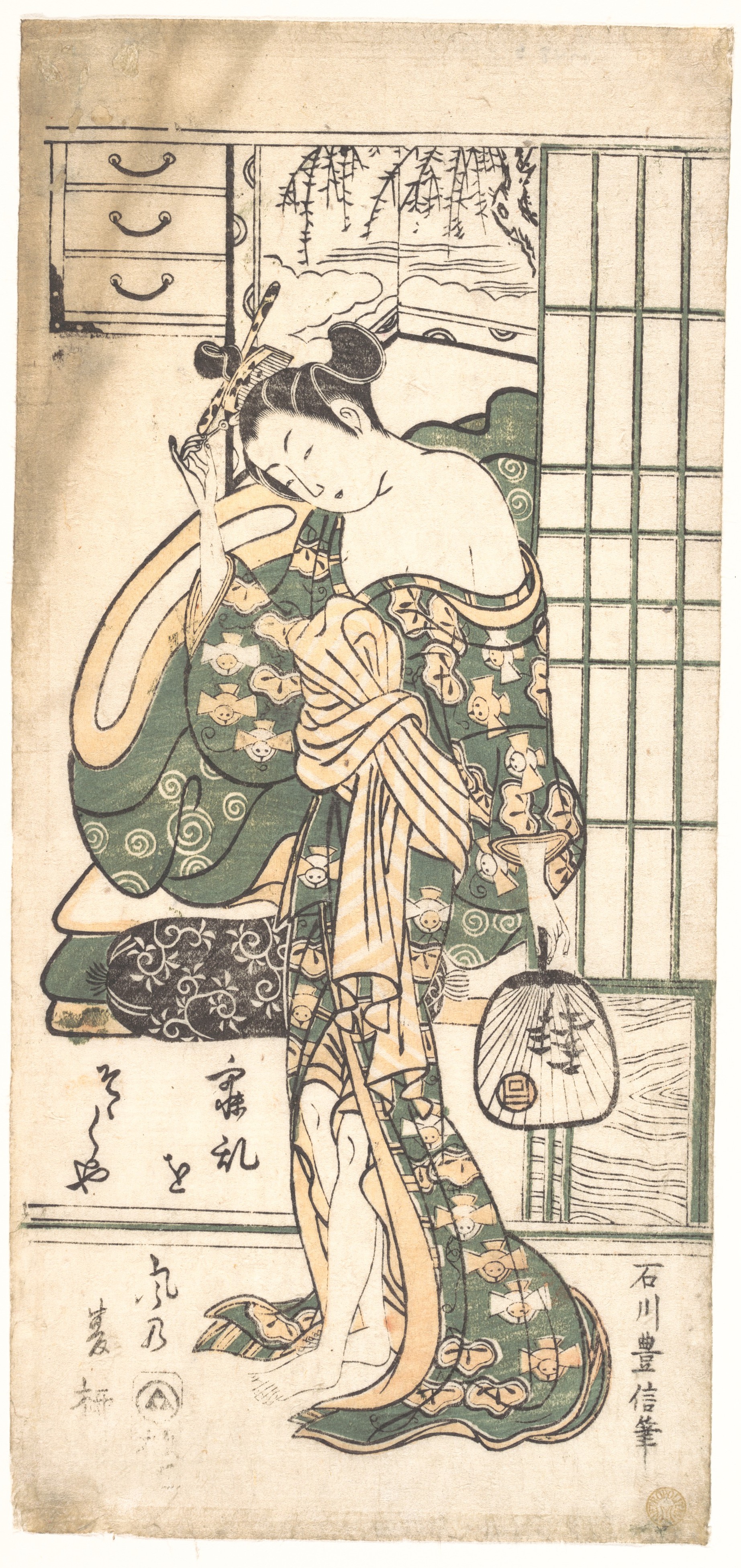
Summer Willow in the Breeze
- Date:
- ca. 1748
- Medium:
- Woodblock print; ink and color on paper
- Source:
- Metropolitan Museum of Art
Description
"Summer Willow in the Breeze" is a quiet, atmospheric beauty print by Ishikawa Toyonobu held in the Metropolitan Museum of Art's collection of early Edo ukiyo-e. The composition arranges a willowy young woman beside a hanging branch of leaves so that her body and the tree echo each other's slender curves; the wind that bends the willow also catches the hem of her kimono and the trailing ends of her sash, animating an otherwise still scene with a single shared breath. Toyonobu uses the limited two- and three-block printing palette typical of his benizuri-e work, with soft rose pinks and pale greens hand-cut and registered against a black keyblock that does the heavy descriptive labor. The result is a print that looks closer to a brush painting than to the bolder polychrome nishiki-e that would dominate ukiyo-e after the 1760s; Toyonobu, trained in painting and reluctant to abandon its disciplines, treated color as an accent to drawing rather than the other way around. The subject belongs to the bijin-ga tradition of idealized female beauties for which he was particularly celebrated alongside Okumura Masanobu. The willow is itself a coded reference to the licensed pleasure quarters of Edo, where weeping willows were planted at gates and intersections; a willow paired with an elegant young woman almost inevitably calls Yoshiwara to mind, and contemporary buyers would have read the print as a graceful tribute to its culture. As a representative late example of his work in benizuri-e, this sheet illustrates why Ishikawa Toyonobu remained a leading voice of early Edo ukiyo-e even as the technical landscape of the genre was rapidly changing around him.
More Prints by Ishikawa Toyonobu

Young Woman after a Bath
c. 1745
Hand-colored woodblock print; wide hashira-e, beni-e

A Young Couple Visiting a Shrine
18th century
Color woodblock print; hashira-e

Young Woman and Hotei
c. 1741
Hand-colored woodblock print; wide hashira-e, sumizuri-e

Youth Carrying a Lantern and an Umbrella
1740s
Hand-colored woodblock print; hashira-e, beni-e
More Summer Prints
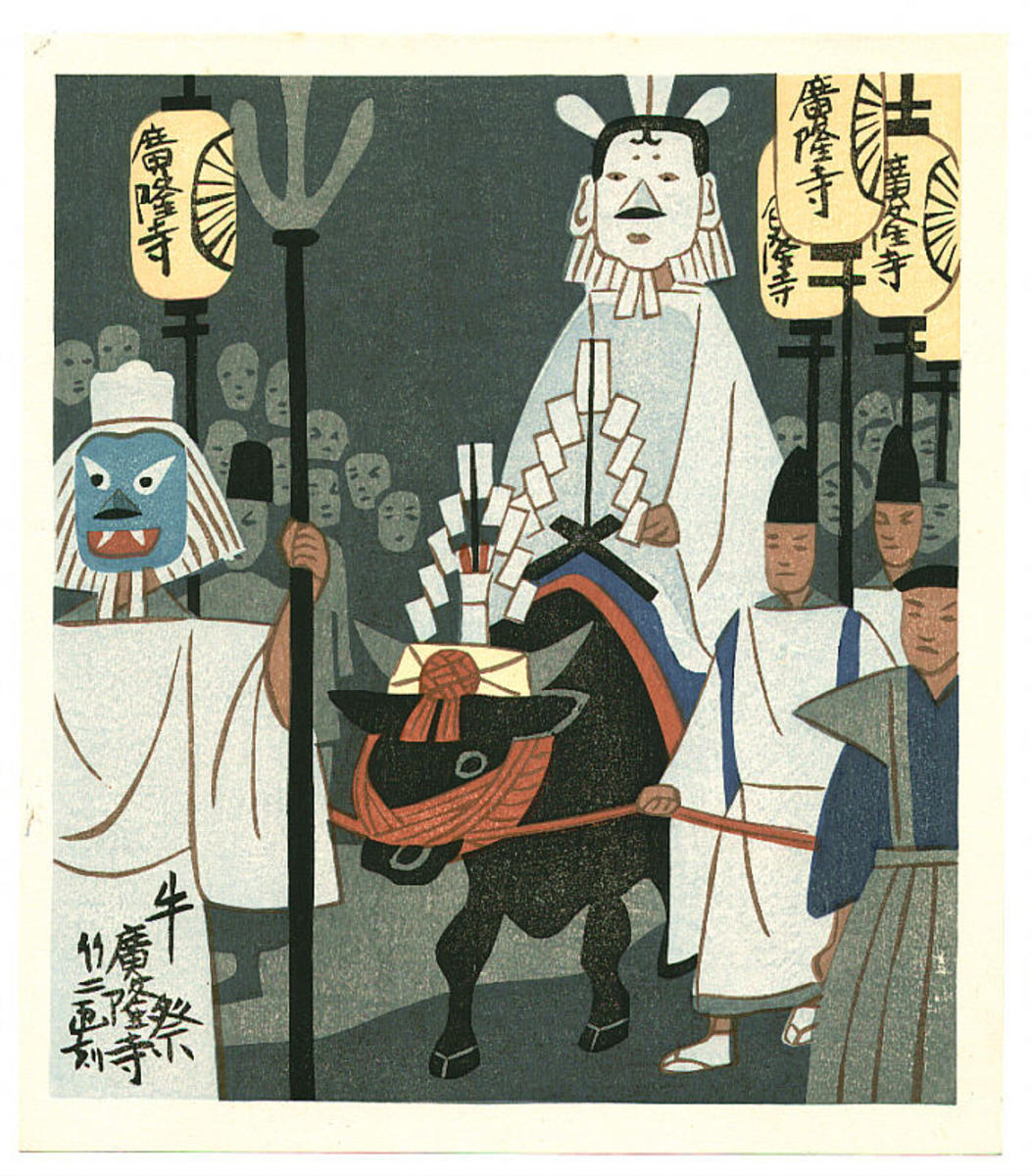
Bull Festival at Koryuji
広隆寺牛祭
Woodblock print
February (The Annual Festival of the Fushimi Inari)
二月 (伏見稲荷大社祭)
second half 20th century
Woodblock print, ink and color on paper

July (Gorgeous Procession of Yama-hoko or the Floats at the Gion Festival)
七月 (祇園祭山鉾巡行)
second half 20th century
Woodblock print, ink and color on paper

August (The Bonfire Festival of the Daimonji Hill Viewed from the Sanjo Bridge)
八月 (三条大橋より大文字)
second half 20th century
Woodblock print, ink and color on paper
Frequently Asked Questions
Summer Willow in the Breeze was created by Ishikawa Toyonobu (石川豊信) in ca. 1748.
Summer Willow in the Breeze depicts summer.