
Samurai
- Date:
- 17th century
- Medium:
- Hanging scroll; ink and color on paper
- Source:
- Art Institute of Chicago
Description
This seventeenth-century hanging scroll in the Art Institute of Chicago, painted in ink and color on paper, depicts a samurai in a single-figure composition that exemplifies Iwasa Matabei's mature painting style. The work belongs to the period when Matabei was producing portrait-like figure studies of contemporary warrior-class subjects alongside his more elaborate narrative handscrolls, and the single-figure format gave him room to concentrate the viewer's attention on the kind of psychological characterization for which he was celebrated. His signature figural treatment is visible throughout, the broad cheekbones, the narrow chin, the slightly downcast eyes that defined the so-called toyokao or rich-face type that later scholars identified as the visible signature of his hand. The samurai's costume, with its layered robes and conspicuous swords, is rendered with the careful attention to textile pattern and dress detail that Matabei inherited from the Tosa school and adapted to his own ends. The composition demonstrates the kind of dignified yet earthy presence that distinguished Matabei's figural work from both the more idealized courtly portraits of the Tosa lineage and the more austere ink studies of the Kano school, and that would resonate through the later ukiyo-e tradition as one of its prehistoric foundations.
More Prints by Iwasa Matabei

Portrait of Chunagon Asatada
Edo period (1610-1868); about 1600
Hanging scroll; ink and color on paper

The Poetess Kotaigogu no Daibu
Edo period (1610-1898)
Hanging scroll; ink and colors on gold-flecked paper

Archbishop Henjō (Sōjō Henjō zu), from the Dōon Version of the Thirty-Six Poetic Immortals
僧正遍昭図
1620s-1630s
Hanging scroll: ink, color, gold and silver on paper
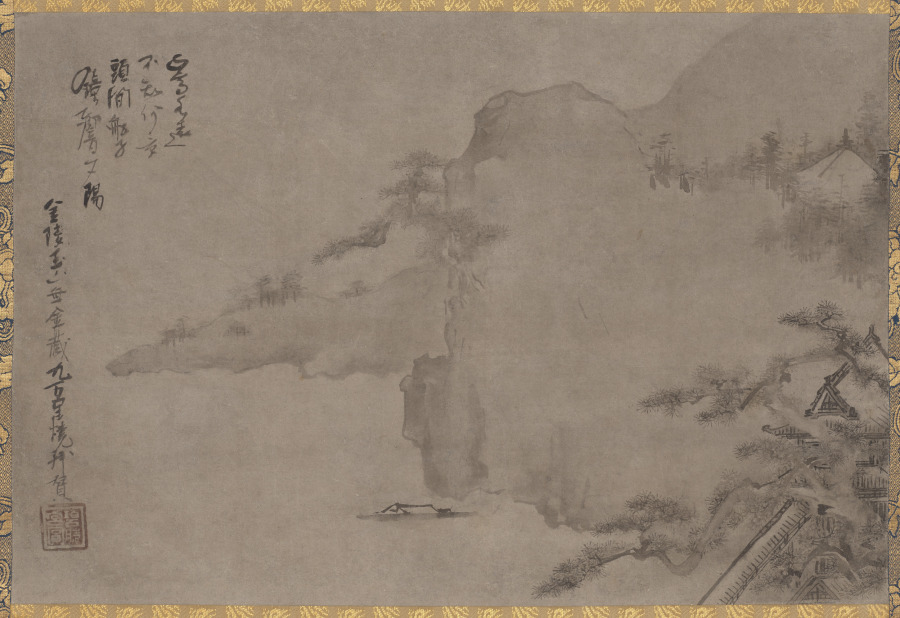
Coastal Landscape
1573-1615
Hanging scroll; ink on paper
Frequently Asked Questions
Samurai was created by Iwasa Matabei (岩佐又兵衛) in 17th century.