
Nara Sansai
by Joel Stewart
- Medium:
- Etching
- Image courtesy of
- The Verne Collection
Description
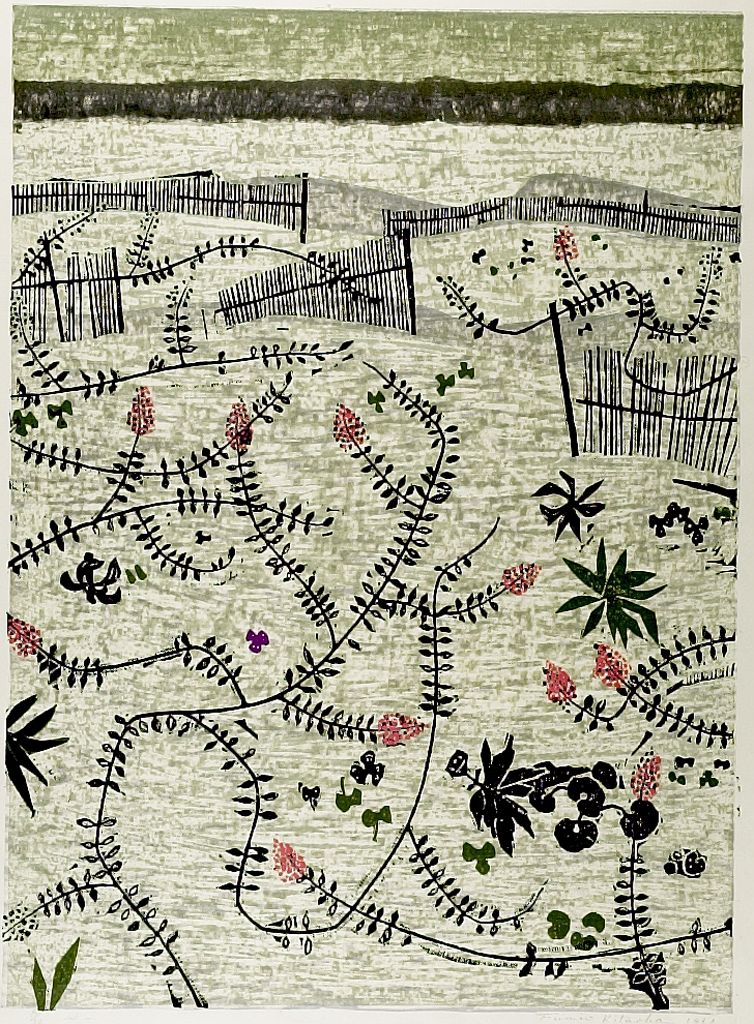
Nara Sansai combines two culturally layered references: Nara, Japan's ancient capital and home to centuries-old Buddhist temples, Shinto shrines, and the Imperial collections housed in the Shosoin repository — and sansai, the wild mountain vegetables foraged seasonally from Japanese hillsides. Sansai such as fuki, warabi, zenmai, and taranome are gathered in early spring and figure prominently in the cuisine of Nara and the surrounding Yamato region. Stewart's etching likely presents these foraged plants as a still-life arrangement, their irregular, organic forms suited to the fine, descriptive line work of intaglio. The subject connects seasonal gathering practices, local food culture, and the natural landscape of the ancient capital. Working in Kyoto, adjacent to Nara's cultural sphere, Stewart would have direct access to both the plants and the culinary traditions that frame them.
More Prints by Joel Stewart


More Still Life Prints


Frequently Asked Questions
Nara Sansai was created by Joel Stewart.
Nara Sansai uses Etching and Lithograph, on etching.
Nara Sansai depicts still life.