
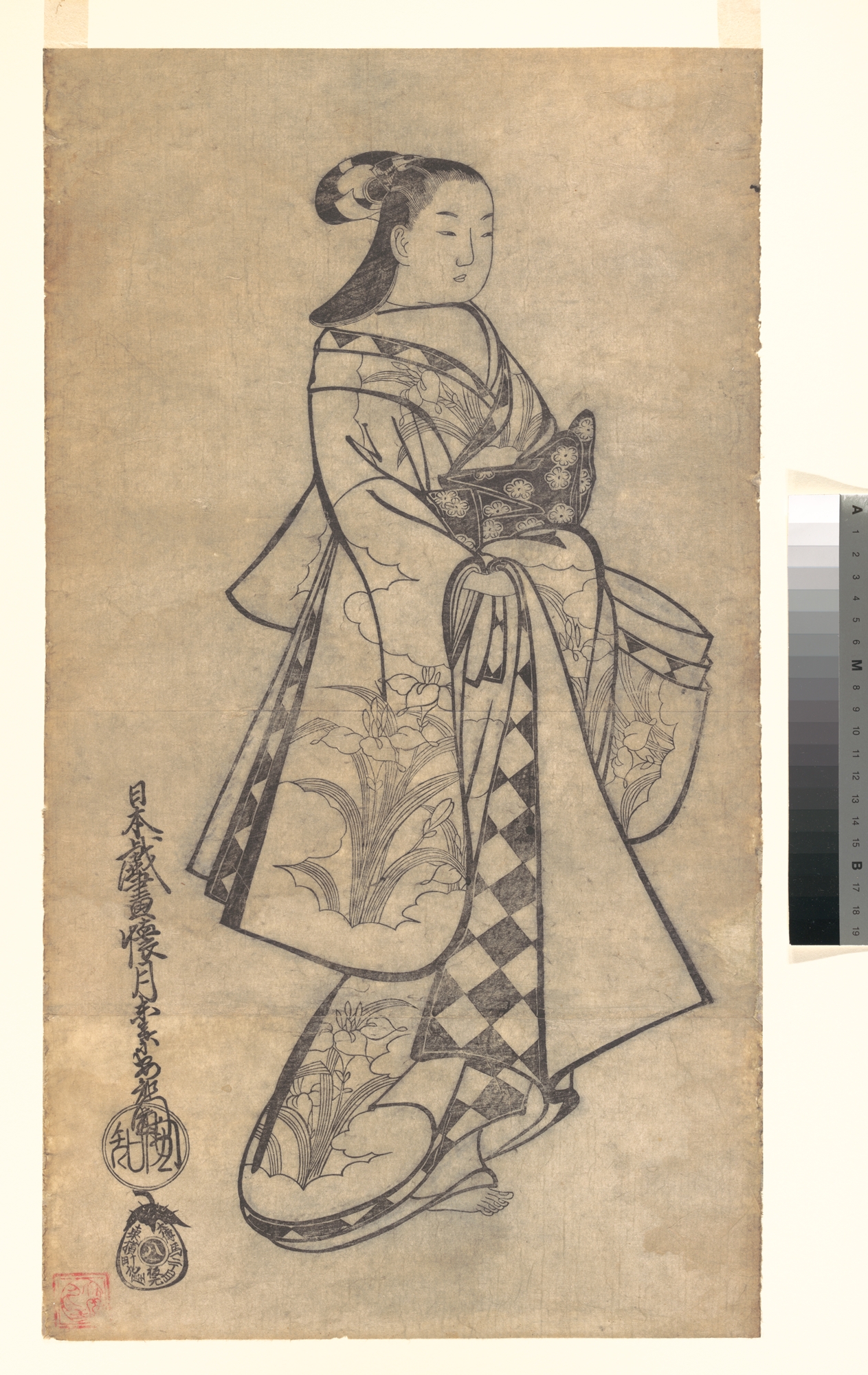
Standing Beauty
- Date:
- about 1714
- Medium:
- Woodblock print; sumizuri-e, kakemono-e
- Source:
- Art Institute of Chicago
Description
Dated to about 1714 and held in the Art Institute of Chicago, Standing Beauty is a sumizuri-e (ink-only woodblock print) in kakemono-e format measuring approximately 57 by 32 centimeters, named for the hanging-scroll proportions that gave the kakemono-e (literally 'hanging picture') its distinctive vertical compositional architecture. The work presents the Kaigetsudō school's iconic single-figure bijin formula in its purest monochromatic form, before any hand-coloring was applied: a courtesan stands frontally on the unmarked ground, her body's mass and the elaborate patterning of her outer robe described entirely through the calligraphic confidence of the woodblock's black-ink outlines. The kakemono-e format, derived from the hanging-scroll tradition of Japanese painting, encouraged a vertical compositional logic in which the figure occupies the full height of the sheet and is meant to be experienced as a kind of pictorial substitute for the more expensive painted hanging scrolls that the Kaigetsudō workshop primarily produced for wealthier clients. The decision to leave the print uncolored — to produce a sumizuri-e rather than the hand-colored tan-e or sumizuri-e plus selective applied pigment that some of Anchi's other works exemplify — emphasizes the school's foundational commitment to outline drawing as the principal carrier of pictorial meaning. The Kaigetsudō bijin's monumentality and sculptural authority emerge here through the sweeping calligraphic line alone, with the dense patterning of the courtesan's robe building up rhythmically across the figure's surface. The Art Institute's example provides one of the strongest surviving documents of Anchi's monochromatic mode and his command of the kakemono-e proportional system.
More Prints by Kaigetsudō Anchi
Frequently Asked Questions
Standing Beauty was created by Kaigetsudō Anchi (懐月堂安知) in about 1714.