
Fuji from under Bridge
- Medium:
- Mokuhanga (Japanese woodblock)
- Image courtesy of
- Saru Gallery
Description
Compositions that frame Mount Fuji through or beneath a bridge span have a known precedent in the Hokusai canon, particularly within Thirty-six Views of Mount Fuji. The framing device — typically an arched wooden bridge whose underside forms the upper border of the image — directs the viewer's eye through the architectural opening to the mountain beyond. This produces a layered depth: bridge timbers in the immediate foreground, water and bank in the middle ground, Fuji's silhouette in the far distance. Mokuhanga technique handles the bridge's timbers through a dense, dark-toned block, often with grain effects achieved by leaving the underlying washi texture partly visible. Sky and mountain behind would receive bokashi treatment for atmospheric distance. Within Kaiseki's 25 Views of Fuji in the Four Seasons, this print contributes the architectural-foreground compositional type to the series, alongside its temple, river, cottage, and other bridge views. The lack of biographical or publisher records for Kaiseki places this work within the broader twentieth-century continuation of the Fuji-print tradition rather than within a documented school.
More Prints by Jokata Kaiseki


More Bridges Prints
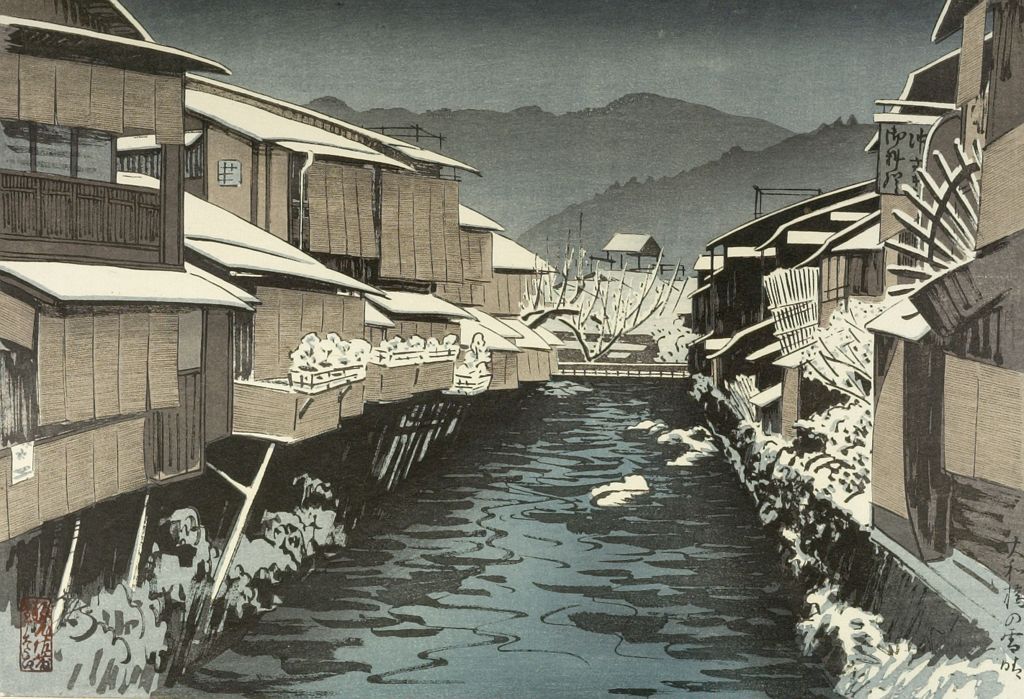
Fair Weather After Snow at Yamato Bridge, Kyoto (Yamato bashi no yukibare), Taishô period, dated 1924
Woodblock print
![Mount Fuji on a Moonlit Night, Kawai Bridge (Tsukiyo no Fuji [Kawaibashi]), from the series "Selection of Views of the Tokaido (Tokaido fukei senshu)" by Kawase Hasui](https://www.artic.edu/iiif/2/d0960668-1e73-339a-b182-fb995a54bff0/full/843,/0/default.jpg)
Mount Fuji on a Moonlit Night, Kawai Bridge (Tsukiyo no Fuji [Kawaibashi]), from the series "Selection of Views of the Tokaido (Tokaido fukei senshu)"
1947
Color woodblock print; oban

Shin Ohashi Bridge (Shin Ohashi), from the series "Twenty View of Tokyo (Tokyu nijukkei)"
1926
Color woodblock print; oban

Sacred Bridge in Nikko (Nikko Shinkyo)
1930
Color woodblock print; oban
Frequently Asked Questions
Fuji from under Bridge was created by Jokata Kaiseki.
Fuji from under Bridge depicts bridges.