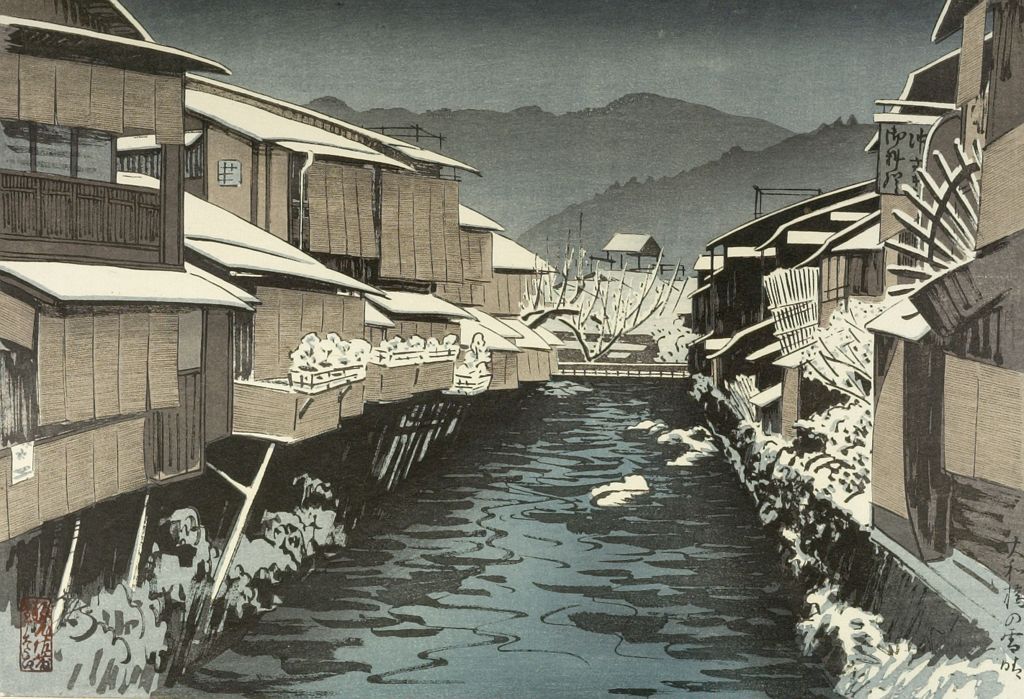
Fair Weather After Snow at Yamato Bridge, Kyoto (Yamato bashi no yukibare), Taishô period, dated 1924
- Medium:
- Woodblock print
- Source:
- Harvard Art Museum
- Image courtesy of
- Harvard Art Museum
Description
A river channel flanked by wooden houses on stilts recedes toward distant snow-capped mountains under a dark blue-gray sky, with a single figure crossing a small bridge over the water. Snow lines the rooftops, eaves, and riverbanks in white against the buildings' brown and black tones, while the water reflects pale gray-blue light. Woodblock print by Kanpo Yoshikawa, "Fair Weather After Snow at Yamato Bridge, Kyoto (Yamato bashi no yukibare)," Taishô period, dated 1924.
More Prints by Kanpo Yoshikawa

The Actor Kataoka Gado IV as Miyuki in the play Shoutsushi Asagao Nikki (The Diary of the Morning Glory)
c. 1924
Color woodblock print; oban

Five, Hinazō
early summer 1922
Woodblock print, ink and color on paper with mica
The Actor Nakamura Enjaku II as the Snarling Gonta
Woodblock print
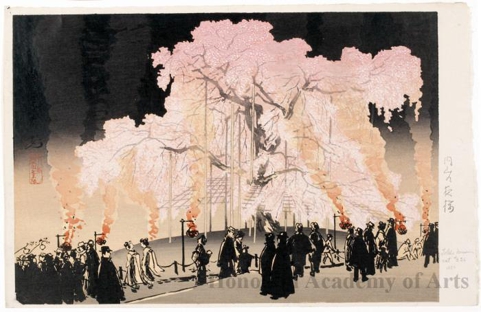
Cherry Blossoms at Night, Maruyama
Woodblock print
More Landscapes Prints

Lake Kugushi in Wakasa Province (Wakasa Kugushiko), from the series Souvenirs of Travel I (Tabi miyage dai isshu)"
Wakasa Kugushiko
1920
Color woodblock print; oban
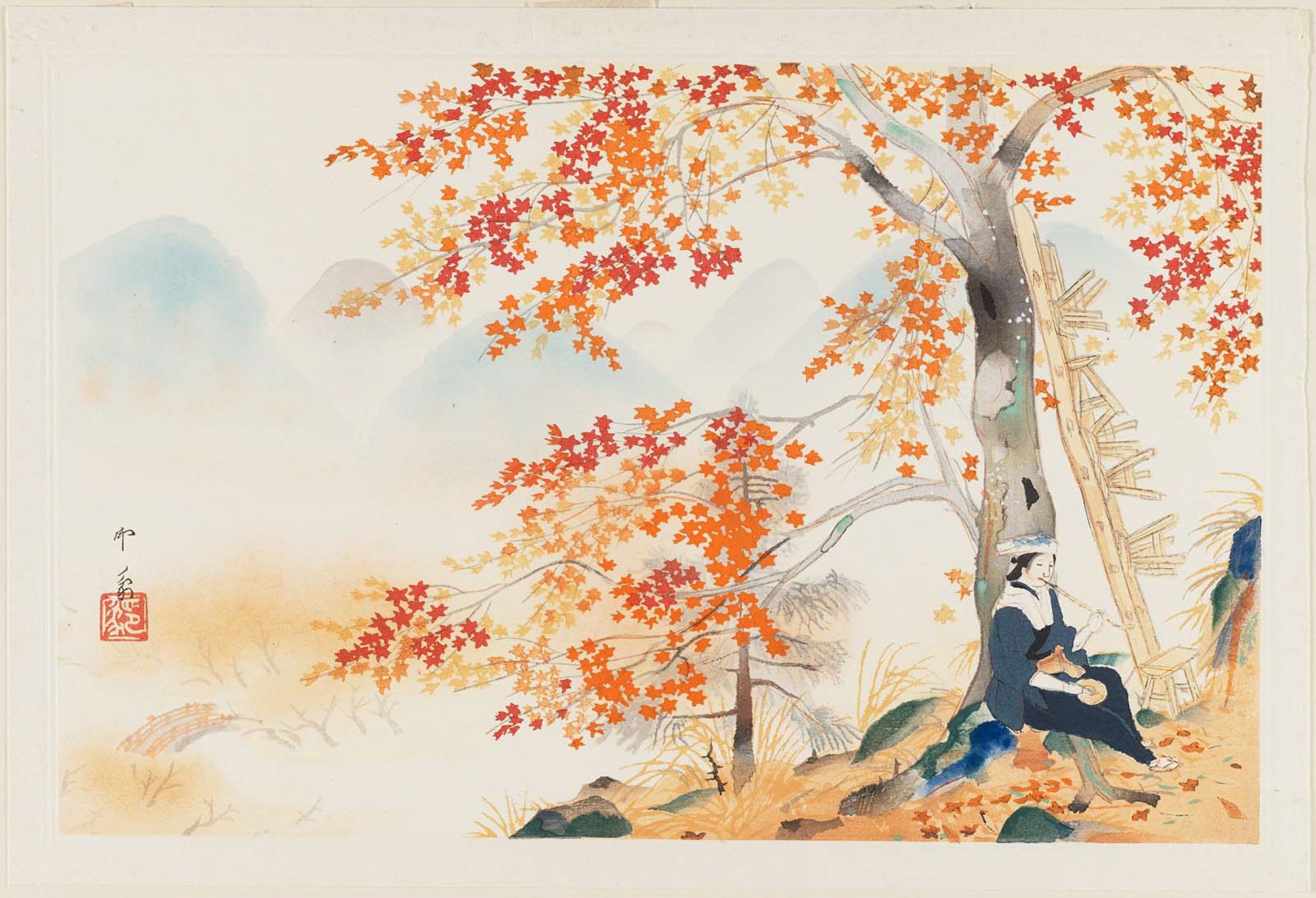
Autumn Maple Leaves at Takao, from the album Eight Views of Kyoto (Kyôto hakkei)
Woodblock print

The Beach at Kaiganji in Sanuki Province (Sanuki Kaiganji no hama), from the series "Collection of Views of Japan II, Kansai Edition (Nihon fukei shu II Kansai hen)"
1934
Color woodblock print; oban

Tea Kettle, section of a sheet from the series "Mirror of Stone Rubbings of Views of the Provinces" (Kohon meihitsu ishizuri kagami)
n.d.
Woodblock print; ishizuri-e, section of harimaze sheet
Featured in Collections
Curated cross-cuts that include this print.
Frequently Asked Questions
Fair Weather After Snow at Yamato Bridge, Kyoto (Yamato bashi no yukibare), Taishô period, dated 1924 was created by Kanpo Yoshikawa (吉川観方).
Fair Weather After Snow at Yamato Bridge, Kyoto (Yamato bashi no yukibare), Taishô period, dated 1924 depicts landscapes, snow scenes, and bridges, set at Kyoto.