
Sacred Bridge in Nikko (Nikko Shinkyo)
by Kawase Hasui
- Date:
- 1930
- Medium:
- Color woodblock print; oban
- Format:
- Oban
- Publisher:
- Watanabe Shozaburo
- Edition:
- Published by Watanabe Shozaburo
- Source:
- Art Institute of Chicago
Description
Sacred Bridge at Nikko (Nikko Shinkyo), published in 1930, depicts the vermillion sacred bridge spanning the Daiya River at the entrance to Nikko's shrine complex — the same subject Hasui would return to in 1953 with more refined technique. This 1930 version, with its bokashi treatment and Bridges tag, represents an earlier compositional approach to the shinkyo's dramatic arc and its relationship to the surrounding cedar forest and the river's clear mountain water below. The 1930 Nikko bridge subject initiated Hasui's sustained documentation of the site.
More Prints by Kawase Hasui
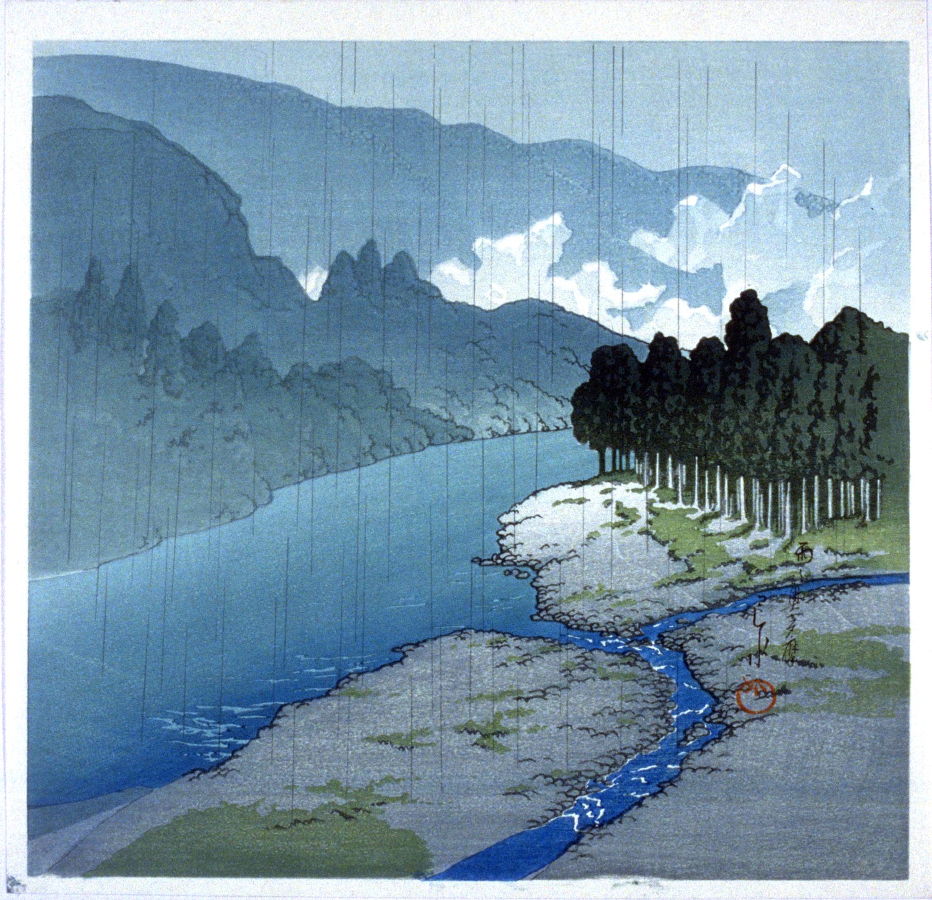

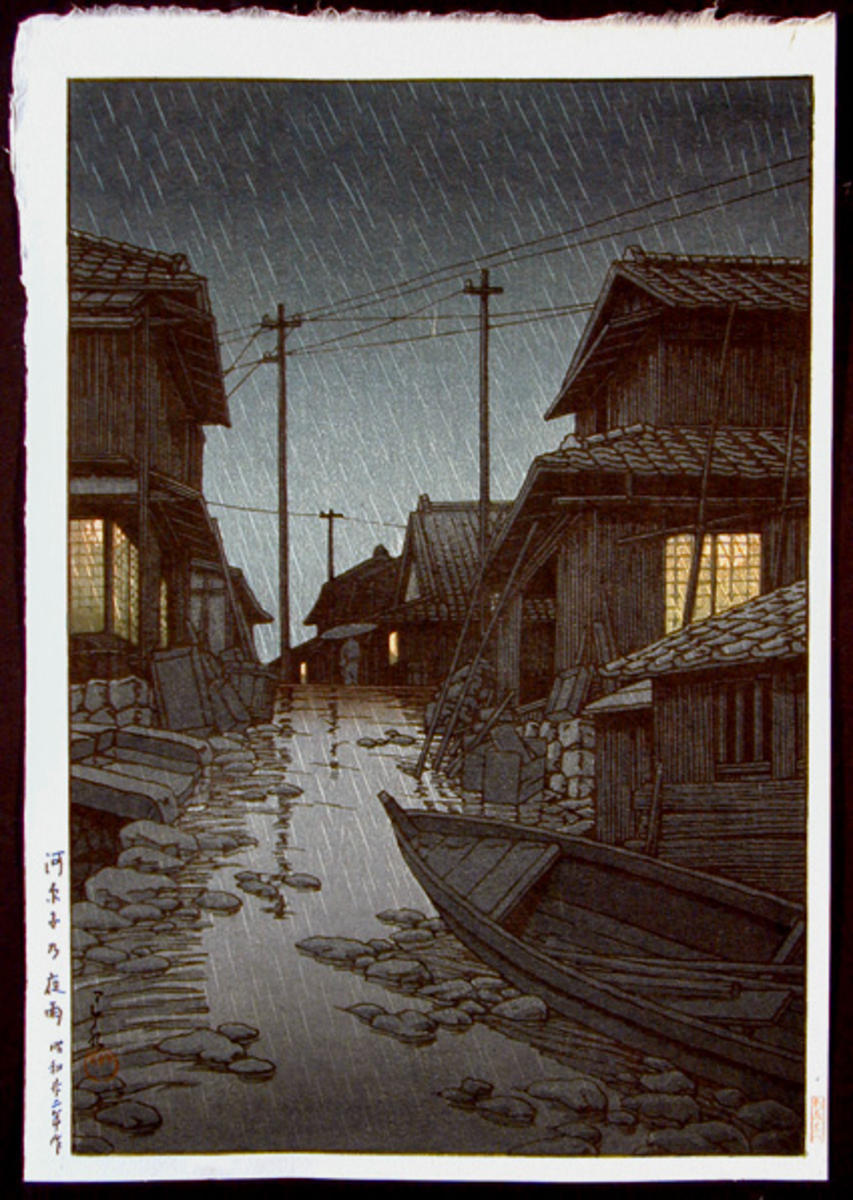
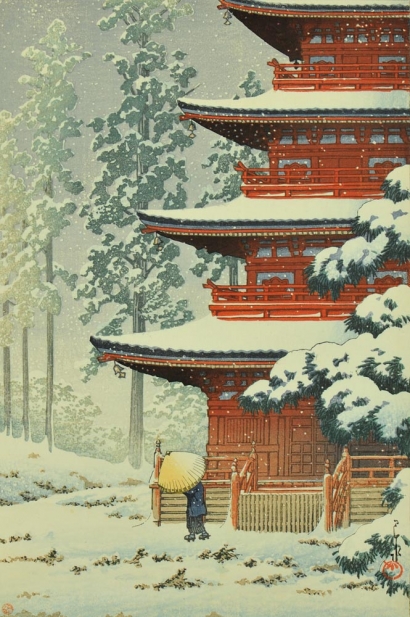
More Bridges Prints
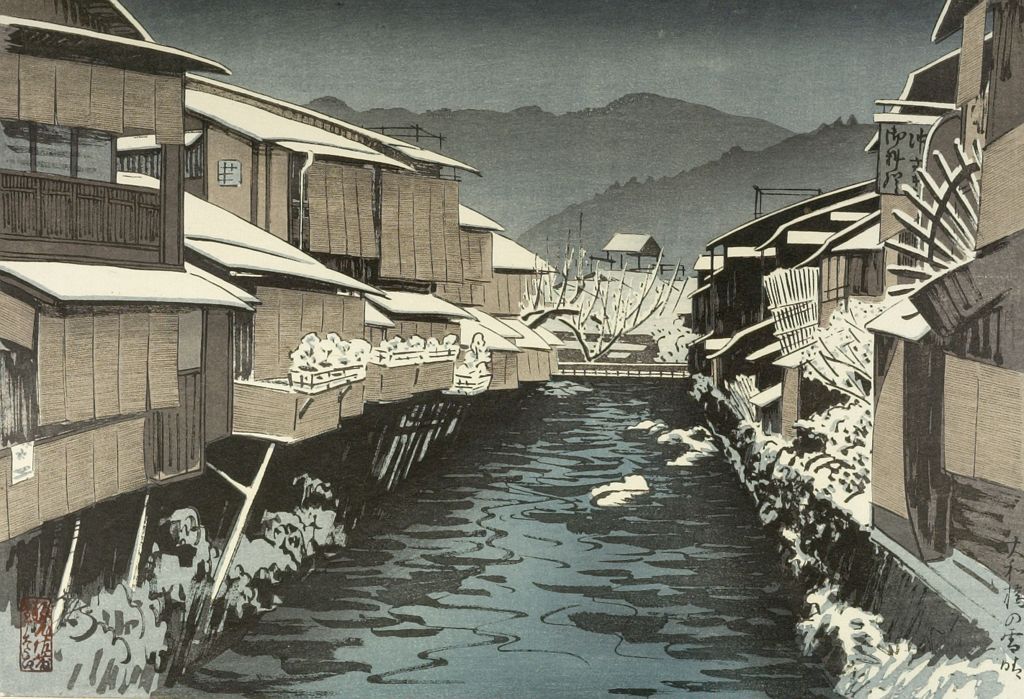
Fair Weather After Snow at Yamato Bridge, Kyoto (Yamato bashi no yukibare), Taishô period, dated 1924
Woodblock print
![Mount Fuji on a Moonlit Night, Kawai Bridge (Tsukiyo no Fuji [Kawaibashi]), from the series "Selection of Views of the Tokaido (Tokaido fukei senshu)" by Kawase Hasui](https://www.artic.edu/iiif/2/d0960668-1e73-339a-b182-fb995a54bff0/full/843,/0/default.jpg)
Mount Fuji on a Moonlit Night, Kawai Bridge (Tsukiyo no Fuji [Kawaibashi]), from the series "Selection of Views of the Tokaido (Tokaido fukei senshu)"
1947
Color woodblock print; oban

Shin Ohashi Bridge (Shin Ohashi), from the series "Twenty View of Tokyo (Tokyu nijukkei)"
1926
Color woodblock print; oban
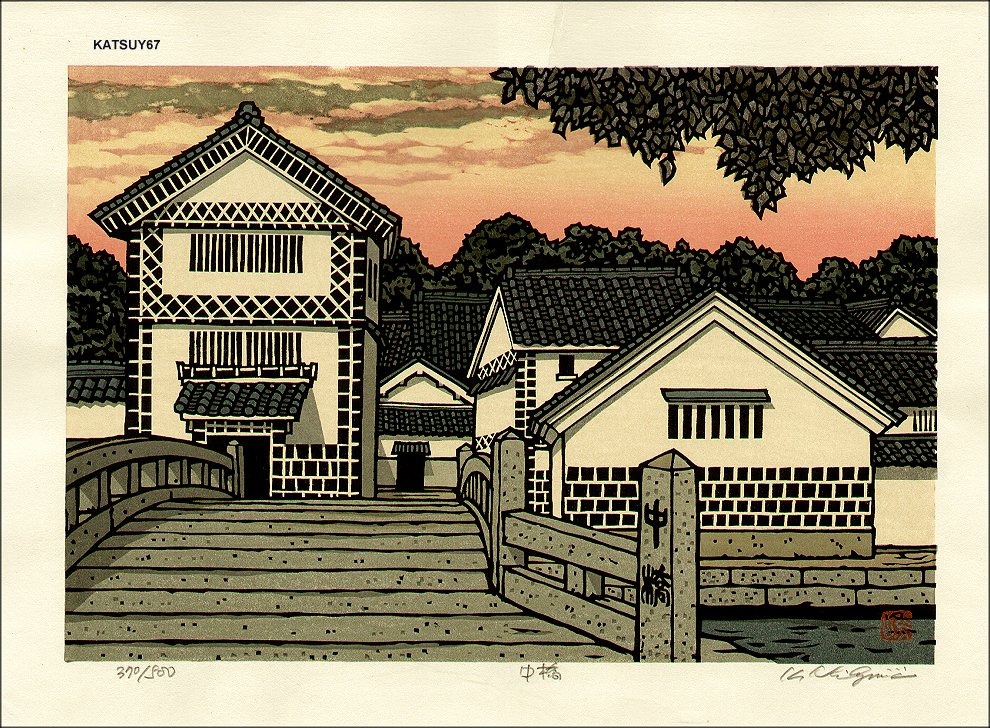
Nakahashi Bridge
Woodblock print
Featured in Collections
Curated cross-cuts that include this print.
Frequently Asked Questions
Sacred Bridge in Nikko (Nikko Shinkyo) was created by Kawase Hasui (川瀬巴水) in 1930.
Sacred Bridge in Nikko (Nikko Shinkyo) uses Bokashi, on color woodblock print; oban.
Sacred Bridge in Nikko (Nikko Shinkyo) was published by Watanabe Shozaburo (1930).
Sacred Bridge in Nikko (Nikko Shinkyo) depicts bridges, set at Nikko.