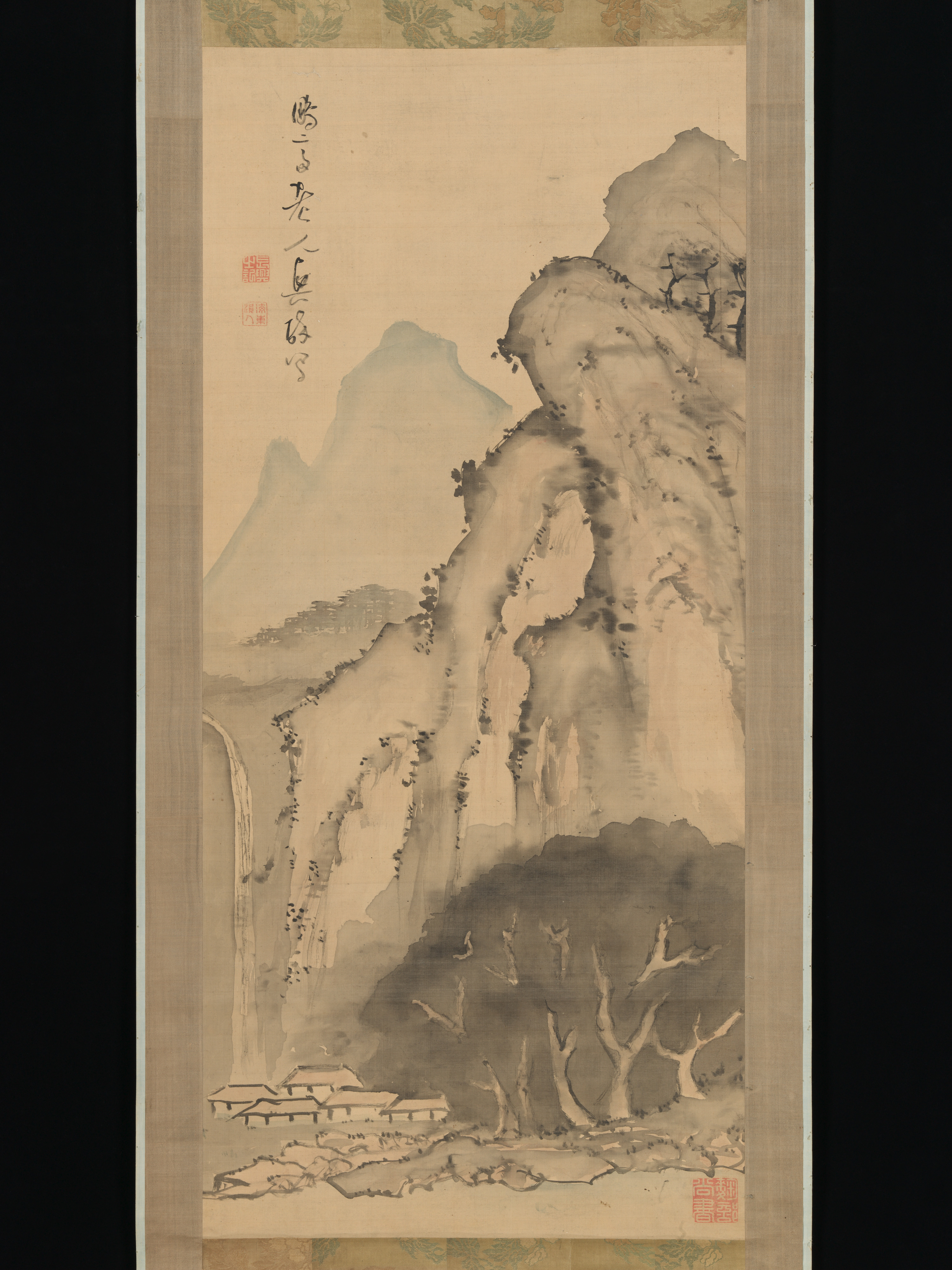
Landscape with Waterfall
by Kameda Bōsai
- Date:
- ca. 1817
- Medium:
- Hanging scroll; ink and color on silk
- Source:
- Metropolitan Museum of Art
Description
Landscape with Waterfall, dated 1817, is a hanging-scroll painting by Kameda Bōsai (亀田鵬斎, 1752-1826), held by the Metropolitan Museum of Art (accession recorded at https://www.metmuseum.org/art/collection/search/53465). The waterfall is among the most canonical of Chinese literati landscape subjects: a set-piece motif through which a scholar-painter could demonstrate command of the inherited brush vocabulary — dragging strokes for the rock facets, fine parallel hatching for the falling water, contrasting textures of stone and surrounding vegetation. The motif descends from the great Song landscapists and reaches Edo Japan through the Ming and Qing model albums and woodblock-printed Chinese painting manuals on which Edo nanga depended, where waterfall landscapes served as exercises in the literati handling of natural force. Bōsai was a Confucian scholar by training and ran his own academy in Edo until the Kansei Reforms of 1790 banned heterodox Confucianism (the Kansei igaku no kin); this turn of events redirected his life toward poetry, calligraphy, and self-taught bunjinga and brought him into the company of the leading Edo and Kansai literati painters of his generation. The 1817 date places the painting in his late period, when his distinctive eccentric brush manner — calligraphically inflected, deliberately unschooled, freed from the decorum of the official painting schools — had reached its full authority. A waterfall composition in his hand would be less an exercise in topographic description than in literati brushwork as the record of a cultivated mind: the personal rhythm of his line and the tonal management of his wash are the carriers of the subject's meaning.
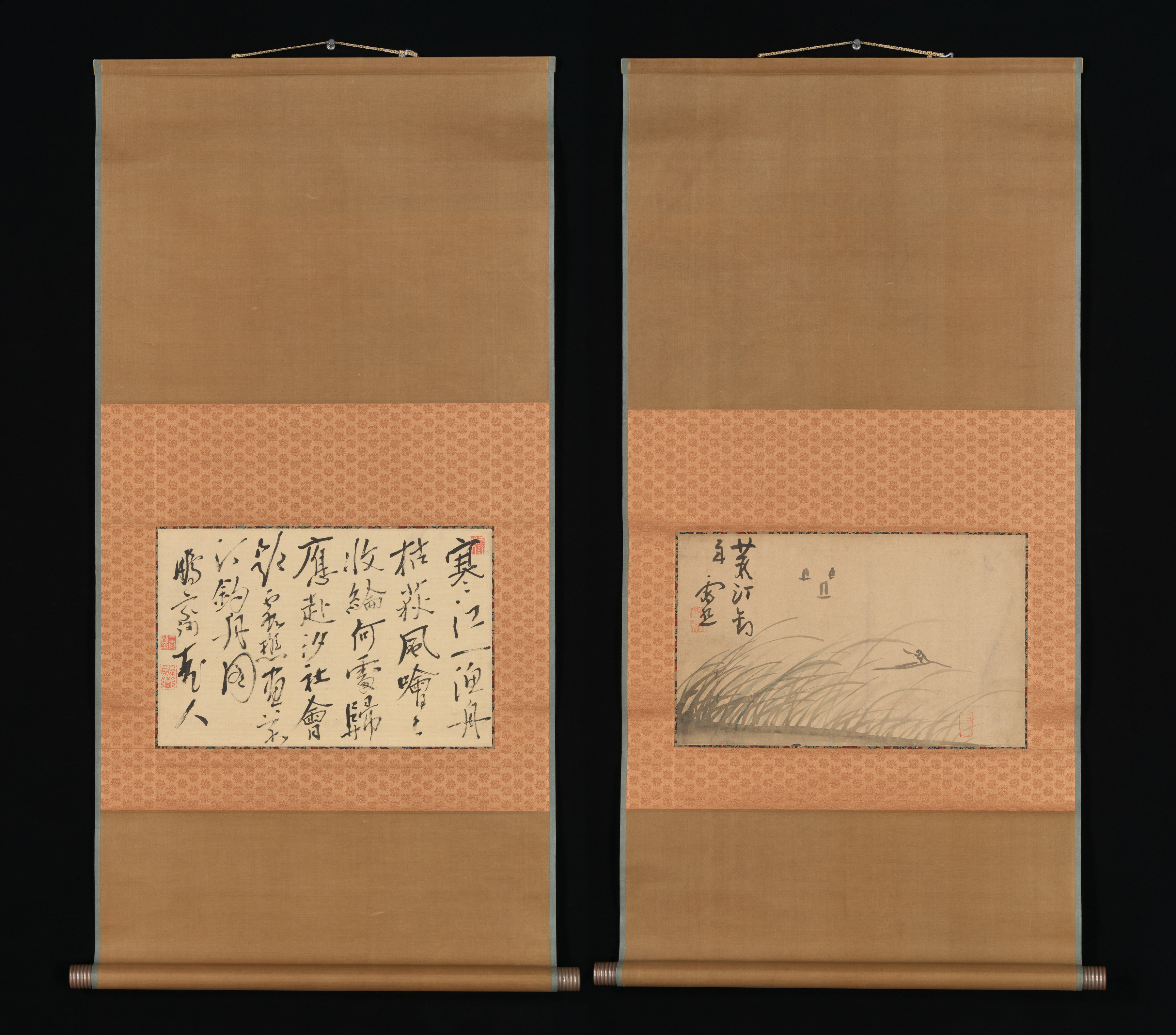
More Prints by Kameda Bōsai


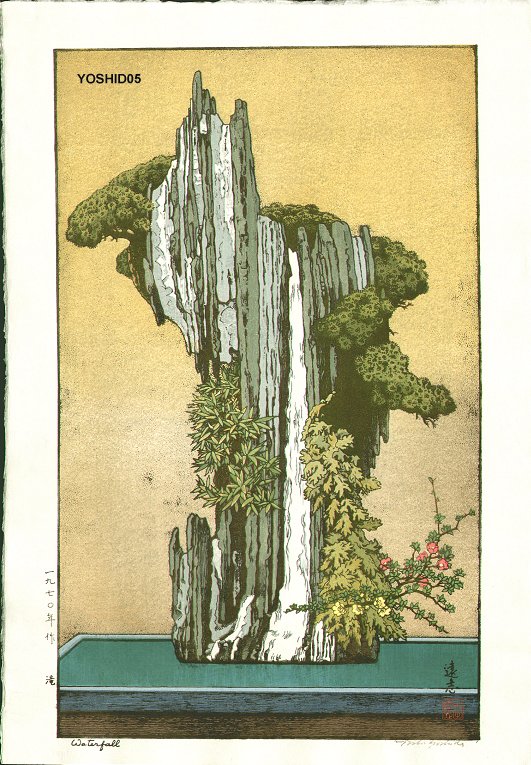
More Waterfalls Prints


Frequently Asked Questions
Landscape with Waterfall was created by Kameda Bōsai (亀田鵬斎) in ca. 1817.
Landscape with Waterfall depicts waterfalls and autumn foliage.