
Kakidate, from the series 'Ten Customs of Akita (Akita fuzoku judai)'
秋田風俗十題 柿立
- Date:
- 1943
- Medium:
- Color woodblock print
- Source:
- Art Institute of Chicago
Description
This 1943 colour woodblock print, held by the Art Institute of Chicago, depicts the kakidate — the wooden rack used in rural Akita to dry persimmons (kaki) in the late autumn for winter eating — and belongs to Katsuhira Tokushi's series Akita fūzoku jūdai ("Ten Customs of Akita") of 1938–1944. The composition centres the trellis of orange-skinned fruit hanging from the eaves of an Akita farmhouse against a sky of late-autumn grey, treating the visual rhythm of the suspended persimmons as a compositional armature for a meditation on the agricultural year. The drying of kaki was, and remains, a defining domestic ritual of the late October to November Akita countryside, marking the end of the harvest season and the laying-in of the sweet preserves that would supplement winter rice. Within the broader Akita fūzoku jūdai cycle the Kakidate print belongs to a small group focused on agricultural preservation and food storage, and it shows the artist's careful attention to the textiles, woodwork, and ground surfaces of the farmhouse exterior as carriers of seasonal meaning.
More Prints by Katsuhira Tokushi
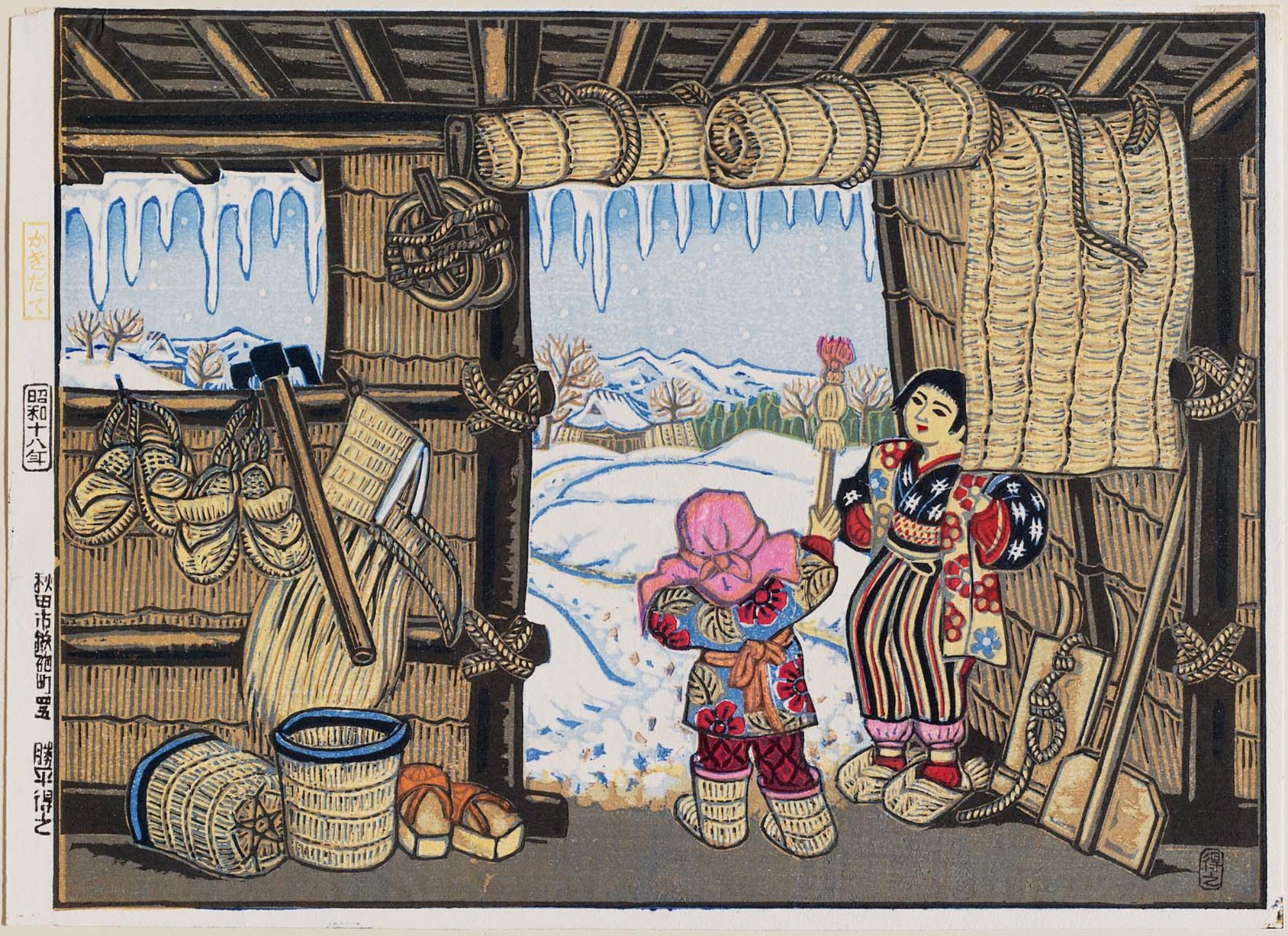
Two Children by Farm House Door
Shōwa era, 20th century
Color woodblock print
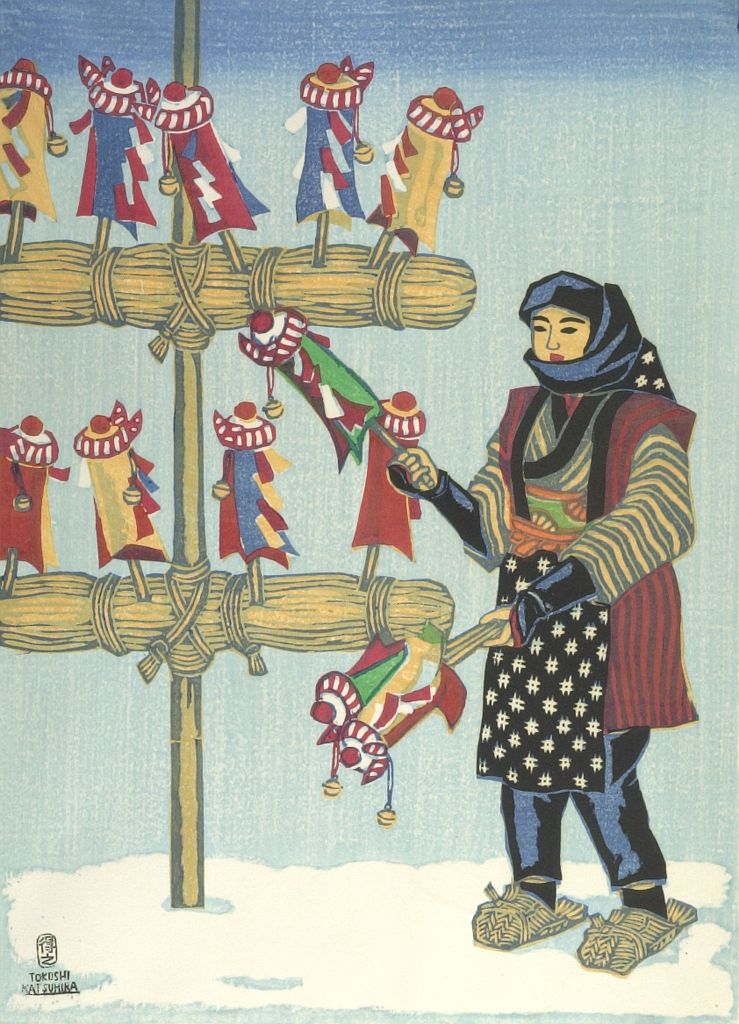
Seller of Bonden
Shōwa period (1926–1989)
Color woodblock print
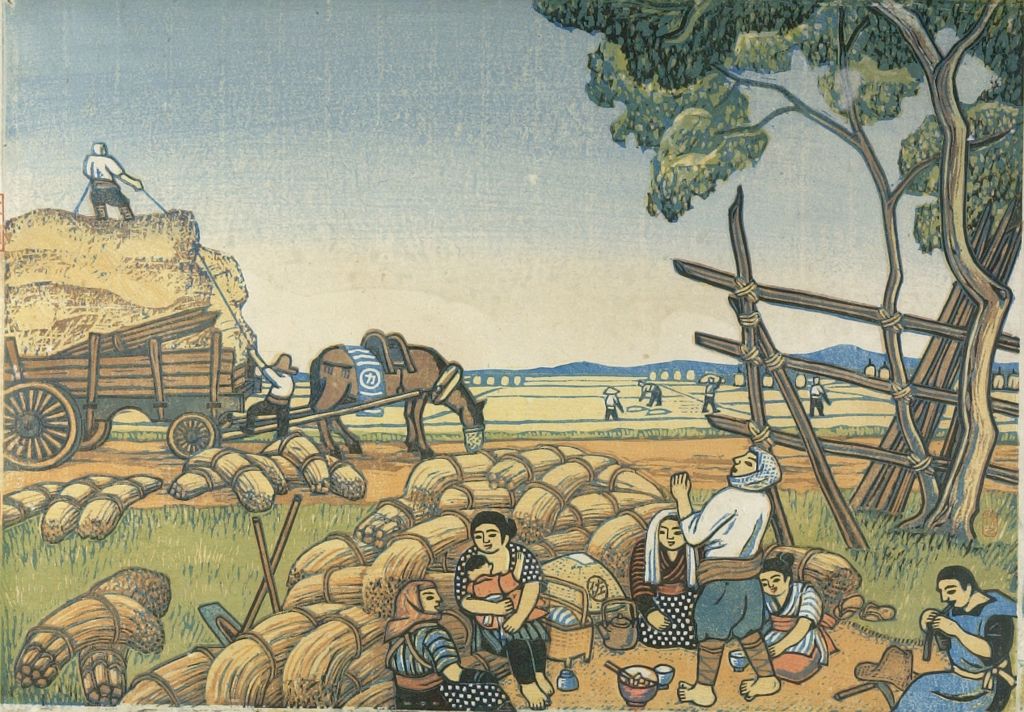
Harvest Scene
Shōwa period (1926–1989)
Color woodblock print

Hearth (Irori), from the series 'Ten Customs of Akita (Akita fuzoku judai)'
秋田風俗十題 囲炉裏
1939
Color woodblock print
Featured in Collections
Curated cross-cuts that include this print.
Frequently Asked Questions
Kakidate, from the series 'Ten Customs of Akita (Akita fuzoku judai)' (秋田風俗十題 柿立) was created by Katsuhira Tokushi (勝平得之) in 1943.