
Blue and Red Macaws
- Date:
- early 20th century
- Medium:
- Color woodblock print
- Source:
- Art Institute of Chicago
Description
Blue and Red Macaws, held by the Art Institute of Chicago, is a color woodblock print attributed to Katsukawa Shunkō that depicts two parrots in a relatively unusual subject for the Katsukawa school. Bird-and-flower prints (kachō-e) were a recognized genre within ukiyo-e, but they were generally associated with Hokusai, Hiroshige, and specialist bird-and-flower artists rather than with the actor-print specialists of the Katsukawa lineage. The presence of macaws — birds native to the Americas — points to one of the more curious dimensions of late Edo visual culture: the period's fascination with exotic foreign animals and objects that arrived through the Dutch trading post at Dejima in Nagasaki. Imported parrots were rare luxuries of the wealthiest collectors, and depictions of foreign birds gave Edo print designers an opportunity to demonstrate technical virtuosity with brilliant color and unusual ornithological detail. The Art Institute of Chicago's catalog dates the work to the early twentieth century, which suggests it may be a posthumous edition or a re-cut printing from later blocks; original Shunkō-era impressions of his designs are increasingly rare and confirmed early printings are highly prized. The print remains a useful document of the Katsukawa school's range and of the persistence of Shunkō's designs in later commercial editions.
More Prints by Katsukawa Shunkō
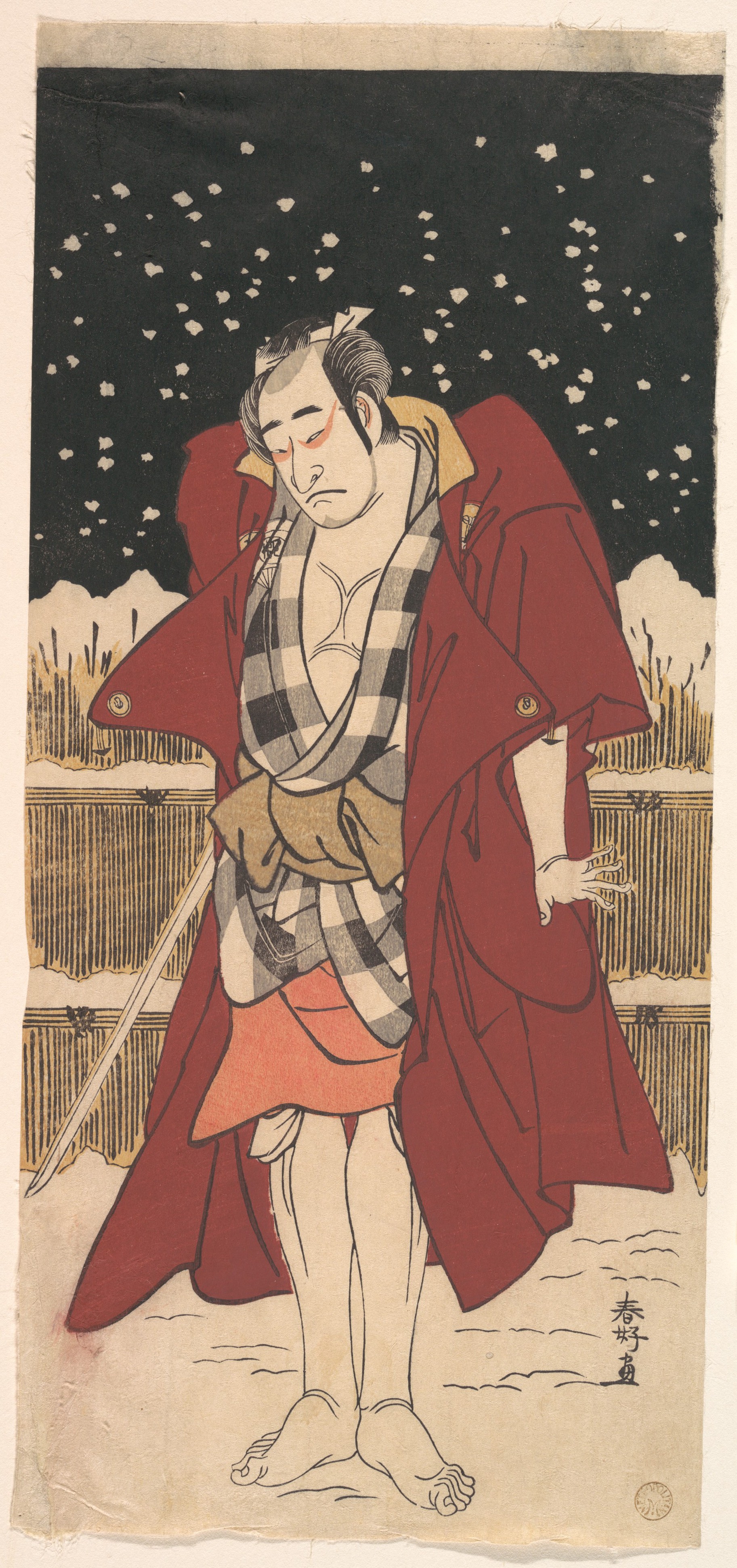
Onoe Matsusuke as Man Armed with a Sword, Standing in Snow before a Fence
1786
Woodblock print; ink and color on paper

Waitress at a Seaside Teahouse
late 18th century
Color woodblock print; hashira-e
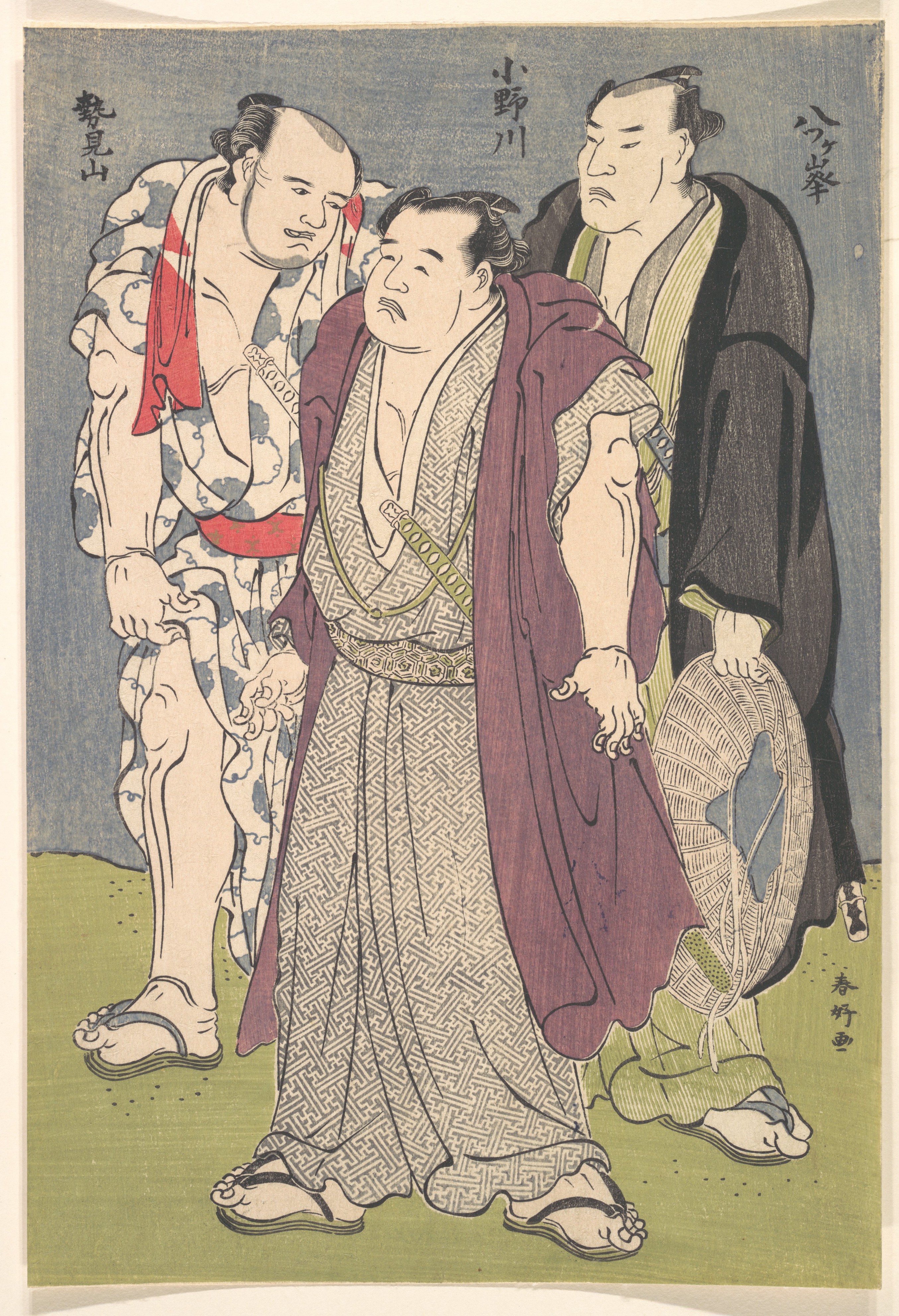
Three Sumō Wrestlers: Onogawa, Seimiyama, and Yatsugamine
ca. 1790s
Woodblock print; ink and color on paper

The Actor Otani Hiroemon as a Man Standing in a Room
ca. 1789
Diptych of woodblock prints; ink and color on paper
Frequently Asked Questions
Blue and Red Macaws was created by Katsukawa Shunkō (勝川春好) in early 20th century.