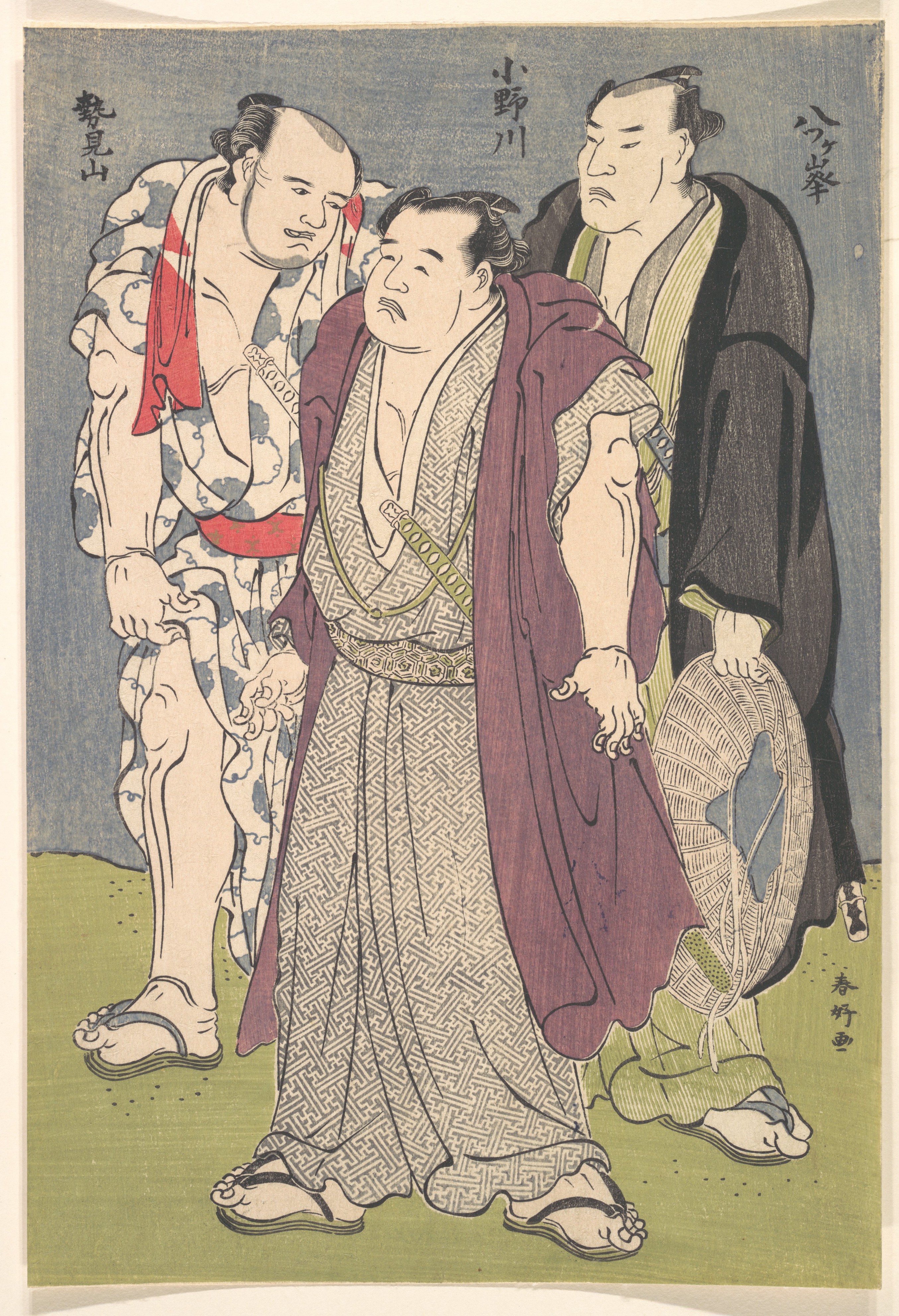
Three Sumō Wrestlers: Onogawa, Seimiyama, and Yatsugamine
- Date:
- ca. 1790s
- Medium:
- Woodblock print; ink and color on paper
- Source:
- Metropolitan Museum of Art
Description
Dated circa the 1790s and held by the Metropolitan Museum of Art, this Katsukawa Shunkō print depicts three legendary sumō wrestlers — Onogawa, Seimiyama, and Yatsugamine. Sumō prints (sumō-e) were a recognized parallel genre to actor prints, treating sumō wrestlers as celebrities of the same plebeian-culture pantheon that included kabuki stars and famous courtesans. Onogawa Kisaburō was one of the most celebrated yokozuna of the late eighteenth century, considered with his great rival Tanikaze to be a foundational figure in the modern sumō ranking system. Shunkō, like his teacher Shunshō, produced periodic sumō prints alongside his actor work, and his portraits of wrestlers display the same attention to individual physiognomy and bearing that characterized his yakusha-e — the wrestlers' faces, body types, and ceremonial mawashi (loincloth) patterns are rendered with documentary precision. This print may have been issued to commemorate a specific tournament or a memorable bout between the three figures. The Metropolitan's catalog dating of circa 1790s places the work in or near Shunkō's last productive years before his stroke; some scholars have argued that the latest Shunkō-signed sumō prints may include posthumous re-issues from his blocks. The print preserves Edo's celebrity culture of strength and stage in a single composition.
More Prints by Katsukawa Shunkō
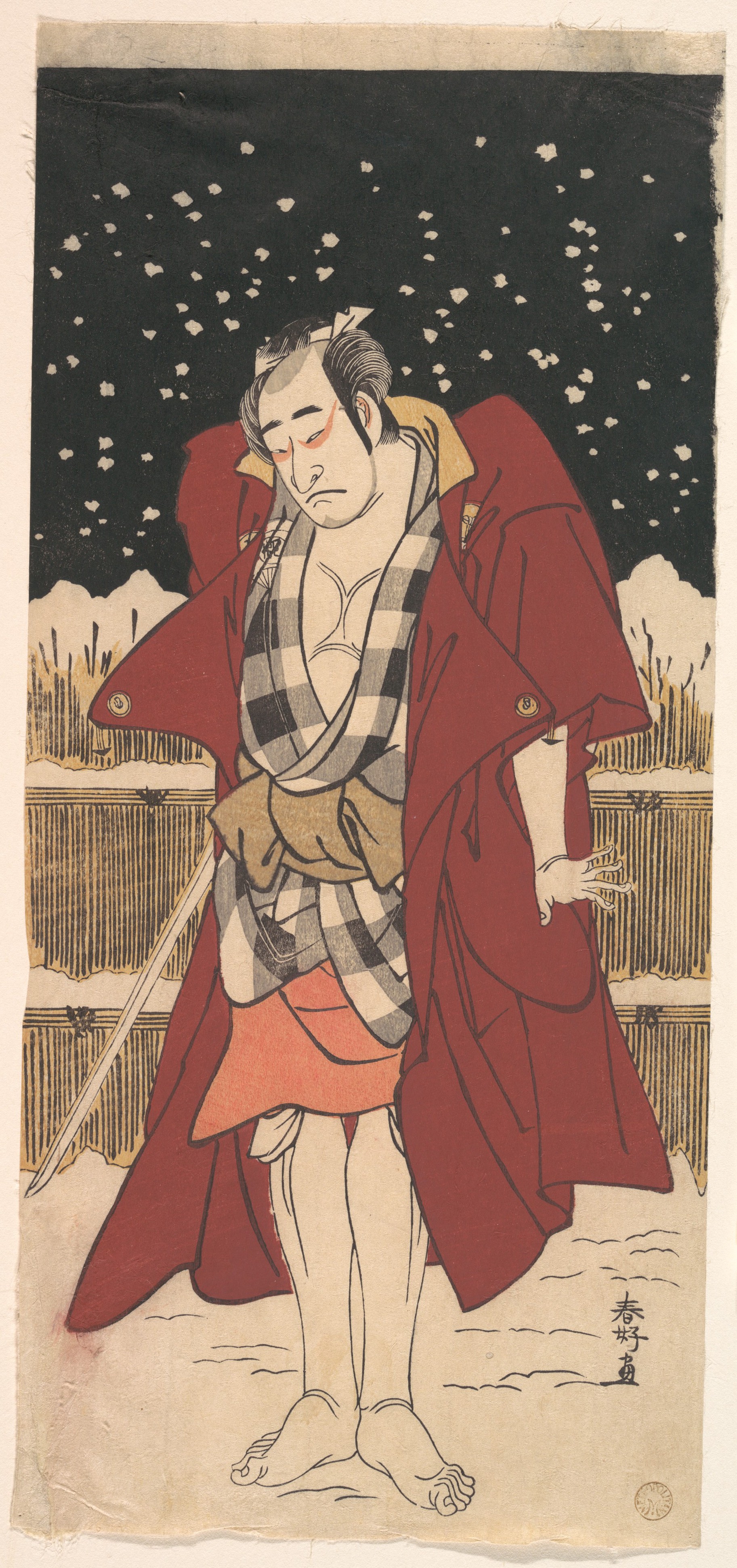
Onoe Matsusuke as Man Armed with a Sword, Standing in Snow before a Fence
1786
Woodblock print; ink and color on paper

Blue and Red Macaws
early 20th century
Color woodblock print

Waitress at a Seaside Teahouse
late 18th century
Color woodblock print; hashira-e

The Actor Otani Hiroemon as a Man Standing in a Room
ca. 1789
Diptych of woodblock prints; ink and color on paper
More Sumo Prints


Frequently Asked Questions
Three Sumō Wrestlers: Onogawa, Seimiyama, and Yatsugamine was created by Katsukawa Shunkō (勝川春好) in ca. 1790s.
Three Sumō Wrestlers: Onogawa, Seimiyama, and Yatsugamine depicts sumo.