
Waitress at a Seaside Teahouse
- Date:
- late 18th century
- Medium:
- Color woodblock print; hashira-e
- Source:
- Art Institute of Chicago
Description
This hashira-e (pillar print) by Katsukawa Shunkō depicts a young waitress at a seaside teahouse, rendered in the tall, narrow format used for hanging in the recessed posts of Edo townhouse interiors. The hashira-e was one of the most challenging formats in ukiyo-e: the artist had to compose a full figure within an extreme vertical aspect ratio, typically around six times taller than wide, requiring elongated proportions and inventive cropping. Shunkō, best known for his kabuki actor prints, occasionally turned to bijin-ga (beautiful-women prints) and genre subjects like this seaside teahouse waitress. The young woman stands against a suggested background that places her at one of the small establishments along Edo Bay or the Tōkaidō coastal road, where travelers stopped for tea, light meals, and conversation. Teahouse waitresses (chaya musume) were a recognized type within Edo's celebrity culture, and several specific waitresses — most famously O-Sen of Kasamori Shrine and O-Fuji of Yagenbori — became print-portrait subjects in their own right. Held by the Art Institute of Chicago, this design shows Shunkō working outside his Katsukawa-school actor specialty and engaging the broader popular-print tradition that flourished in the late eighteenth century. The print is a useful counterpoint to his yakusha-e: the same hand that drew Edo's leading kabuki performers could also produce a delicate, elongated portrait of an anonymous young woman in service.
More Prints by Katsukawa Shunkō
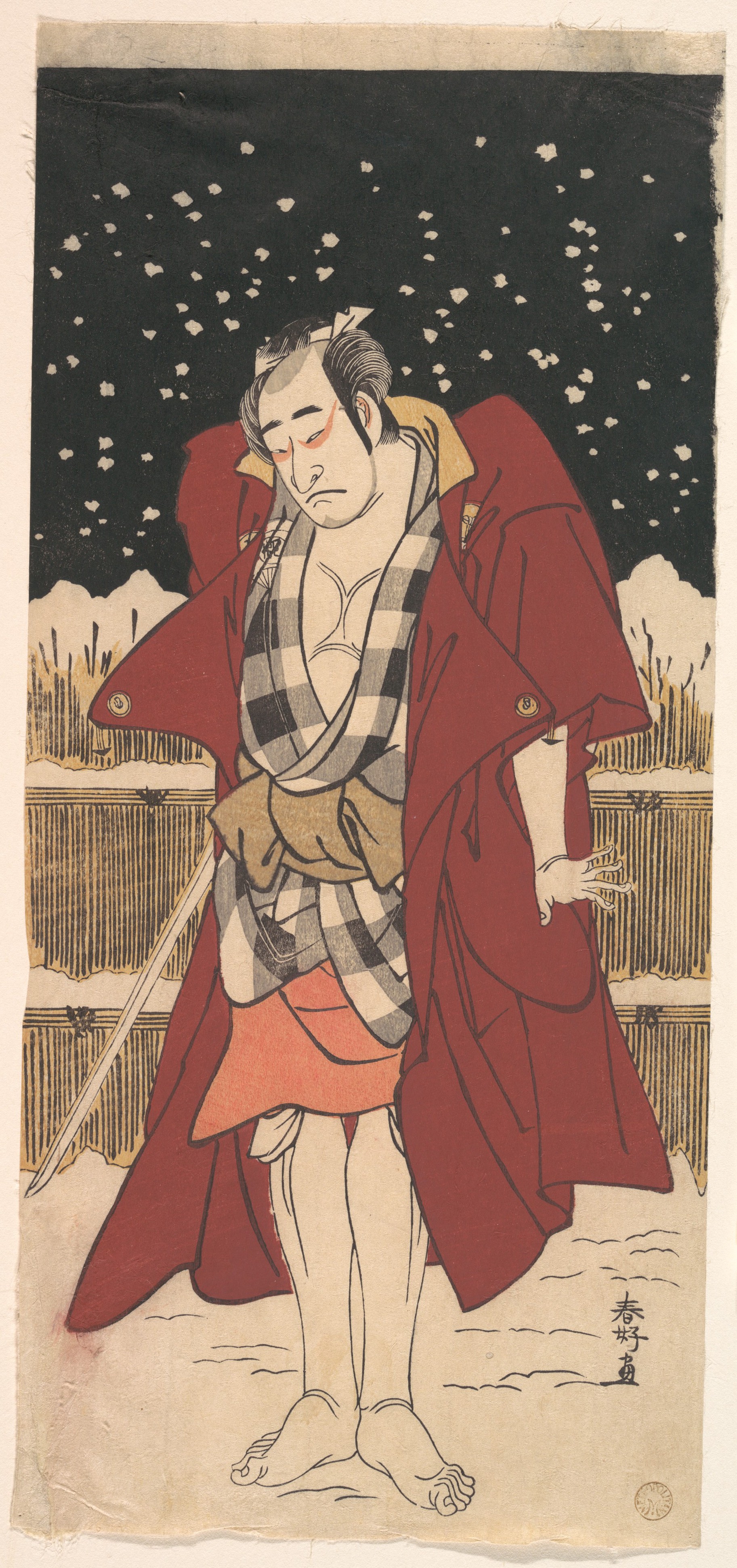
Onoe Matsusuke as Man Armed with a Sword, Standing in Snow before a Fence
1786
Woodblock print; ink and color on paper

Blue and Red Macaws
early 20th century
Color woodblock print
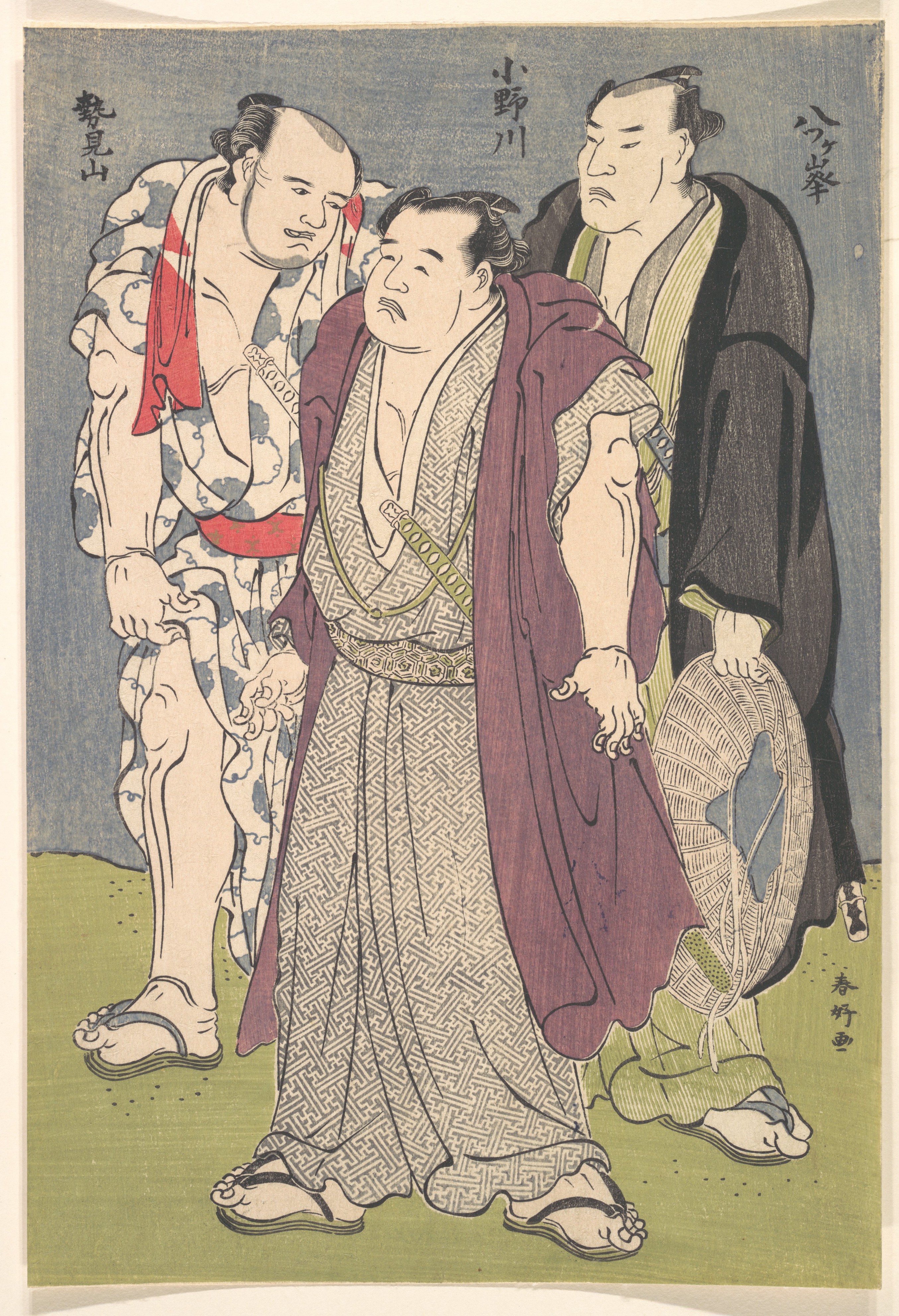
Three Sumō Wrestlers: Onogawa, Seimiyama, and Yatsugamine
ca. 1790s
Woodblock print; ink and color on paper

The Actor Otani Hiroemon as a Man Standing in a Room
ca. 1789
Diptych of woodblock prints; ink and color on paper
Frequently Asked Questions
Waitress at a Seaside Teahouse was created by Katsukawa Shunkō (勝川春好) in late 18th century.