
Autumn Moon at Ishiyama (Ishiyama no shūgetsu), from the series Eight Views of Lake Biwa (ōmi hakkei)
- Date:
- Late Edo period, circa 1800-1802
- Medium:
- Ukiyo-e woodblock print in the "chūban" format; ink and color on paper
- Source:
- Art Institute of Chicago
Description
Autumn Moon at Ishiyama (Ishiyama no shugetsu) is a Katsushika Hokusai design from around 1800 in his series Eight Views of Lake Biwa (Omi hakkei), held at the Art Institute of Chicago. The traditional theme pairs the autumn moon with Ishiyama-dera, a hillside temple above the southern end of Lake Biwa, long famous in poetry as the site where the writer Murasaki Shikibu is said to have begun The Tale of Genji while watching the moon rise over the lake. Hokusai responds with a quietly composed Edo ukiyo-e print in which temple buildings and pine groves frame the elevated view, while the calm surface of the lake reflects the full moon at the horizon. Figures of visitors, perhaps poets or pilgrims, gather at vantage points along the precincts. The composition emphasizes vertical layering, from foreground rooftops to middle-ground temple structures to the distant water and sky, allowing the eye to ascend in stages much as a real visitor would climb the slope. As an entry in the Omi hakkei tradition rendered in mainstream ukiyo-e print form, Ishiyama no shugetsu testifies to Hokusai's facility with classical themes and his readiness to weave literary memory directly into pictorial structure, reaffirming Lake Biwa's central place in the imaginative geography of Edo Japan.
More Prints by Katsushika Hokusai
Hokusai manga (Hokusai Sketchbooks)
19th century
Woodblock-printed book; ink and light color on paper
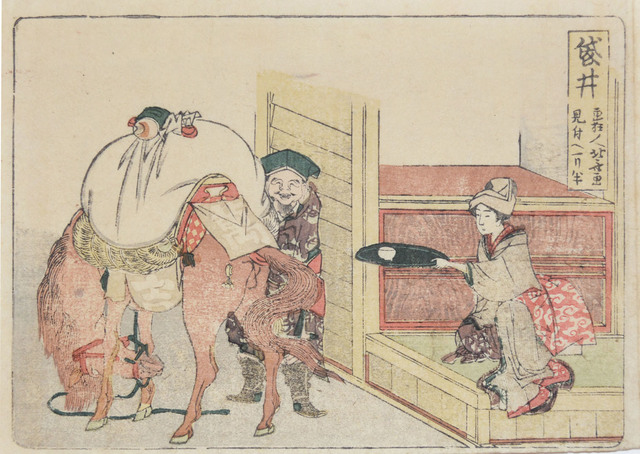
Fukuroi
1804
Japanese woodblock print

The Fishermen of Katase Hauling in Their Nets: The Purple Shell (Murasakigai)
1821
Color woodblock print with metallic pigments; surimono shikishiban

Burdock Root (Kurama gobo), from the series "A Selection of Horses (Uma-zukushi)"
1822
Color woodblock print; shikishiban, surimono
More Landscapes Prints

Lake Kugushi in Wakasa Province (Wakasa Kugushiko), from the series Souvenirs of Travel I (Tabi miyage dai isshu)"
Wakasa Kugushiko
1920
Color woodblock print; oban
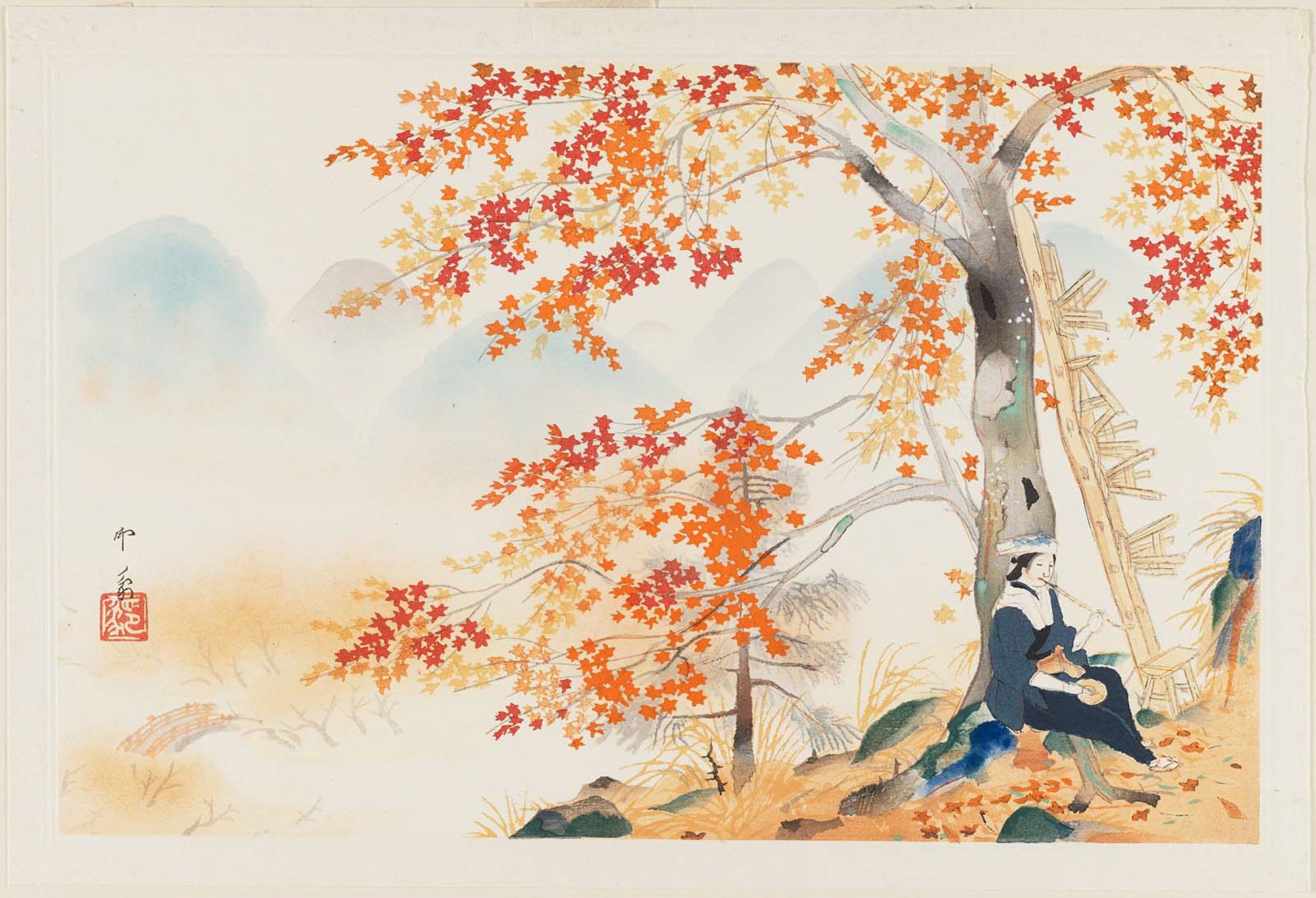
Autumn Maple Leaves at Takao, from the album Eight Views of Kyoto (Kyôto hakkei)
Woodblock print

The Beach at Kaiganji in Sanuki Province (Sanuki Kaiganji no hama), from the series "Collection of Views of Japan II, Kansai Edition (Nihon fukei shu II Kansai hen)"
1934
Color woodblock print; oban

Tea Kettle, section of a sheet from the series "Mirror of Stone Rubbings of Views of the Provinces" (Kohon meihitsu ishizuri kagami)
n.d.
Woodblock print; ishizuri-e, section of harimaze sheet
Featured in Collections
Curated cross-cuts that include this print.
Frequently Asked Questions
Autumn Moon at Ishiyama (Ishiyama no shūgetsu), from the series Eight Views of Lake Biwa (ōmi hakkei) was created by Katsushika Hokusai (葛飾北斎) in Late Edo period, circa 1800-1802.
Autumn Moon at Ishiyama (Ishiyama no shūgetsu), from the series Eight Views of Lake Biwa (ōmi hakkei) depicts landscapes, moonlight, and autumn foliage.