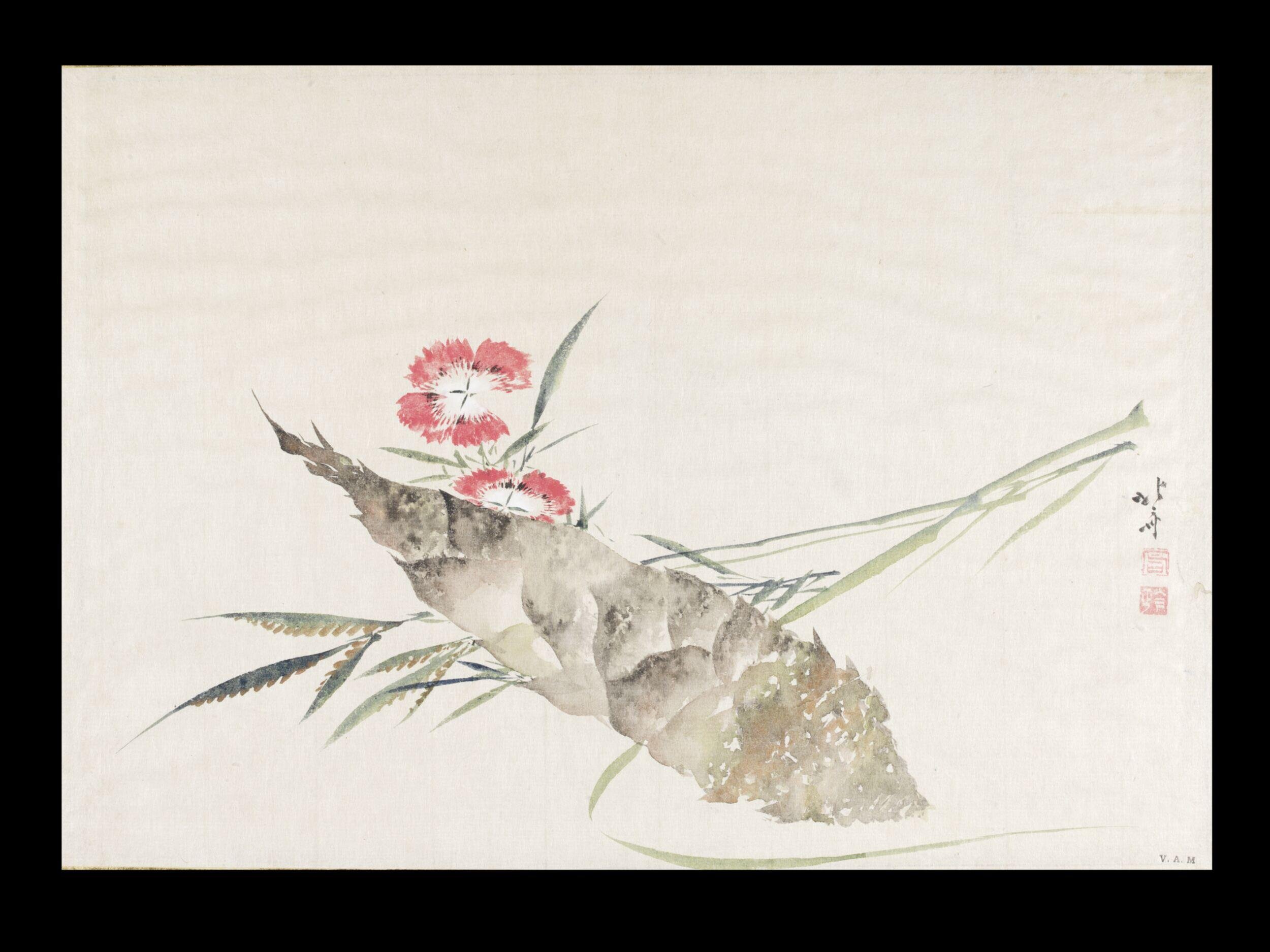
Bamboo Shoot
- Date:
- ca. 1808-1809
- Medium:
- Source:
- Victoria and Albert Museum
Description
Bamboo Shoot, dated about 1808 and held by the Victoria and Albert Museum, is a finely worked surimono-style print by Katsushika Hokusai depicting a single bamboo shoot emerging from the ground beside other early spring growth. The image is austere and emblematic, treating the young bamboo as a symbol of resilience, rapid growth, and seasonal renewal long established in Chinese and Japanese poetic traditions. Hokusai composes the shoot with a calligraphic confidence that emphasizes the elegant curve of the leaves and the textured sheath of the emerging stalk. As an Edo ukiyo-e print produced for surimono use, the design likely accompanied a kyoka verse celebrating the New Year or early spring, and its understated palette of greens and ochres against a pale ground exemplifies the genre's quiet refinement. The Victoria and Albert Museum impression preserves the crisp printing and the subtle gradations of color that distinguish surimono from commercial ukiyo-e print runs. Katsushika Hokusai's surimono output during this period demonstrates his deep involvement with poetry circles and the way he used such commissions to refine the calligraphic precision that underlies all of his later work. The bamboo shoot, with its evocations of family flourishing and stoic strength, is a classic surimono subject, but Hokusai's particular treatment, which omits any background, foregrounds the form of the plant itself as an icon worthy of close looking. Collectors and historians value such prints as documents of how Hokusai used the smallest format to develop the rigorous design thinking that would later inform his large-scale landscape compositions and his celebrated illustrated books.
More Prints by Katsushika Hokusai
Hokusai manga (Hokusai Sketchbooks)
19th century
Woodblock-printed book; ink and light color on paper
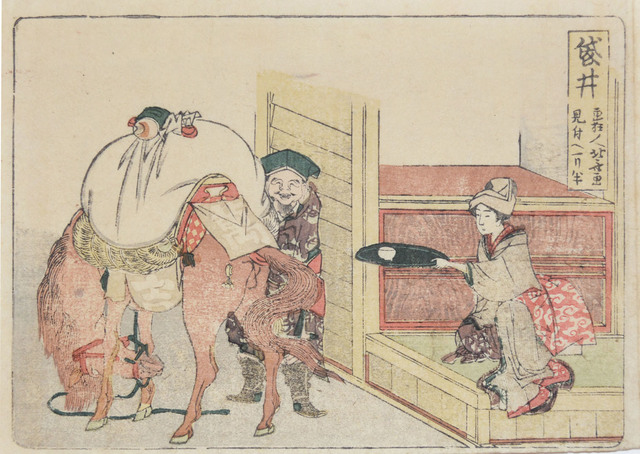
Fukuroi
1804
Japanese woodblock print

The Fishermen of Katase Hauling in Their Nets: The Purple Shell (Murasakigai)
1821
Color woodblock print with metallic pigments; surimono shikishiban

Burdock Root (Kurama gobo), from the series "A Selection of Horses (Uma-zukushi)"
1822
Color woodblock print; shikishiban, surimono
More Landscapes Prints

Lake Kugushi in Wakasa Province (Wakasa Kugushiko), from the series Souvenirs of Travel I (Tabi miyage dai isshu)"
Wakasa Kugushiko
1920
Color woodblock print; oban
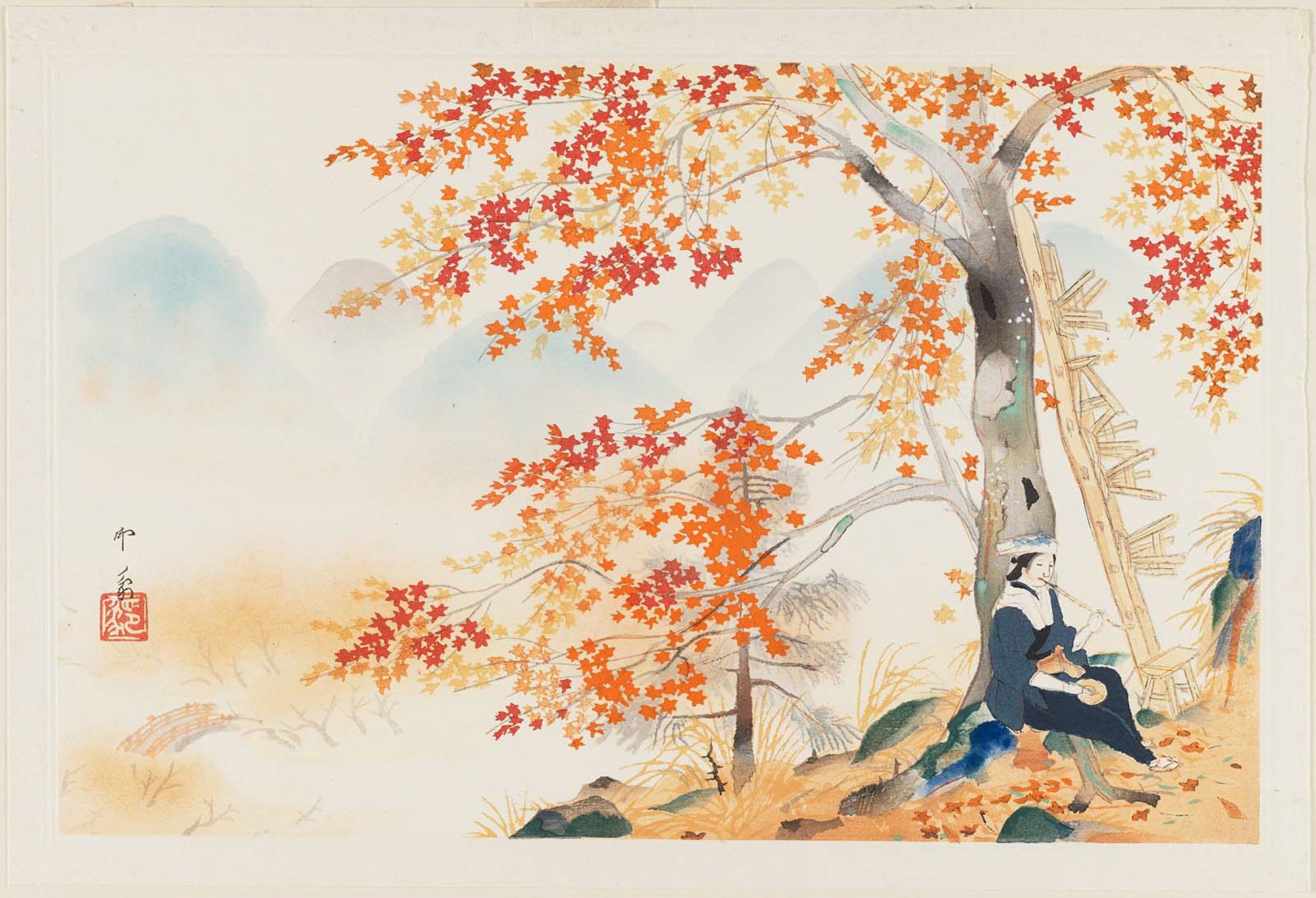
Autumn Maple Leaves at Takao, from the album Eight Views of Kyoto (Kyôto hakkei)
Woodblock print

The Beach at Kaiganji in Sanuki Province (Sanuki Kaiganji no hama), from the series "Collection of Views of Japan II, Kansai Edition (Nihon fukei shu II Kansai hen)"
1934
Color woodblock print; oban

Tea Kettle, section of a sheet from the series "Mirror of Stone Rubbings of Views of the Provinces" (Kohon meihitsu ishizuri kagami)
n.d.
Woodblock print; ishizuri-e, section of harimaze sheet
Featured in Collections
Curated cross-cuts that include this print.
Frequently Asked Questions
Bamboo Shoot was created by Katsushika Hokusai (葛飾北斎) in ca. 1808-1809.
Bamboo Shoot depicts landscapes.