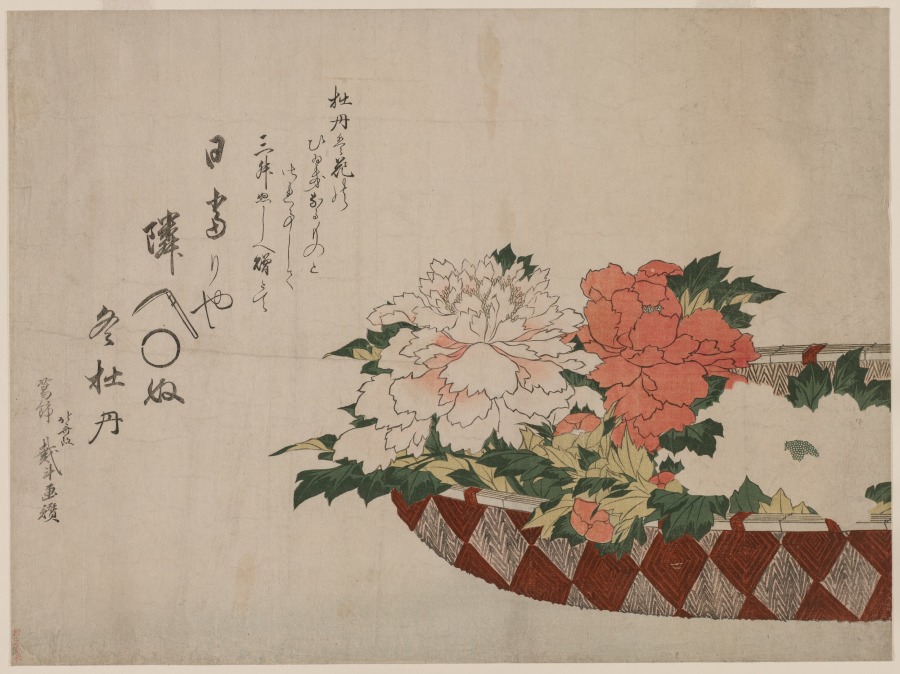
Basket of Peonies
- Date:
- 1810 or 1814
- Medium:
- color woodblock print; surimono
- Source:
- Cleveland Museum of Art
Description
Basket of Peonies, designed around 1810, is a graceful surimono-style print by Katsushika Hokusai depicting a low woven basket filled with full-bodied peony blossoms. The peony, long associated with prosperity, dignity, and refined feminine virtue in East Asian iconography, becomes here a study in the play of color, weight, and texture against the linear precision of the basket weave. The Cleveland Museum of Art impression preserves the saturated reds and pinks of the petals along with the cool greens of the foliage, demonstrating the refined color work characteristic of high-quality surimono. As an Edo ukiyo-e print, the design exemplifies the genre of privately commissioned woodblock images circulated within poetry circles, often paired with kyoka verses written by the members of those groups. Hokusai's composition is deliberately compact, with the basket occupying most of the sheet and the blossoms spilling upward and outward in graceful asymmetry. The drawing of each petal shows the kind of disciplined botanical observation that would later inform Hokusai's large-format Flowers series, anticipating his unified pictorial response to the natural world. Katsushika Hokusai used such commissions to refine his understanding of luxury printing techniques, including blind embossing, metallic pigments, and meticulous color layering, all of which contributed to the development of his later prints. For collectors of the ukiyo-e print, Basket of Peonies is valued both as a beautifully produced surimono in its own right and as a document of the artistic methods that Hokusai carried forward into his great late series, making it an essential reference for understanding the breadth of his output.
More Prints by Katsushika Hokusai
Hokusai manga (Hokusai Sketchbooks)
19th century
Woodblock-printed book; ink and light color on paper
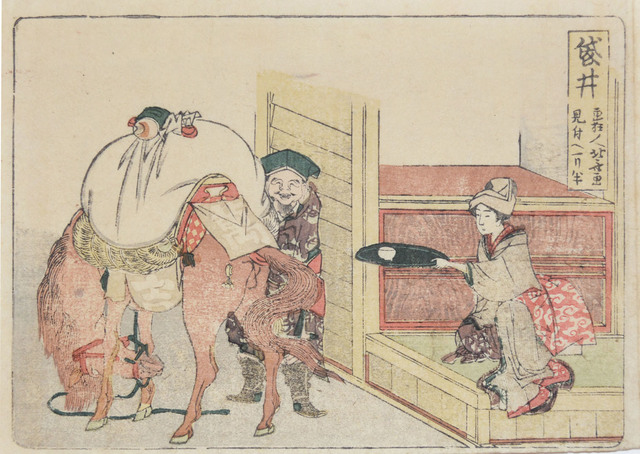
Fukuroi
1804
Japanese woodblock print

The Fishermen of Katase Hauling in Their Nets: The Purple Shell (Murasakigai)
1821
Color woodblock print with metallic pigments; surimono shikishiban

Burdock Root (Kurama gobo), from the series "A Selection of Horses (Uma-zukushi)"
1822
Color woodblock print; shikishiban, surimono
More Landscapes Prints

Lake Kugushi in Wakasa Province (Wakasa Kugushiko), from the series Souvenirs of Travel I (Tabi miyage dai isshu)"
Wakasa Kugushiko
1920
Color woodblock print; oban
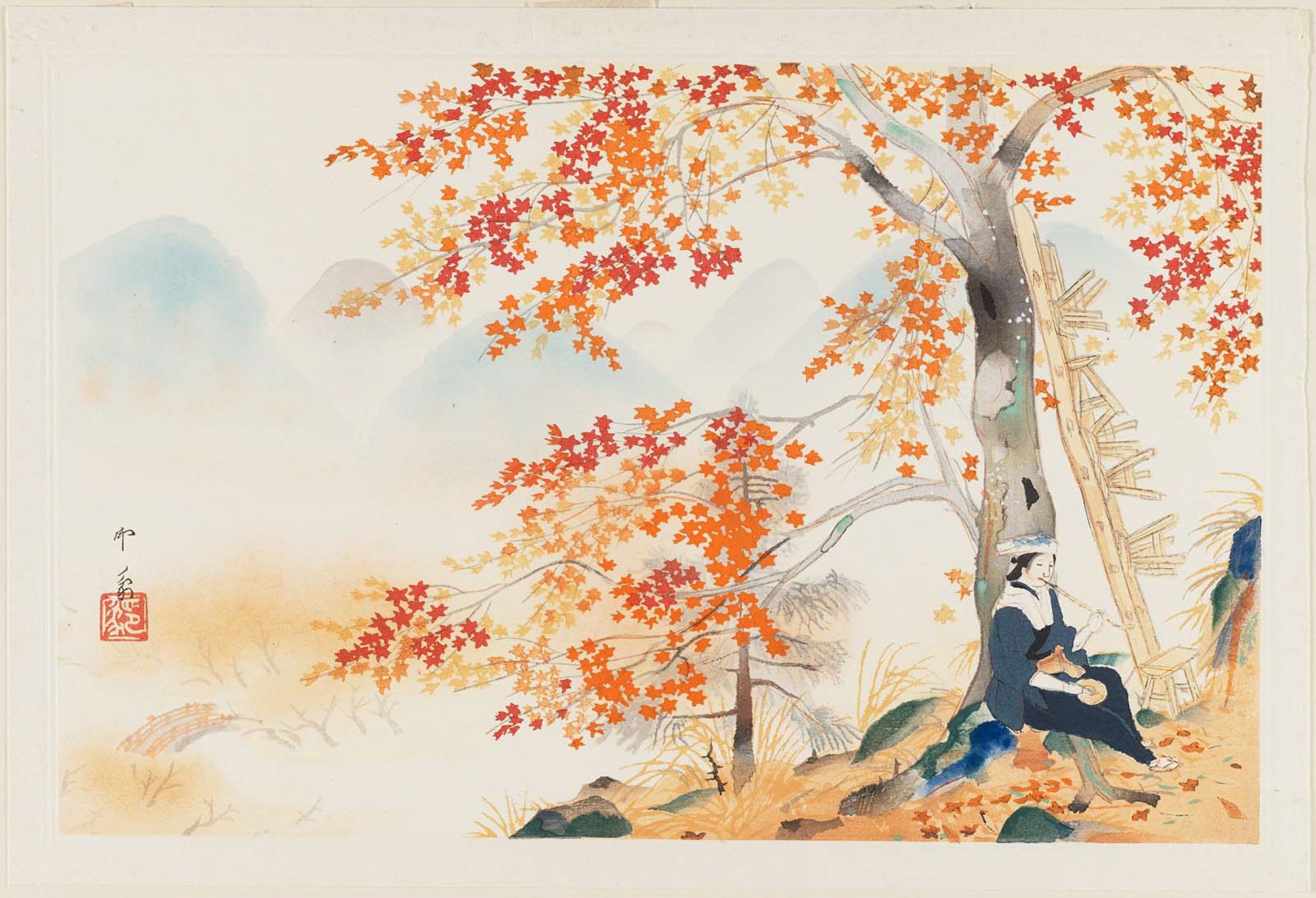
Autumn Maple Leaves at Takao, from the album Eight Views of Kyoto (Kyôto hakkei)
Woodblock print

The Beach at Kaiganji in Sanuki Province (Sanuki Kaiganji no hama), from the series "Collection of Views of Japan II, Kansai Edition (Nihon fukei shu II Kansai hen)"
1934
Color woodblock print; oban

Tea Kettle, section of a sheet from the series "Mirror of Stone Rubbings of Views of the Provinces" (Kohon meihitsu ishizuri kagami)
n.d.
Woodblock print; ishizuri-e, section of harimaze sheet
Featured in Collections
Curated cross-cuts that include this print.
Frequently Asked Questions
Basket of Peonies was created by Katsushika Hokusai (葛飾北斎) in 1810 or 1814.
Basket of Peonies depicts landscapes.