
Cuckoo and Azaleas (Hototogisu, satsuki)
- Date:
- c. 1834
- Medium:
- Color woodblock print; chuban
- Source:
- Art Institute of Chicago
Description
Cuckoo and Azaleas (Hototogisu, satsuki) is a Katsushika Hokusai ukiyo-e print of 1829 in the Art Institute of Chicago, part of his celebrated late kacho-e (bird and flower) production. The pairing of the hototogisu, a small migratory cuckoo whose voice is one of the most loved sounds of early summer in Japan, with the azaleas of the fifth month is a deeply traditional poetic combination, and Hokusai treats it with the restraint that subject demands. The composition is tightly vertical, with the bird in flight and the flowering branches arranged to lead the eye through the picture rather than crowd it. Color is used sparingly to set off the bird's plumage against the blossom cluster. As an Edo ukiyo-e print, the sheet belongs to the same set of large bird and flower designs as Bullfinch and Weeping Cherry and is generally regarded as one of the high points of Hokusai's bird and flower work. The pairing's literary weight allows the design to function both as decoration and as a quiet reference to centuries of Japanese poetry about the hototogisu. For collectors and historians, this is one of the most rewarding Hokusai kacho-e designs available outside his major landscape series. The Art Institute of Chicago records the work in its Japanese print holdings.
More Prints by Katsushika Hokusai
Hokusai manga (Hokusai Sketchbooks)
19th century
Woodblock-printed book; ink and light color on paper
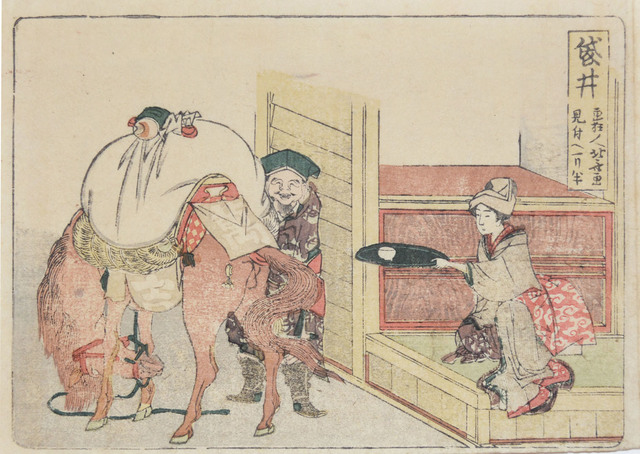
Fukuroi
1804
Japanese woodblock print

The Fishermen of Katase Hauling in Their Nets: The Purple Shell (Murasakigai)
1821
Color woodblock print with metallic pigments; surimono shikishiban

Burdock Root (Kurama gobo), from the series "A Selection of Horses (Uma-zukushi)"
1822
Color woodblock print; shikishiban, surimono
More Landscapes Prints

Lake Kugushi in Wakasa Province (Wakasa Kugushiko), from the series Souvenirs of Travel I (Tabi miyage dai isshu)"
Wakasa Kugushiko
1920
Color woodblock print; oban
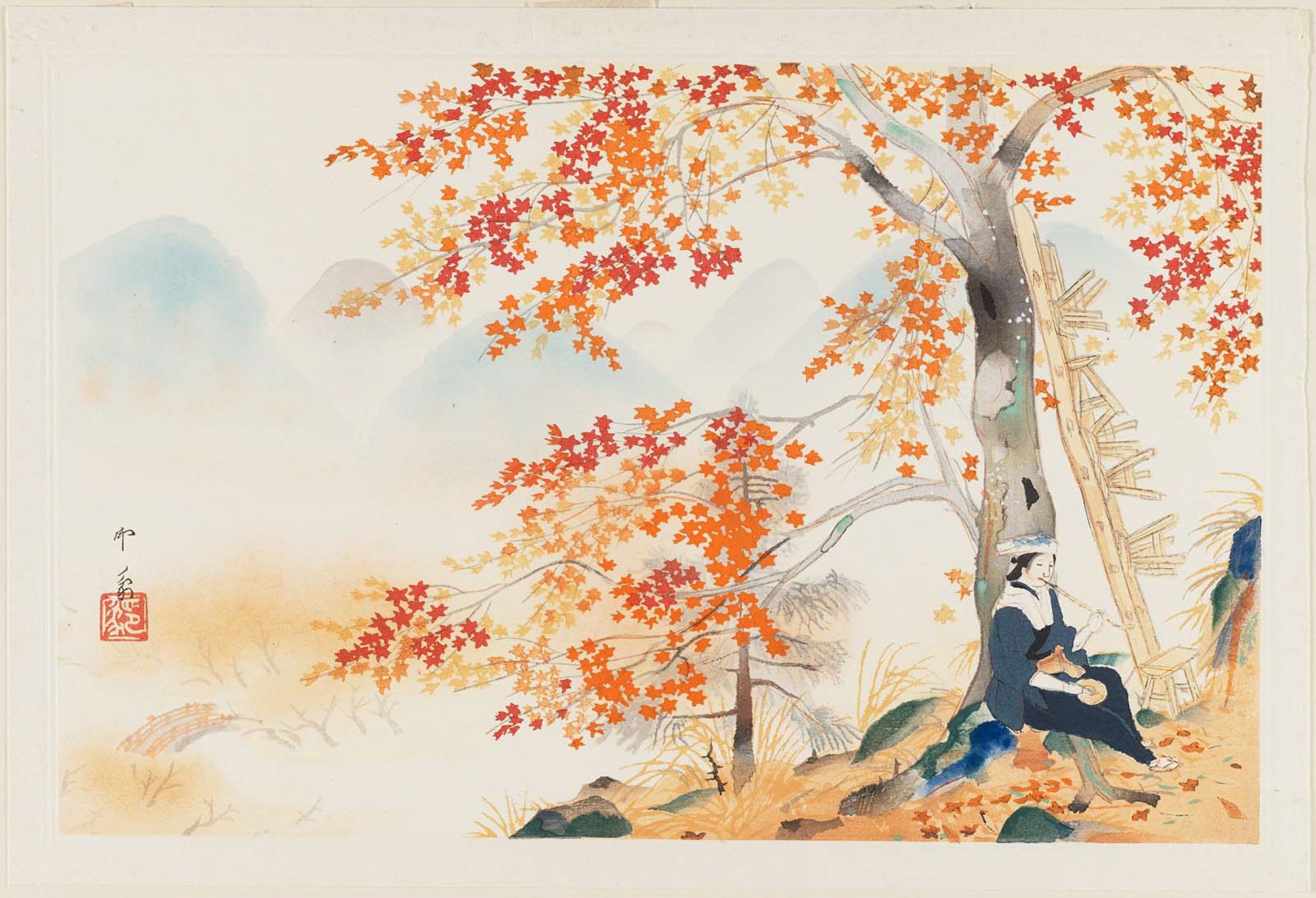
Autumn Maple Leaves at Takao, from the album Eight Views of Kyoto (Kyôto hakkei)
Woodblock print

The Beach at Kaiganji in Sanuki Province (Sanuki Kaiganji no hama), from the series "Collection of Views of Japan II, Kansai Edition (Nihon fukei shu II Kansai hen)"
1934
Color woodblock print; oban

Tea Kettle, section of a sheet from the series "Mirror of Stone Rubbings of Views of the Provinces" (Kohon meihitsu ishizuri kagami)
n.d.
Woodblock print; ishizuri-e, section of harimaze sheet
Featured in Collections
Curated cross-cuts that include this print.
Frequently Asked Questions
Cuckoo and Azaleas (Hototogisu, satsuki) was created by Katsushika Hokusai (葛飾北斎) in c. 1834.
Cuckoo and Azaleas (Hototogisu, satsuki) depicts landscapes.