
Li Bai (Japanese: Ri Haku), from the series "A True Mirror of Japanese and Chinese Poems (Shiika shashin kyo)"
- Date:
- c. 1833/34
- Medium:
- Color woodblock print; vertical nagaban
- Source:
- Art Institute of Chicago
Description
Li Bai, from the series A True Mirror of Japanese and Chinese Poems (Shiika shashin kyo), is one of Katsushika Hokusai's most ambitious narrative landscapes, designed in the late 1820s in the large nagaban format that the series favored. The print illustrates the Tang dynasty poet Li Bai (read in Japanese as Ri Haku) gazing in awe at the Lushan waterfall, a scene celebrated in his most famous verses. Hokusai shows the poet as a small figure at the base of the composition, attended by two boys, while a vast cataract pours down a ravine of sheer cliffs above him. The waterfall is rendered in pale lines of falling water against deep Prussian blue rocks, with mist softening the upper distance and pine trees clinging to the precipice. Although the subject is Chinese, the print belongs squarely to the world of Edo ukiyo-e: it was carved and printed in Edo, sold to a sophisticated urban audience steeped in Sinophile literary taste, and uses the same chuban-derived landscape vocabulary Hokusai had refined in his Mount Fuji and waterfall series. The impression in the Art Institute of Chicago shows the rich graduated printing that makes the Shiika shashin kyo set so prized. As an ukiyo-e print, Li Bai exemplifies Hokusai's interest in fusing classical East Asian poetry with the spectacular landscape designs of his late career, and it remains a touchstone for understanding how he reimagined Chinese subjects within Japanese woodblock practice.
More Prints by Katsushika Hokusai
Hokusai manga (Hokusai Sketchbooks)
19th century
Woodblock-printed book; ink and light color on paper
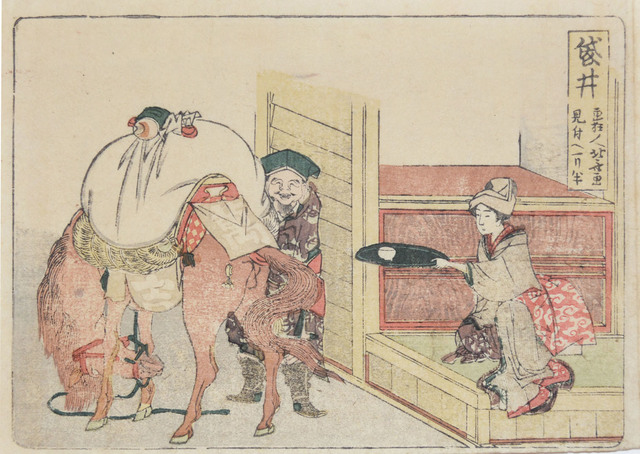
Fukuroi
1804
Japanese woodblock print

The Fishermen of Katase Hauling in Their Nets: The Purple Shell (Murasakigai)
1821
Color woodblock print with metallic pigments; surimono shikishiban

Burdock Root (Kurama gobo), from the series "A Selection of Horses (Uma-zukushi)"
1822
Color woodblock print; shikishiban, surimono
More Landscapes Prints

Lake Kugushi in Wakasa Province (Wakasa Kugushiko), from the series Souvenirs of Travel I (Tabi miyage dai isshu)"
Wakasa Kugushiko
1920
Color woodblock print; oban
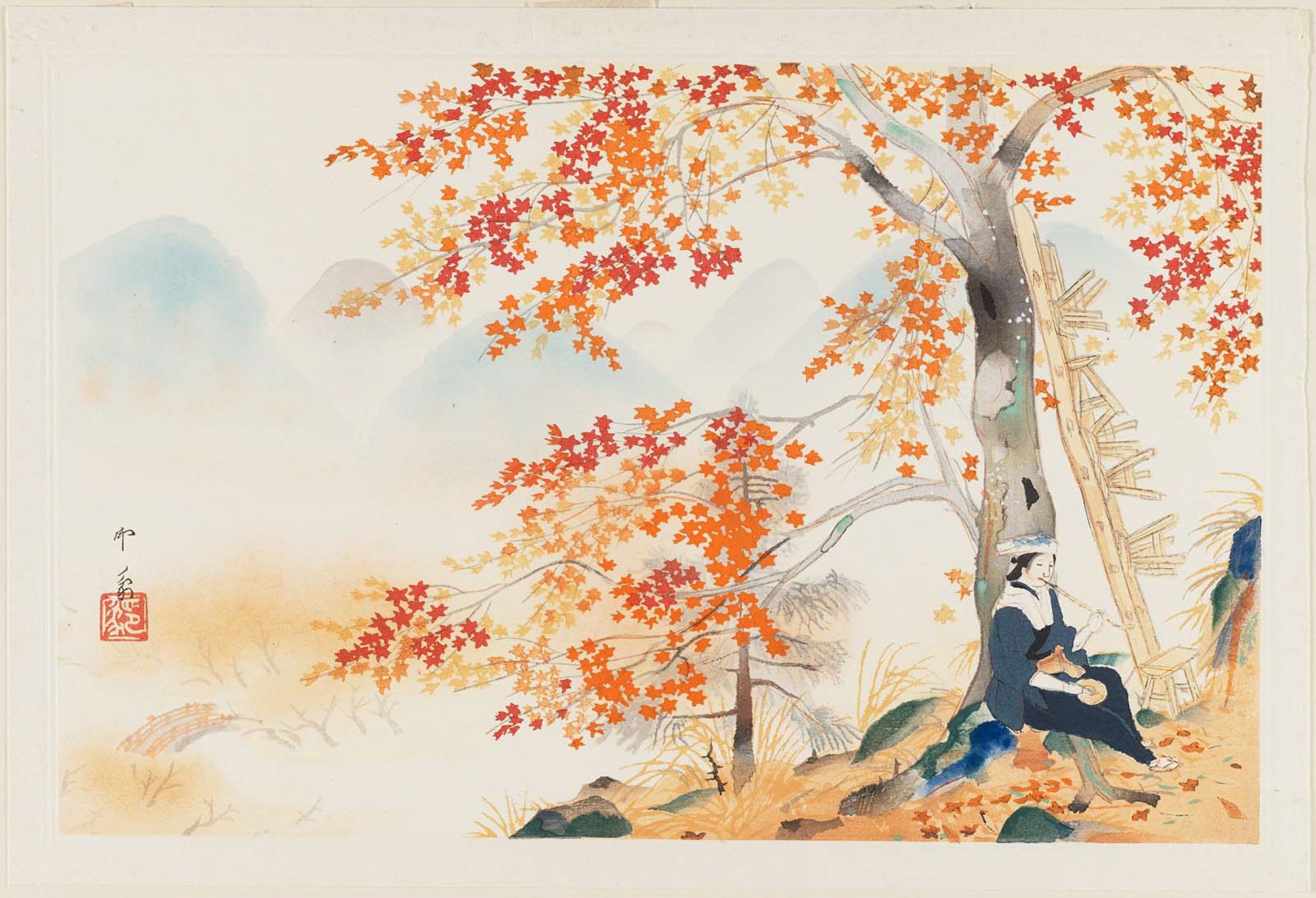
Autumn Maple Leaves at Takao, from the album Eight Views of Kyoto (Kyôto hakkei)
Woodblock print

The Beach at Kaiganji in Sanuki Province (Sanuki Kaiganji no hama), from the series "Collection of Views of Japan II, Kansai Edition (Nihon fukei shu II Kansai hen)"
1934
Color woodblock print; oban

Tea Kettle, section of a sheet from the series "Mirror of Stone Rubbings of Views of the Provinces" (Kohon meihitsu ishizuri kagami)
n.d.
Woodblock print; ishizuri-e, section of harimaze sheet
Featured in Collections
Curated cross-cuts that include this print.
Frequently Asked Questions
Li Bai (Japanese: Ri Haku), from the series "A True Mirror of Japanese and Chinese Poems (Shiika shashin kyo)" was created by Katsushika Hokusai (葛飾北斎) in c. 1833/34.
Li Bai (Japanese: Ri Haku), from the series "A True Mirror of Japanese and Chinese Poems (Shiika shashin kyo)" depicts landscapes.