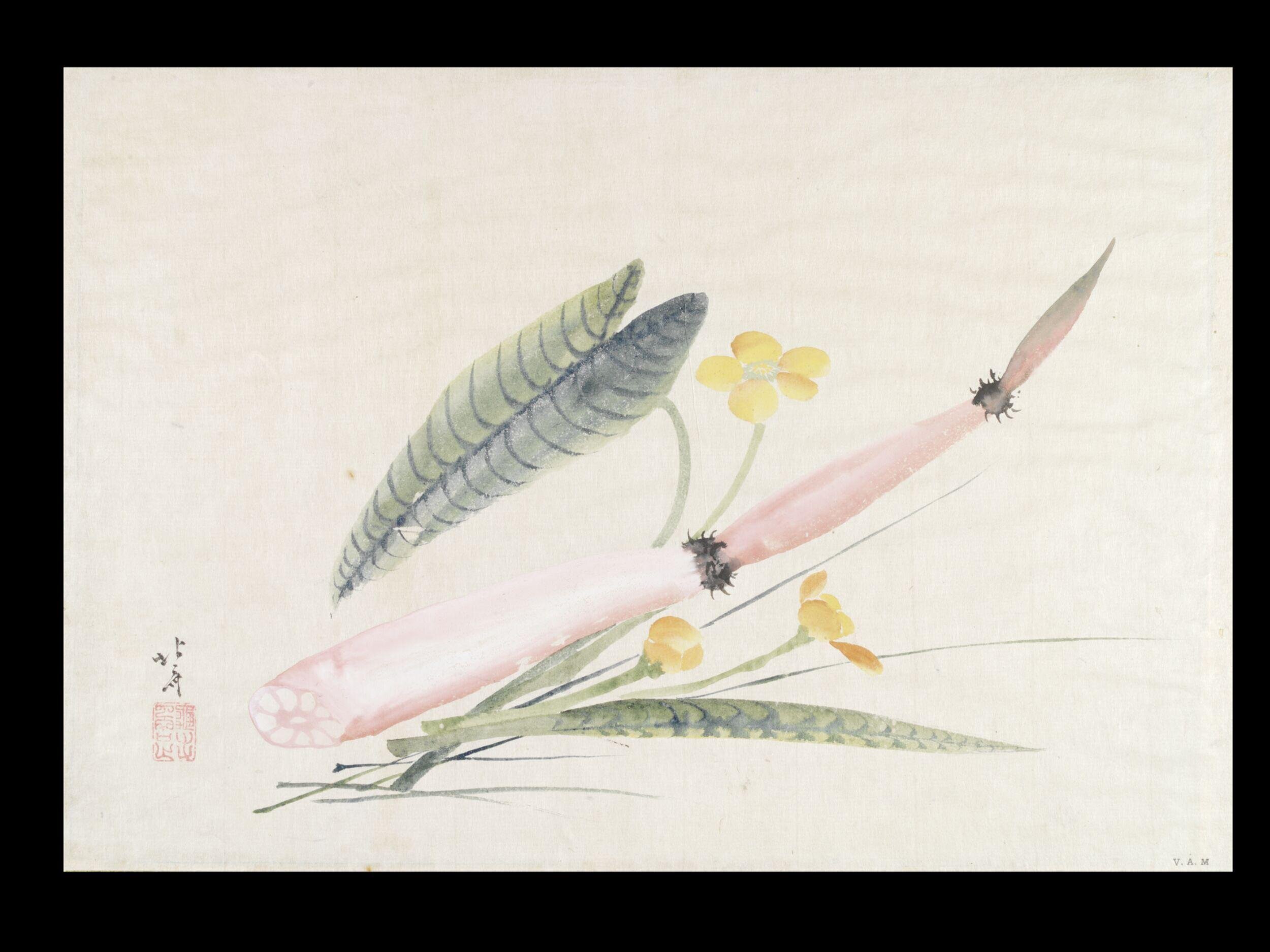
Lotus Root and Spatterdocks
- Date:
- ca. 1808-1809
- Medium:
- Source:
- Victoria and Albert Museum
Description
Dating to 1808, this Katsushika Hokusai print combines lotus root and spatterdocks (a yellow pond lily) into a tightly composed botanical study. The lotus root, with its swollen, segmented form, lies prominently in the foreground, while the spatterdock flower and its broad lily-pad leaves rise above the water surface to balance the composition. Both plants belong to the same aquatic landscape, and Hokusai uses their visual contrast to demonstrate the variety contained within a single pond ecosystem. As an Edo ukiyo-e print, the sheet illustrates how the kacho-ga tradition could be expanded to include not only birds and conventional flowers but also vegetables and root forms that carried strong dietary and medicinal associations. Lotus roots were a staple Japanese ingredient, valued for their crispness and decorative cross-section, while spatterdocks were familiar from the marshes that flanked the Sumida and other Edo waterways. Hokusai treats each form with attention to its natural color and to the textures that define it, from the smooth, mottled skin of the lotus root to the waxy surface of the lily pad. The composition shows his confidence in arranging organic shapes across a vertical format without the support of a strong narrative or architectural frame. The Victoria and Albert Museum preserves the print within its Hokusai holdings. The sheet is one of a group of botanical works the artist made in this period, all of which testify to his immersion in the natural world and to the broader Japanese culture of seasonal eating, gardening, and pond-keeping that surrounded ukiyo-e production. The print continues to reward attention as both visual design and quiet domestic still life.
More Prints by Katsushika Hokusai
Hokusai manga (Hokusai Sketchbooks)
19th century
Woodblock-printed book; ink and light color on paper
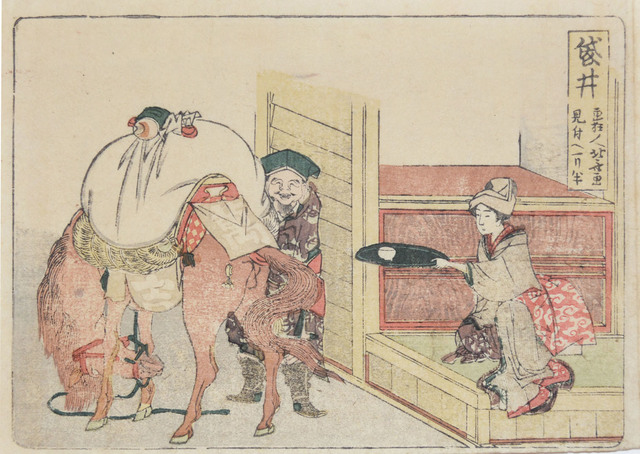
Fukuroi
1804
Japanese woodblock print

The Fishermen of Katase Hauling in Their Nets: The Purple Shell (Murasakigai)
1821
Color woodblock print with metallic pigments; surimono shikishiban

Burdock Root (Kurama gobo), from the series "A Selection of Horses (Uma-zukushi)"
1822
Color woodblock print; shikishiban, surimono
More Landscapes Prints

Lake Kugushi in Wakasa Province (Wakasa Kugushiko), from the series Souvenirs of Travel I (Tabi miyage dai isshu)"
Wakasa Kugushiko
1920
Color woodblock print; oban
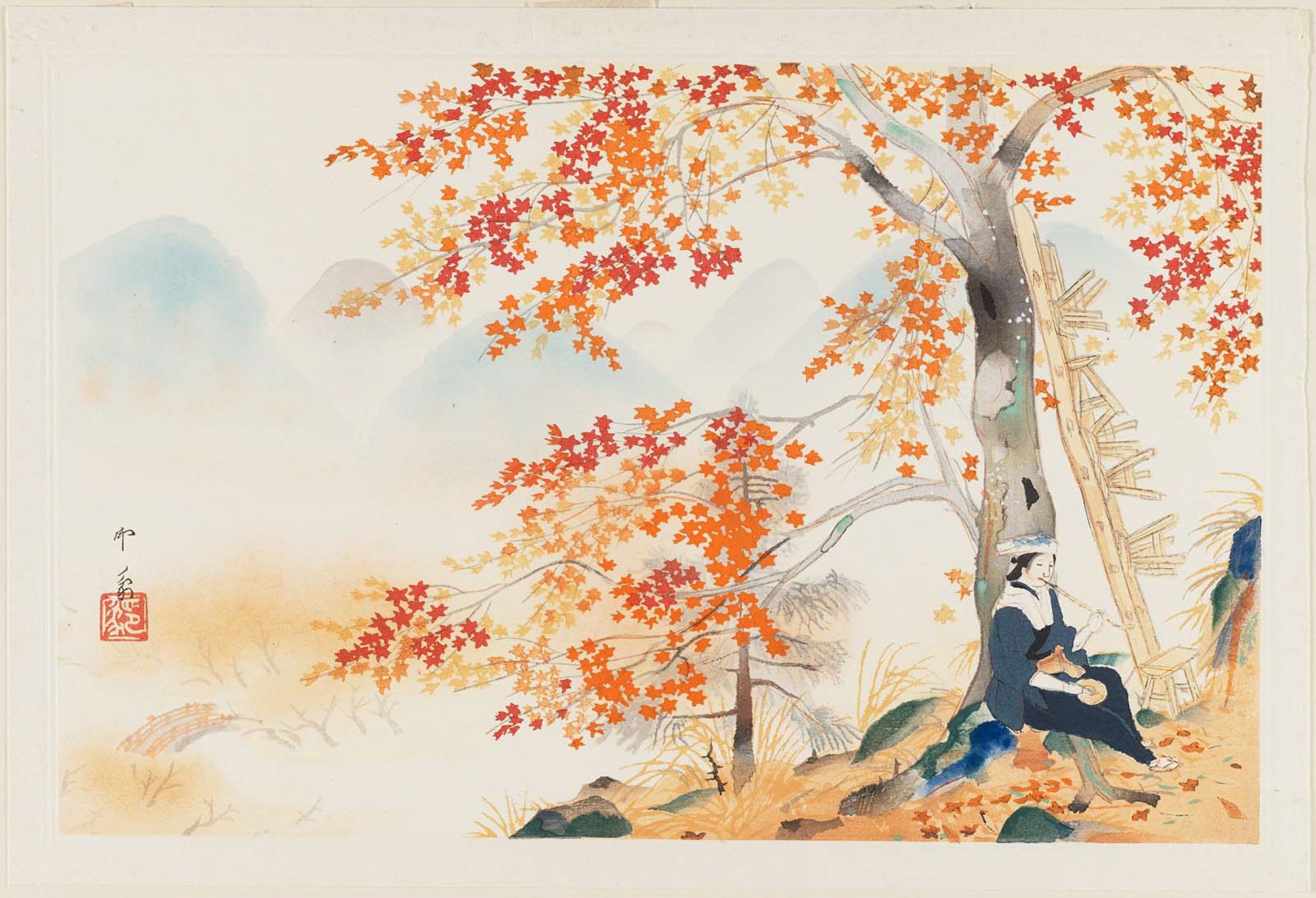
Autumn Maple Leaves at Takao, from the album Eight Views of Kyoto (Kyôto hakkei)
Woodblock print

The Beach at Kaiganji in Sanuki Province (Sanuki Kaiganji no hama), from the series "Collection of Views of Japan II, Kansai Edition (Nihon fukei shu II Kansai hen)"
1934
Color woodblock print; oban

Tea Kettle, section of a sheet from the series "Mirror of Stone Rubbings of Views of the Provinces" (Kohon meihitsu ishizuri kagami)
n.d.
Woodblock print; ishizuri-e, section of harimaze sheet
Featured in Collections
Curated cross-cuts that include this print.
Frequently Asked Questions
Lotus Root and Spatterdocks was created by Katsushika Hokusai (葛飾北斎) in ca. 1808-1809.
Lotus Root and Spatterdocks depicts landscapes.