Pair of Mandarin Ducks beneath Blossoming Plum
- Date:
- Edo period, circa 1813
- Medium:
- Woodblock print (surimono); ink and color on paper
- Source:
- Harvard Art Museums
Description
Pair of Mandarin Ducks beneath Blossoming Plum, produced around 1813, is a kacho-ga or bird-and-flower design by Katsushika Hokusai, in which a pair of mandarin ducks rests beneath the gnarled branches of a blossoming plum tree. The composition draws on a long East Asian tradition in which the mandarin duck symbolises conjugal fidelity and the plum represents resilience and the promise of spring. Hokusai treats the subject with the precise observational eye that would inform his later great kacho-ga series of the 1830s, while the muted palette suggests a late winter or early spring scene. As a ukiyo-e print, the design balances finely carved detail in the bird plumage and plum blossoms with broader washes of colour for ground and sky. The Harvard Art Museums preserve an impression of this print, and the museum's collection of Edo ukiyo-e kacho-ga supports comparative study with later flower-and-bird series by Hokusai, Hiroshige and the Meiji shin-hanga revivalists. Although Hokusai is best known today for his landscapes, the bird-and-flower tradition was an important part of his output over many decades, and this design represents the genre at an early but already accomplished stage of his career. The print also illustrates the rich symbolic vocabulary that an Edo ukiyo-e audience would have read in even an apparently quiet decorative image.
More Prints by Katsushika Hokusai
Hokusai manga (Hokusai Sketchbooks)
19th century
Woodblock-printed book; ink and light color on paper
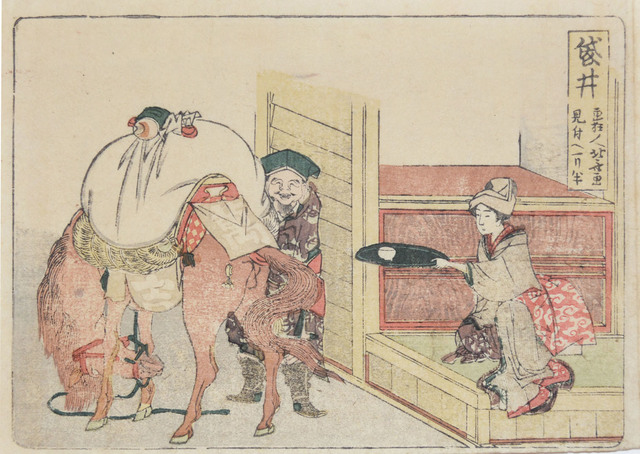
Fukuroi
1804
Japanese woodblock print

The Fishermen of Katase Hauling in Their Nets: The Purple Shell (Murasakigai)
1821
Color woodblock print with metallic pigments; surimono shikishiban

Burdock Root (Kurama gobo), from the series "A Selection of Horses (Uma-zukushi)"
1822
Color woodblock print; shikishiban, surimono
More Landscapes Prints

Lake Kugushi in Wakasa Province (Wakasa Kugushiko), from the series Souvenirs of Travel I (Tabi miyage dai isshu)"
Wakasa Kugushiko
1920
Color woodblock print; oban
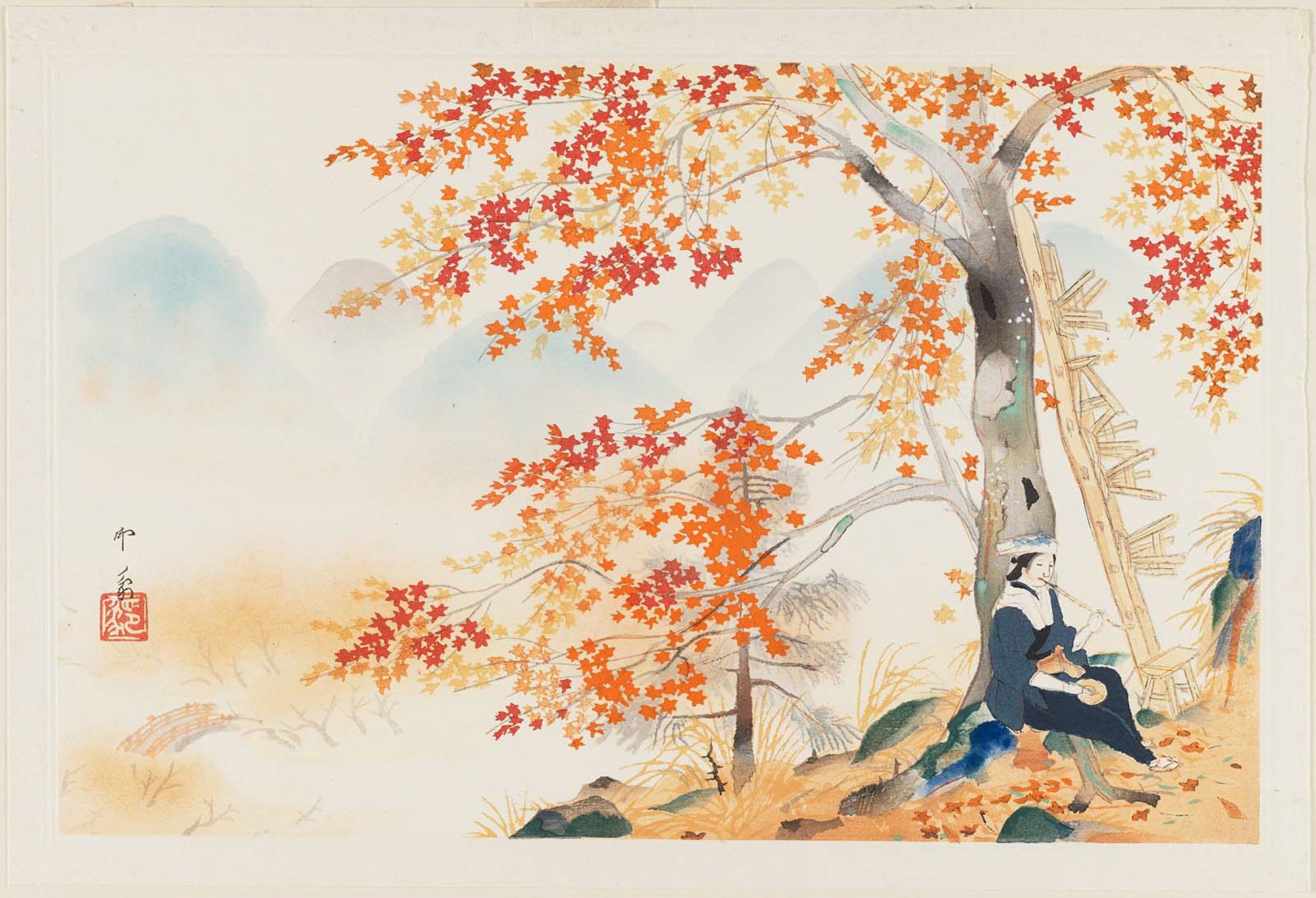
Autumn Maple Leaves at Takao, from the album Eight Views of Kyoto (Kyôto hakkei)
Woodblock print

The Beach at Kaiganji in Sanuki Province (Sanuki Kaiganji no hama), from the series "Collection of Views of Japan II, Kansai Edition (Nihon fukei shu II Kansai hen)"
1934
Color woodblock print; oban

Tea Kettle, section of a sheet from the series "Mirror of Stone Rubbings of Views of the Provinces" (Kohon meihitsu ishizuri kagami)
n.d.
Woodblock print; ishizuri-e, section of harimaze sheet
Featured in Collections
Curated cross-cuts that include this print.
Frequently Asked Questions
Pair of Mandarin Ducks beneath Blossoming Plum was created by Katsushika Hokusai (葛飾北斎) in Edo period, circa 1813.
Pair of Mandarin Ducks beneath Blossoming Plum depicts landscapes.