
Palace of the Queen Mother of the West (Seiōbo, Ch. Xiwangmu)
- Date:
- ca. 1779-94
- Medium:
- Format:
- Oban
- Source:
- Victoria and Albert Museum
Description
The Queen Mother of the West (Seiōbo in Japanese, Xiwangmu in Chinese) — a Daoist immortal who guards the peach garden of eternal life on the mythological Kunlun Mountain — is depicted in this print from Hokusai's early career between 1779 and 1794. The subject draws on Chinese mythological tradition that had deep roots in Japanese popular culture, and the composition reflects the young Hokusai's engagement with Chinese narrative subjects.
More Prints by Katsushika Hokusai
Hokusai manga (Hokusai Sketchbooks)
19th century
Woodblock-printed book; ink and light color on paper
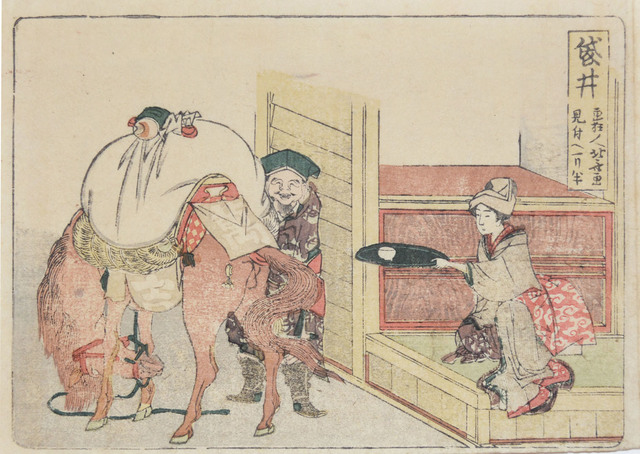
Fukuroi
1804
Japanese woodblock print

The Fishermen of Katase Hauling in Their Nets: The Purple Shell (Murasakigai)
1821
Color woodblock print with metallic pigments; surimono shikishiban

Burdock Root (Kurama gobo), from the series "A Selection of Horses (Uma-zukushi)"
1822
Color woodblock print; shikishiban, surimono
More Landscapes Prints

Lake Kugushi in Wakasa Province (Wakasa Kugushiko), from the series Souvenirs of Travel I (Tabi miyage dai isshu)"
Wakasa Kugushiko
1920
Color woodblock print; oban
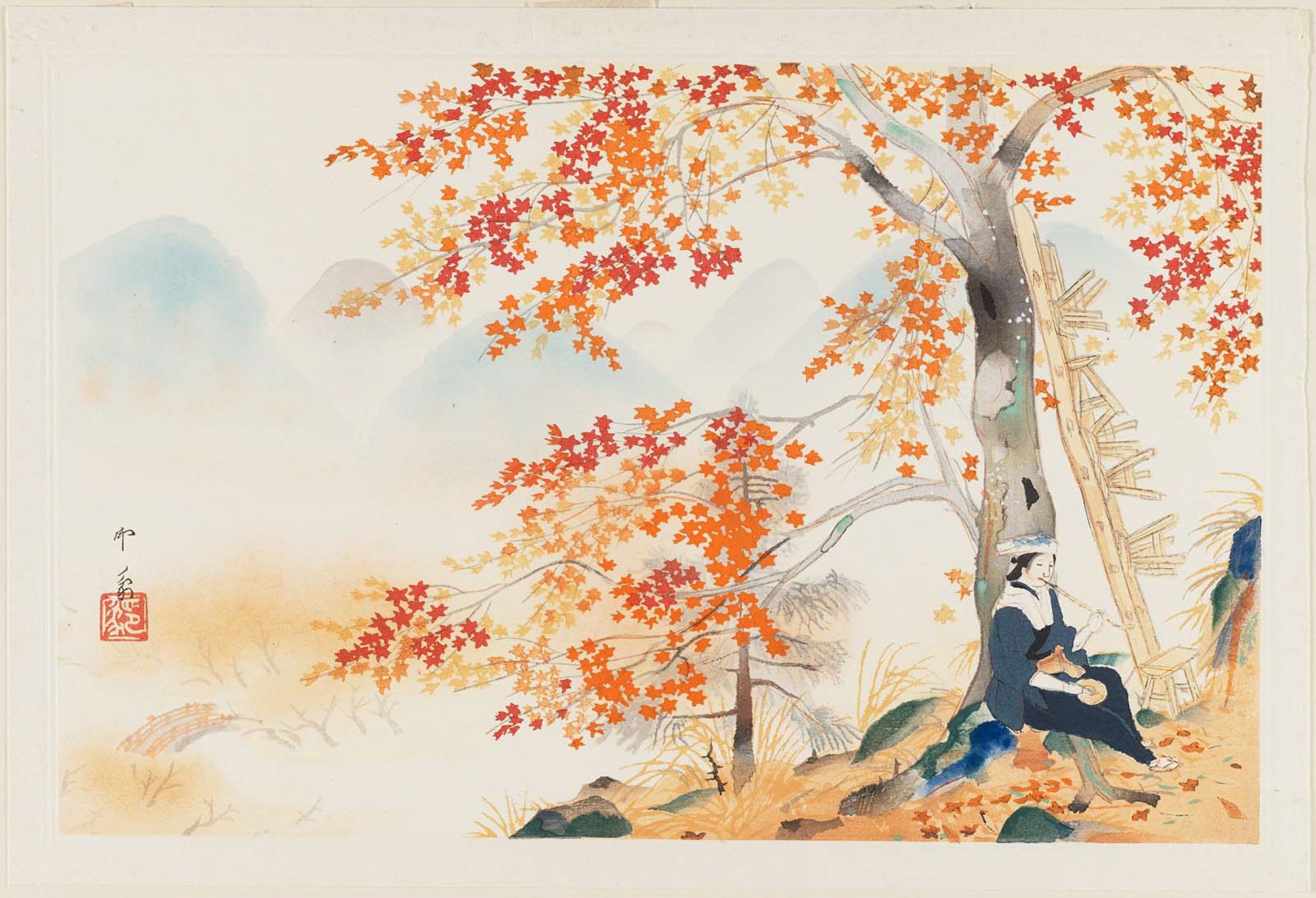
Autumn Maple Leaves at Takao, from the album Eight Views of Kyoto (Kyôto hakkei)
Woodblock print

The Beach at Kaiganji in Sanuki Province (Sanuki Kaiganji no hama), from the series "Collection of Views of Japan II, Kansai Edition (Nihon fukei shu II Kansai hen)"
1934
Color woodblock print; oban

Tea Kettle, section of a sheet from the series "Mirror of Stone Rubbings of Views of the Provinces" (Kohon meihitsu ishizuri kagami)
n.d.
Woodblock print; ishizuri-e, section of harimaze sheet
Featured in Collections
Curated cross-cuts that include this print.
Frequently Asked Questions
Palace of the Queen Mother of the West (Seiōbo, Ch. Xiwangmu) was created by Katsushika Hokusai (葛飾北斎) in ca. 1779-94.
Palace of the Queen Mother of the West (Seiōbo, Ch. Xiwangmu) depicts landscapes, architecture, and daily life.