
Pilgrimage to Enoshima
- Date:
- c. 1821
- Medium:
- Color woodblock print; chuban, surimono
- Source:
- Art Institute of Chicago
Description
Pilgrimage to Enoshima is a Katsushika Hokusai ukiyo-e print from around 1816, held in the Art Institute of Chicago. The design records the popular Edo-period pilgrimage to Enoshima, a small island off the coast of Sagami Bay dedicated to the goddess Benzaiten, who was worshipped for benefits ranging from musical talent to wealth and protection in childbirth. Pilgrims crossed to the island on foot when the tides exposed a sandbar, an event that itself became part of the journey's appeal. Hokusai depicts travelers in conical hats and traveling robes making their way along this temporary path, with the wooded mass of Enoshima rising ahead and the sea stretching to the horizon. The composition combines documentary observation of contemporary religious tourism with the painterly attention to atmosphere that defines Hokusai's mature landscapes. As an Edo ukiyo-e print, the work participated in a broader genre of pilgrimage and travel imagery that flourished alongside guidebooks, illustrated novels, and improved road systems. The Art Institute of Chicago preserves this ukiyo-e print as evidence of how Katsushika Hokusai treated Enoshima long before he revisited it in his Thirty-six Views of Mount Fuji series, and how the island's pilgrimage culture shaped the visual repertoire of early nineteenth-century Edo printmakers.
More Prints by Katsushika Hokusai
Hokusai manga (Hokusai Sketchbooks)
19th century
Woodblock-printed book; ink and light color on paper
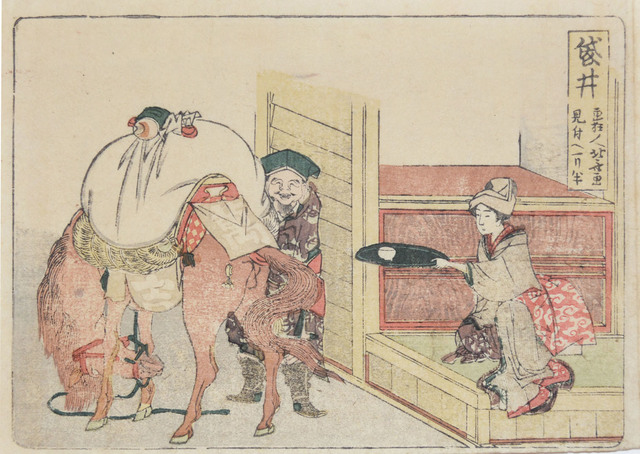
Fukuroi
1804
Japanese woodblock print

The Fishermen of Katase Hauling in Their Nets: The Purple Shell (Murasakigai)
1821
Color woodblock print with metallic pigments; surimono shikishiban

Burdock Root (Kurama gobo), from the series "A Selection of Horses (Uma-zukushi)"
1822
Color woodblock print; shikishiban, surimono
More Landscapes Prints

Lake Kugushi in Wakasa Province (Wakasa Kugushiko), from the series Souvenirs of Travel I (Tabi miyage dai isshu)"
Wakasa Kugushiko
1920
Color woodblock print; oban
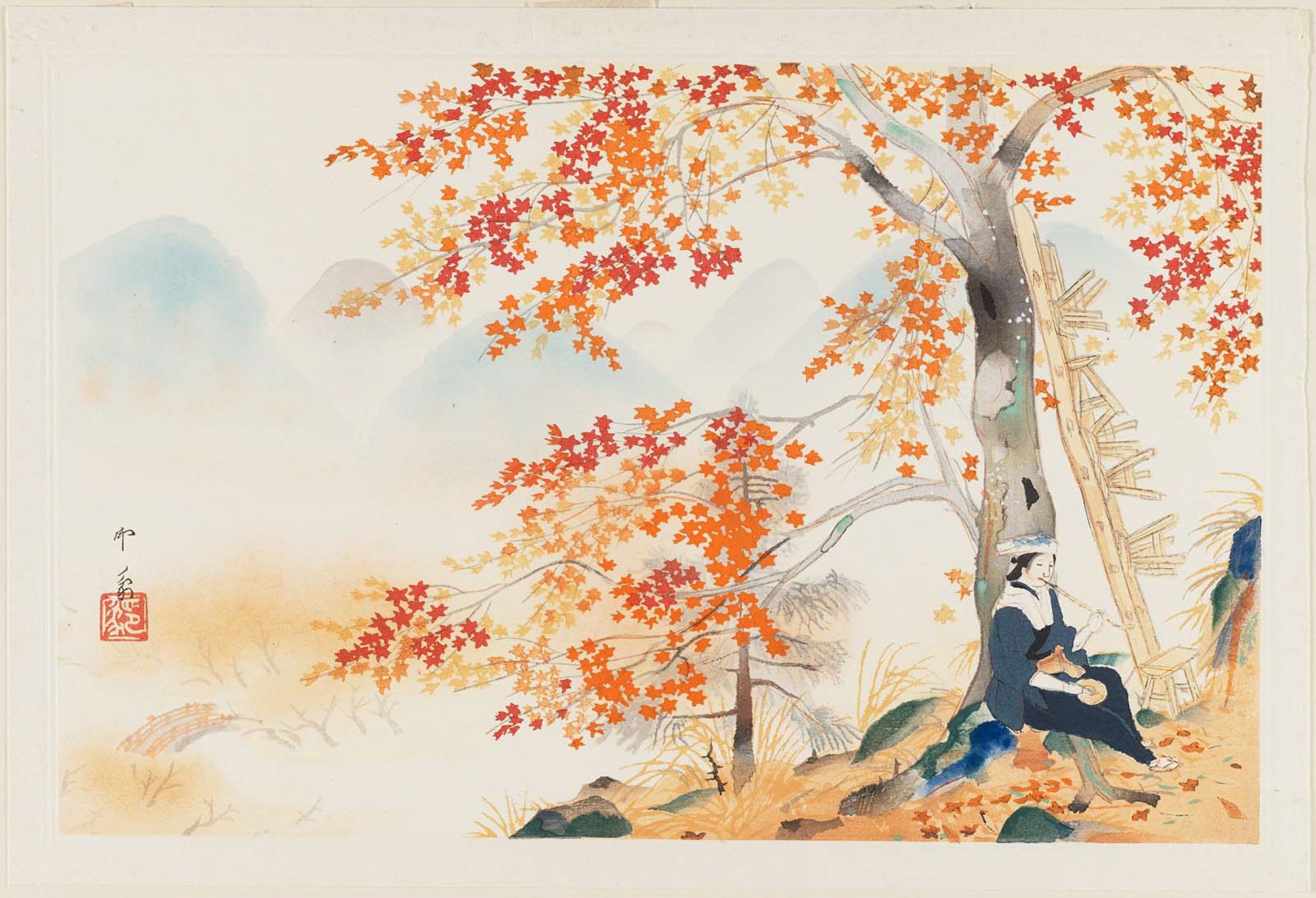
Autumn Maple Leaves at Takao, from the album Eight Views of Kyoto (Kyôto hakkei)
Woodblock print

The Beach at Kaiganji in Sanuki Province (Sanuki Kaiganji no hama), from the series "Collection of Views of Japan II, Kansai Edition (Nihon fukei shu II Kansai hen)"
1934
Color woodblock print; oban

Tea Kettle, section of a sheet from the series "Mirror of Stone Rubbings of Views of the Provinces" (Kohon meihitsu ishizuri kagami)
n.d.
Woodblock print; ishizuri-e, section of harimaze sheet
Featured in Collections
Curated cross-cuts that include this print.
Frequently Asked Questions
Pilgrimage to Enoshima was created by Katsushika Hokusai (葛飾北斎) in c. 1821.
Pilgrimage to Enoshima depicts landscapes.