
Sazai Hall of the Temple of the Five Hundred Arhats
- Date:
- 1830–33
- Medium:
- Woodblock print (nishiki-e), ink and color on paper
- Source:
- Art Institute of Chicago
Description
Sazai Hall of the Temple of the Five Hundred Arhats is one of the Edo-centered prints in Katsushika Hokusai's Thirty-Six Views of Mount Fuji (Fugaku sanjurokkei), produced from around 1830. The Sazai-do, a multi-storied pavilion at the Tokugawa-period Gohyaku Rakanji temple in eastern Edo, was a popular spot from which visitors could climb up to a high observation deck and survey the surrounding plain. Hokusai shows the upper level of the pavilion crowded with figures - some leaning on the railing, others pointing into the distance - all gazing toward Mount Fuji, which rises in a soft cone beyond the rooftops of the city. The design takes a clever conceit: instead of showing Fuji directly, Hokusai shows people looking at it, making the viewer a spectator of other spectators. The Art Institute of Chicago impression preserves the strong blue palette and the carefully observed architectural detail of the pavilion. As an Edo ukiyo-e print, Sazai Hall is among the most self-aware images in the Fuji series, reflecting on the social rituals of sightseeing and the new commercial culture of viewing places that Hokusai's own series helped to define. It also captures something fundamental about late Edo's relationship to Mount Fuji: a familiar object of pilgrimage, devotion, and daily observation, but increasingly also a visual subject to be enjoyed as a view in itself.
More Prints by Katsushika Hokusai
Hokusai manga (Hokusai Sketchbooks)
19th century
Woodblock-printed book; ink and light color on paper
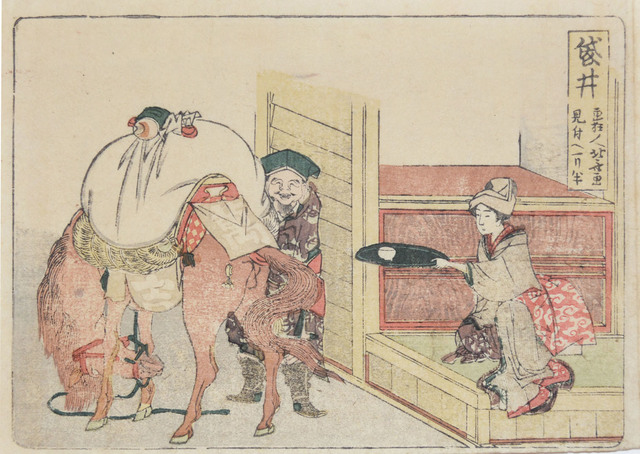
Fukuroi
1804
Japanese woodblock print

The Fishermen of Katase Hauling in Their Nets: The Purple Shell (Murasakigai)
1821
Color woodblock print with metallic pigments; surimono shikishiban

Burdock Root (Kurama gobo), from the series "A Selection of Horses (Uma-zukushi)"
1822
Color woodblock print; shikishiban, surimono
More Landscapes Prints

Lake Kugushi in Wakasa Province (Wakasa Kugushiko), from the series Souvenirs of Travel I (Tabi miyage dai isshu)"
Wakasa Kugushiko
1920
Color woodblock print; oban
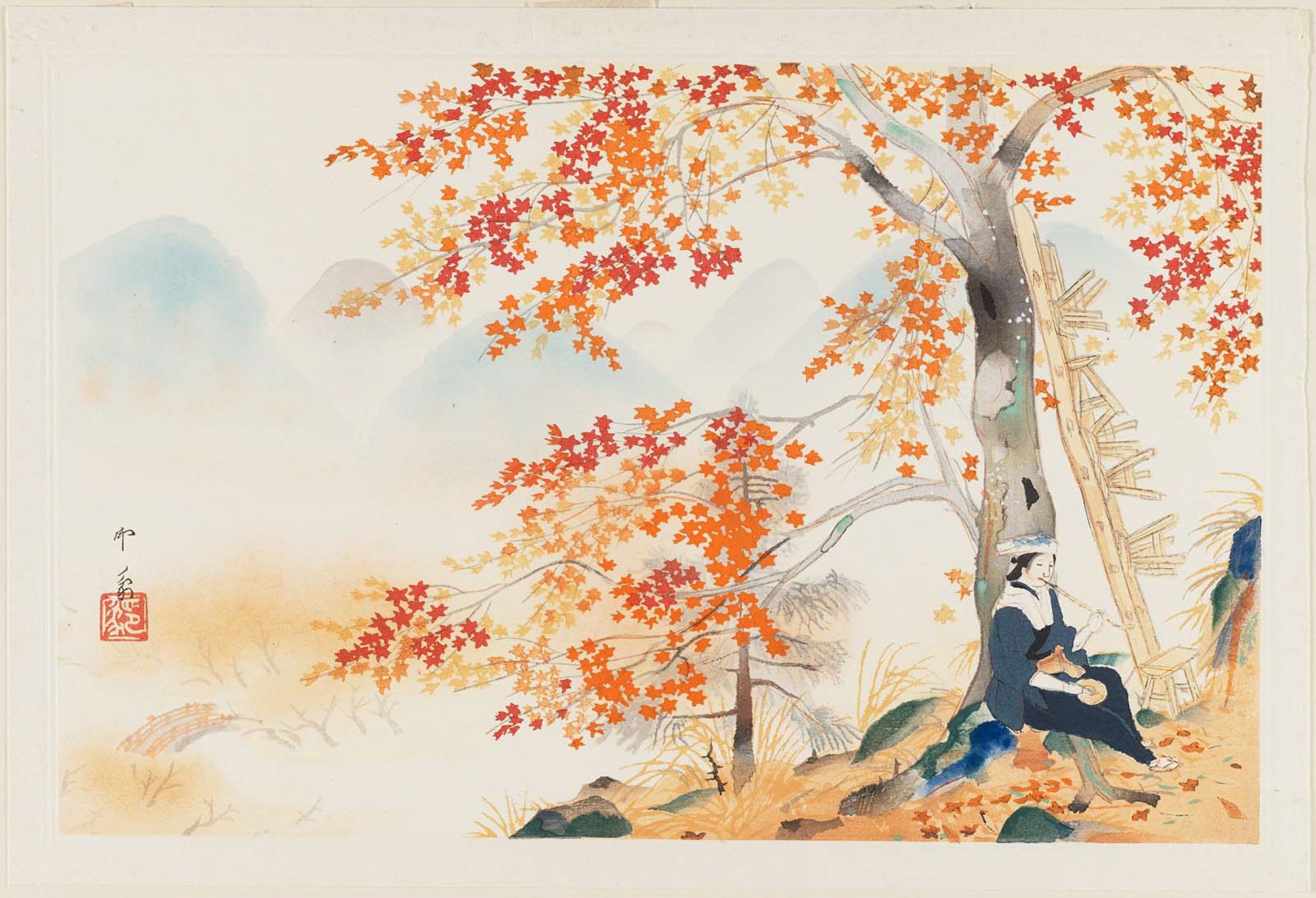
Autumn Maple Leaves at Takao, from the album Eight Views of Kyoto (Kyôto hakkei)
Woodblock print

The Beach at Kaiganji in Sanuki Province (Sanuki Kaiganji no hama), from the series "Collection of Views of Japan II, Kansai Edition (Nihon fukei shu II Kansai hen)"
1934
Color woodblock print; oban

Tea Kettle, section of a sheet from the series "Mirror of Stone Rubbings of Views of the Provinces" (Kohon meihitsu ishizuri kagami)
n.d.
Woodblock print; ishizuri-e, section of harimaze sheet
Featured in Collections
Curated cross-cuts that include this print.
Frequently Asked Questions
Sazai Hall of the Temple of the Five Hundred Arhats was created by Katsushika Hokusai (葛飾北斎) in 1830–33.
Sazai Hall of the Temple of the Five Hundred Arhats depicts landscapes.