
Self-Portrait as a Fisherman
- Date:
- 1835
- Medium:
- Color woodblock print with metallic pigments; surimono shikishiban
- Source:
- Art Institute of Chicago
Description
Self-Portrait as a Fisherman is a Katsushika Hokusai ukiyo-e print of 1830 in the Art Institute of Chicago. Self-portraits are rare in Edo ukiyo-e, and rarer still in the work of an artist who reinvented his name and signature so many times over a long career. By presenting himself as a fisherman, Hokusai draws on a venerable East Asian tradition in which the recluse-fisherman stands for a life spent close to nature, detached from worldly status. He had used the name Manji and Hokusai itself for different phases of his work, and by 1830 he was deep in the landscape projects that would dominate his last decades, so the choice to depict himself as a working man on the water is a quiet but pointed statement about how he understood his own practice. The composition is direct and economical, with the figure clearly defined and the surrounding landscape sketched in just enough detail to support the role. As an Edo ukiyo-e print, the sheet is unusual for being both portrait and self-presentation, and it provides one of the most personal images in the artist's entire output. The Art Institute of Chicago holds the work within its Hokusai collection.
More Prints by Katsushika Hokusai
Hokusai manga (Hokusai Sketchbooks)
19th century
Woodblock-printed book; ink and light color on paper
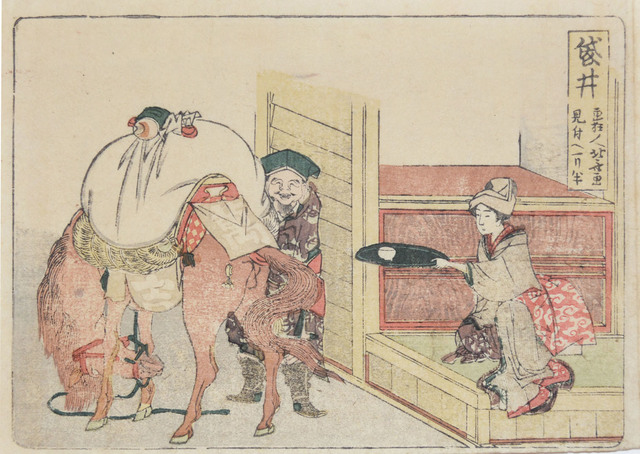
Fukuroi
1804
Japanese woodblock print

The Fishermen of Katase Hauling in Their Nets: The Purple Shell (Murasakigai)
1821
Color woodblock print with metallic pigments; surimono shikishiban

Burdock Root (Kurama gobo), from the series "A Selection of Horses (Uma-zukushi)"
1822
Color woodblock print; shikishiban, surimono
More Landscapes Prints

Lake Kugushi in Wakasa Province (Wakasa Kugushiko), from the series Souvenirs of Travel I (Tabi miyage dai isshu)"
Wakasa Kugushiko
1920
Color woodblock print; oban
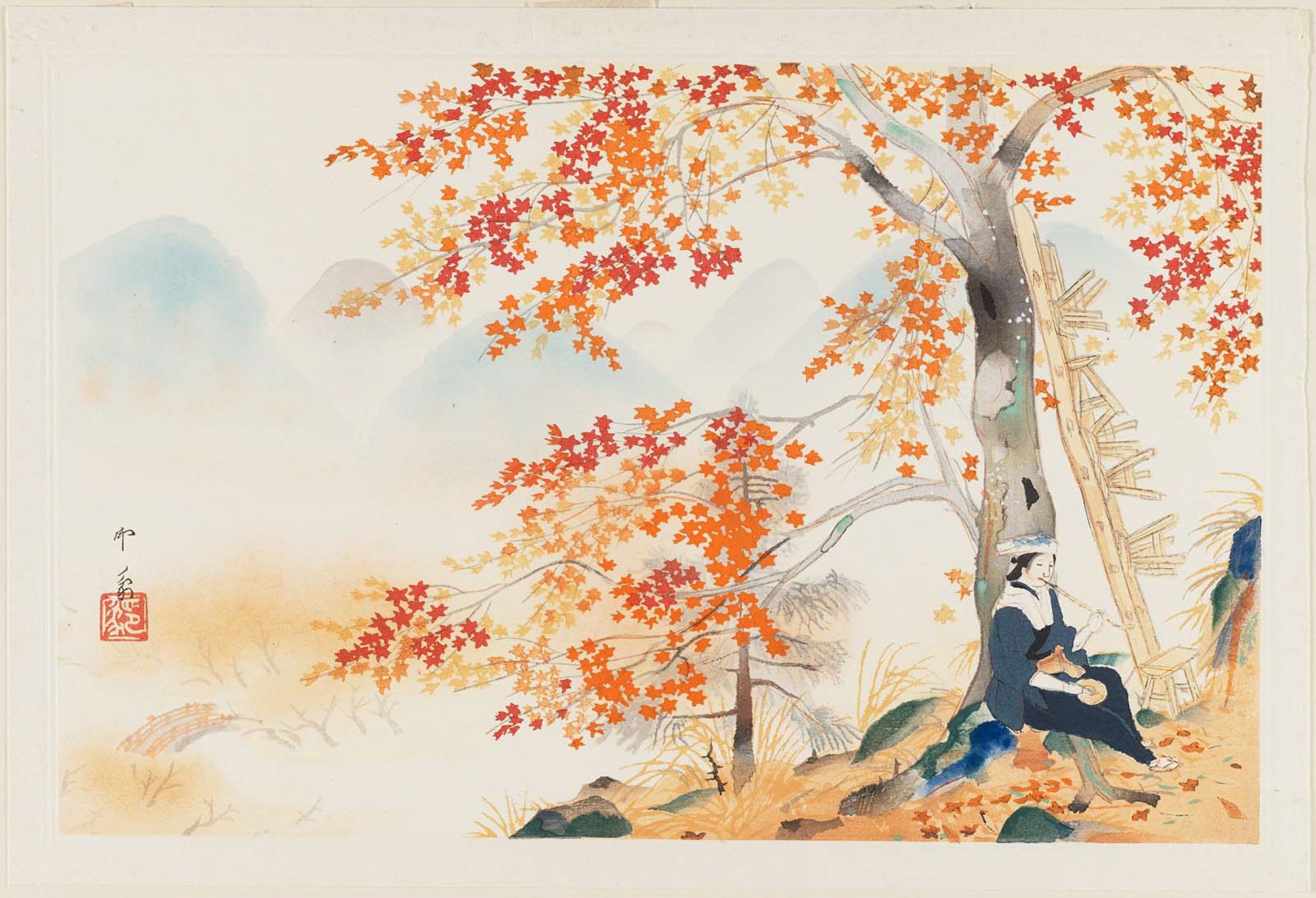
Autumn Maple Leaves at Takao, from the album Eight Views of Kyoto (Kyôto hakkei)
Woodblock print

The Beach at Kaiganji in Sanuki Province (Sanuki Kaiganji no hama), from the series "Collection of Views of Japan II, Kansai Edition (Nihon fukei shu II Kansai hen)"
1934
Color woodblock print; oban

Tea Kettle, section of a sheet from the series "Mirror of Stone Rubbings of Views of the Provinces" (Kohon meihitsu ishizuri kagami)
n.d.
Woodblock print; ishizuri-e, section of harimaze sheet
Featured in Collections
Curated cross-cuts that include this print.
Frequently Asked Questions
Self-Portrait as a Fisherman was created by Katsushika Hokusai (葛飾北斎) in 1835.
Self-Portrait as a Fisherman depicts landscapes and fish.