
Sima Guang and Shibata Katsuie, from the series "Five Sibling Pictures of China and Japan for the Zakurogaki Group (Zakurogaki-ren goban no uchi wakan e-kyodai)"
- Date:
- 1821
- Medium:
- Color woodblock print; shikishiban, surimono
- Source:
- Art Institute of Chicago
Description
Sima Guang and Shibata Katsuie pairs two famous historical strongmen, one from China and one from Japan, in a surimono Katsushika Hokusai designed around 1821 for the Zakurogaki poetry group. The series Five Sibling Pictures of China and Japan juxtaposes wakan kyodai, or Sino-Japanese twins, asking poets to compose verses that link the two figures across cultures. Sima Guang, the Song-dynasty scholar-statesman, is remembered for breaking a water jar to rescue a drowning child, while Shibata Katsuie, the Sengoku warlord, smashed water vessels to spur his troops to victory. Hokusai's design unites these two acts of decisive water-breaking with characteristic economy, using sharply drawn figures and carefully rendered jars to highlight the parallels. As a privately commissioned surimono, the sheet was printed with extraordinary care on thick paper, often with gold, silver, and embossed detail, giving it a tactile richness rarely matched by commercial Edo ukiyo-e. The work belongs squarely within the ukiyo-e print tradition while serving the connoisseur poetry circles that supported Katsushika Hokusai's most refined work in the 1820s. The Art Institute of Chicago holds this impression, documenting the design as part of his ongoing engagement with East Asian narrative and his ability to compress complex cross-cultural allusions into a single elegant image.
More Prints by Katsushika Hokusai
Hokusai manga (Hokusai Sketchbooks)
19th century
Woodblock-printed book; ink and light color on paper
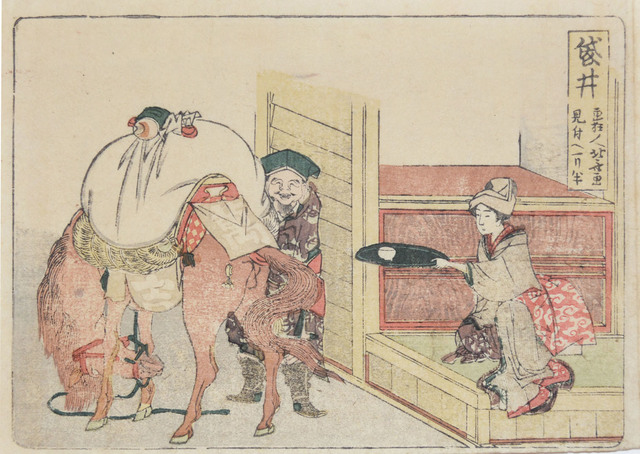
Fukuroi
1804
Japanese woodblock print

The Fishermen of Katase Hauling in Their Nets: The Purple Shell (Murasakigai)
1821
Color woodblock print with metallic pigments; surimono shikishiban

Burdock Root (Kurama gobo), from the series "A Selection of Horses (Uma-zukushi)"
1822
Color woodblock print; shikishiban, surimono
More Landscapes Prints

Lake Kugushi in Wakasa Province (Wakasa Kugushiko), from the series Souvenirs of Travel I (Tabi miyage dai isshu)"
Wakasa Kugushiko
1920
Color woodblock print; oban
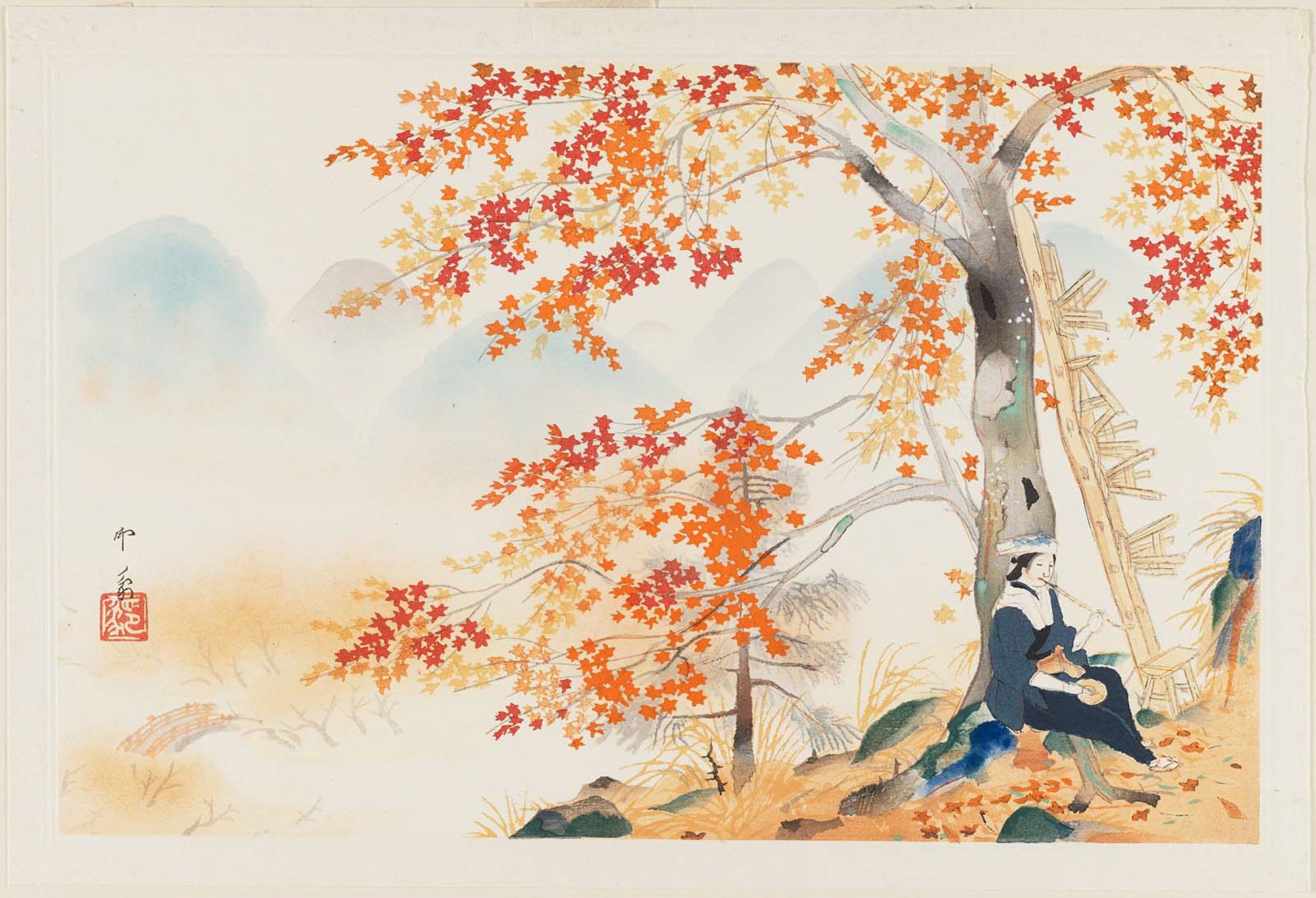
Autumn Maple Leaves at Takao, from the album Eight Views of Kyoto (Kyôto hakkei)
Woodblock print

The Beach at Kaiganji in Sanuki Province (Sanuki Kaiganji no hama), from the series "Collection of Views of Japan II, Kansai Edition (Nihon fukei shu II Kansai hen)"
1934
Color woodblock print; oban

Tea Kettle, section of a sheet from the series "Mirror of Stone Rubbings of Views of the Provinces" (Kohon meihitsu ishizuri kagami)
n.d.
Woodblock print; ishizuri-e, section of harimaze sheet
Featured in Collections
Curated cross-cuts that include this print.
Frequently Asked Questions
Sima Guang and Shibata Katsuie, from the series "Five Sibling Pictures of China and Japan for the Zakurogaki Group (Zakurogaki-ren goban no uchi wakan e-kyodai)" was created by Katsushika Hokusai (葛飾北斎) in 1821.
Sima Guang and Shibata Katsuie, from the series "Five Sibling Pictures of China and Japan for the Zakurogaki Group (Zakurogaki-ren goban no uchi wakan e-kyodai)" depicts landscapes.