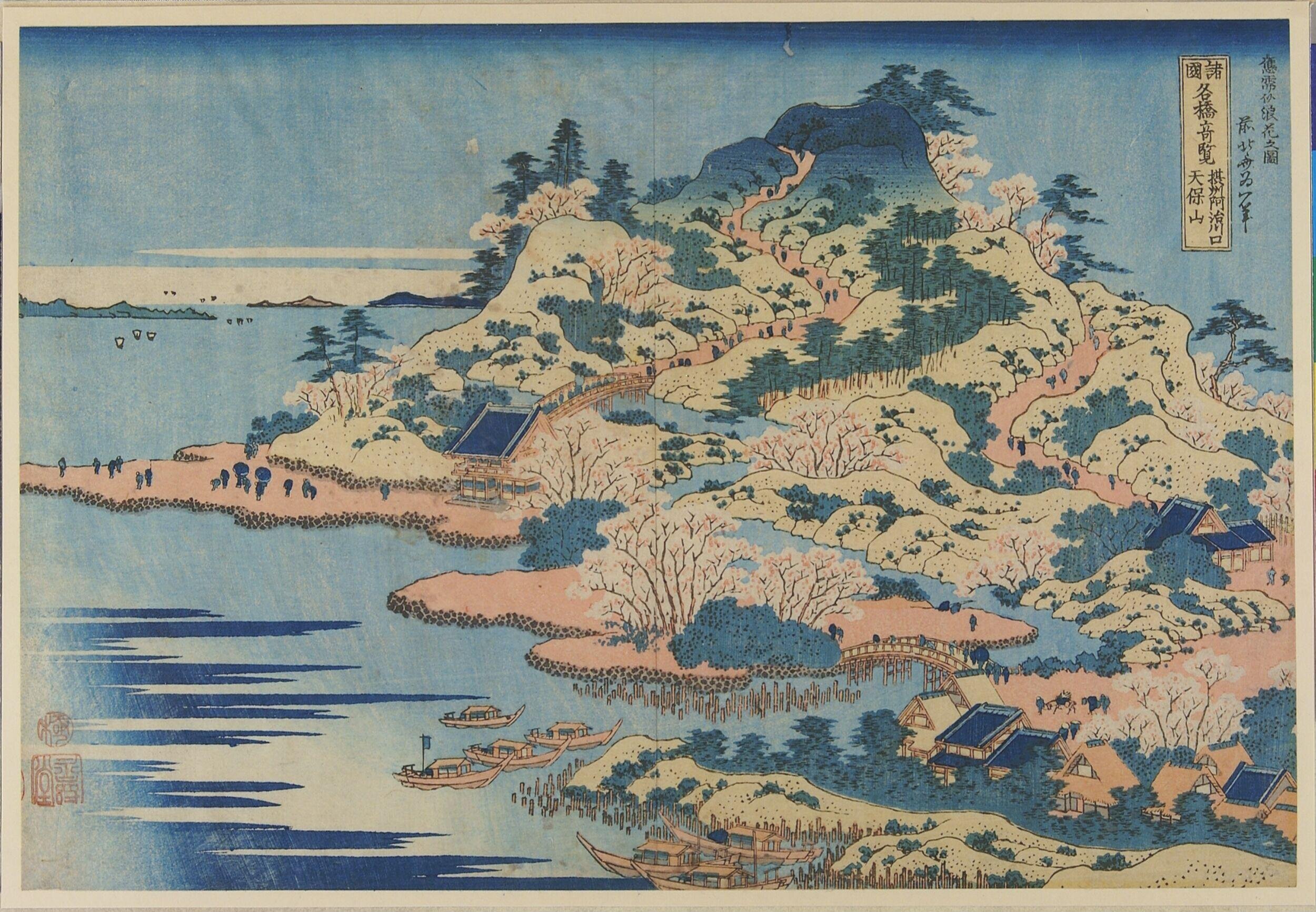
Tenpōzan at the Mouth of the Aji River in Settsu Province (Sesshū Ajikawaguchi Tenpōzan)
- Date:
- ca. 1834
- Medium:
- Source:
- Victoria and Albert Museum
Description
Tenpozan at the Mouth of the Aji River in Settsu Province (Sesshu Ajikawaguchi Tenpozan), produced around 1834, is a design from Katsushika Hokusai's series One Thousand Pictures of the Ocean (Chie no umi) or a closely related coastal sequence and depicts the artificial hill of Tenpozan, raised in 1831 from the silt dredged from the Aji River in present-day Osaka. The new hill rapidly became a famous viewing place for ships entering the busy port of Osaka, and Hokusai uses the high vantage to look out across crowded shipping lanes and the open sea. As a ukiyo-e print, the design balances the documentary impulse of recording a recent civic project with the landscape lyricism that defined his Edo ukiyo-e output of the 1830s. Travellers and dockworkers cluster on the hillside while sailboats fan across the harbour and Prussian blue washes the water and sky. The Victoria and Albert Museum in London preserves an impression of the print, where the publisher's seal and censor marks can be studied alongside the carved water patterns characteristic of late-Edo printing. The image is a valuable record of urban expansion and maritime commerce in nineteenth-century western Japan, as well as a continuation of Hokusai's lifelong fascination with views over water. The V&A holdings make it accessible for comparative study against the Fuji and Bridges series.
More Prints by Katsushika Hokusai
Hokusai manga (Hokusai Sketchbooks)
19th century
Woodblock-printed book; ink and light color on paper
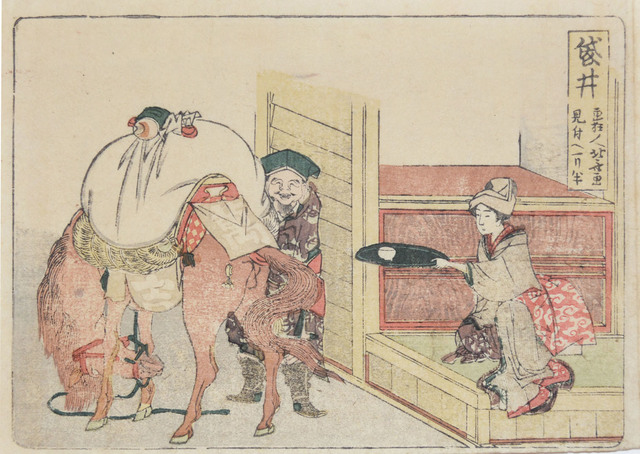
Fukuroi
1804
Japanese woodblock print

The Fishermen of Katase Hauling in Their Nets: The Purple Shell (Murasakigai)
1821
Color woodblock print with metallic pigments; surimono shikishiban

Burdock Root (Kurama gobo), from the series "A Selection of Horses (Uma-zukushi)"
1822
Color woodblock print; shikishiban, surimono
More Landscapes Prints

Lake Kugushi in Wakasa Province (Wakasa Kugushiko), from the series Souvenirs of Travel I (Tabi miyage dai isshu)"
Wakasa Kugushiko
1920
Color woodblock print; oban
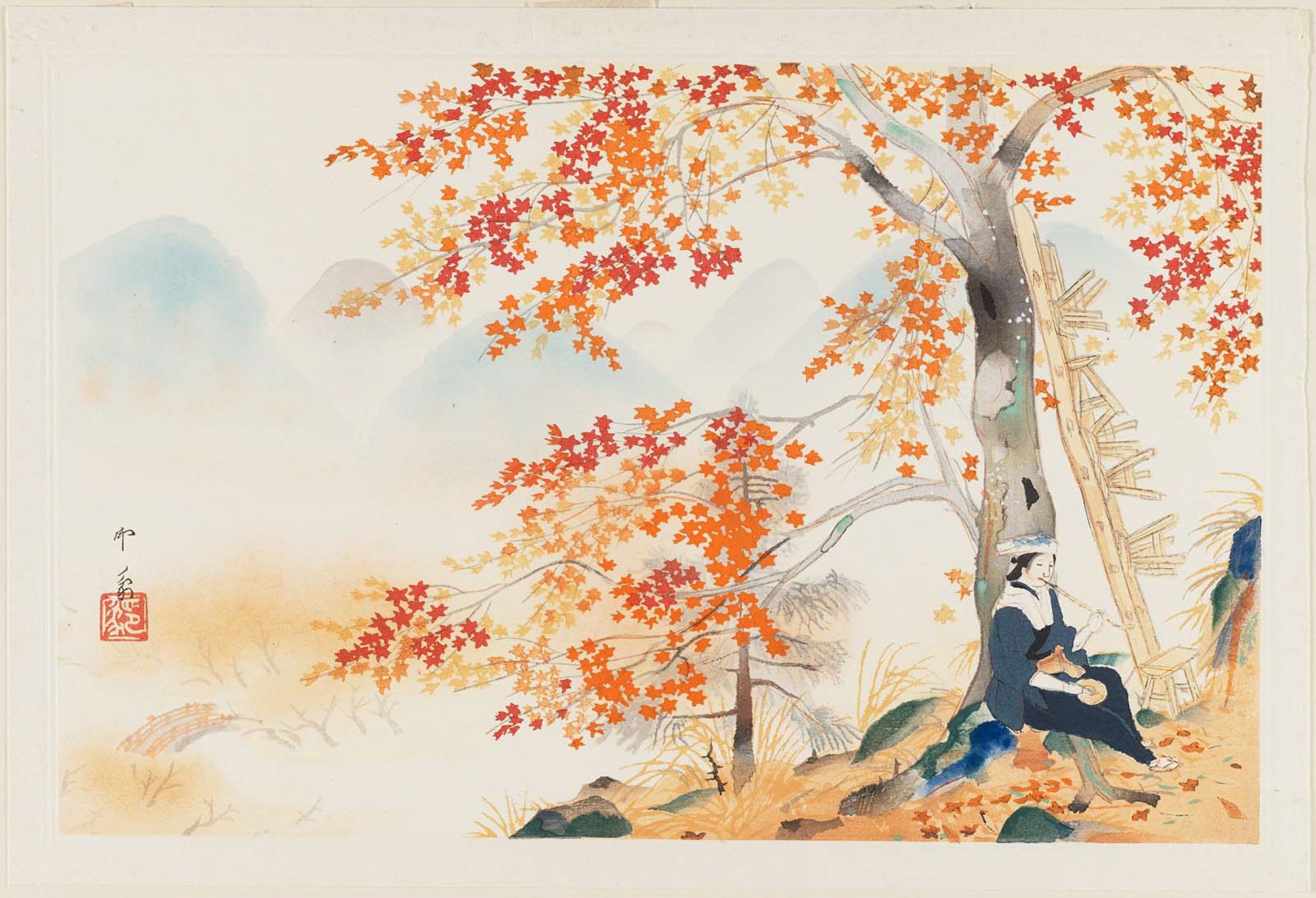
Autumn Maple Leaves at Takao, from the album Eight Views of Kyoto (Kyôto hakkei)
Woodblock print

The Beach at Kaiganji in Sanuki Province (Sanuki Kaiganji no hama), from the series "Collection of Views of Japan II, Kansai Edition (Nihon fukei shu II Kansai hen)"
1934
Color woodblock print; oban

Tea Kettle, section of a sheet from the series "Mirror of Stone Rubbings of Views of the Provinces" (Kohon meihitsu ishizuri kagami)
n.d.
Woodblock print; ishizuri-e, section of harimaze sheet
Featured in Collections
Curated cross-cuts that include this print.
Frequently Asked Questions
Tenpōzan at the Mouth of the Aji River in Settsu Province (Sesshū Ajikawaguchi Tenpōzan) was created by Katsushika Hokusai (葛飾北斎) in ca. 1834.
Tenpōzan at the Mouth of the Aji River in Settsu Province (Sesshū Ajikawaguchi Tenpōzan) depicts landscapes.