
The gods of fortune Ebisu and Daikoku
- Date:
- 1797
- Medium:
- Color woodblock print; surimono, egoyomi
- Format:
- Oban
- Source:
- Art Institute of Chicago
Description
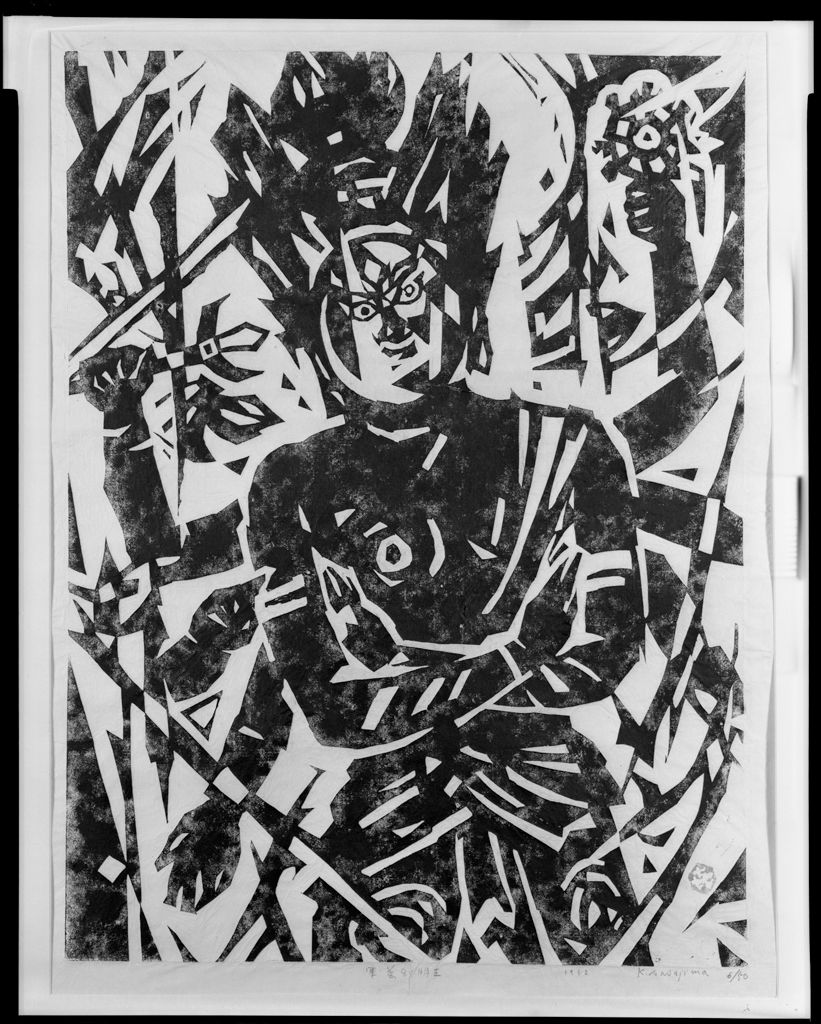
Ebisu, the smiling god of fishermen and commerce, and Daikoku, the rotund deity of wealth and agriculture, appear together as a pair of the Seven Lucky Gods (Shichifukujin) in this surimono from 1797. Issued as an egoyomi — a pictorial calendar whose month-day sequence is embedded within the image — the print served both as a New Year's gift and a witty visual puzzle for the initiated.
More Prints by Katsushika Hokusai
Hokusai manga (Hokusai Sketchbooks)
19th century
Woodblock-printed book; ink and light color on paper
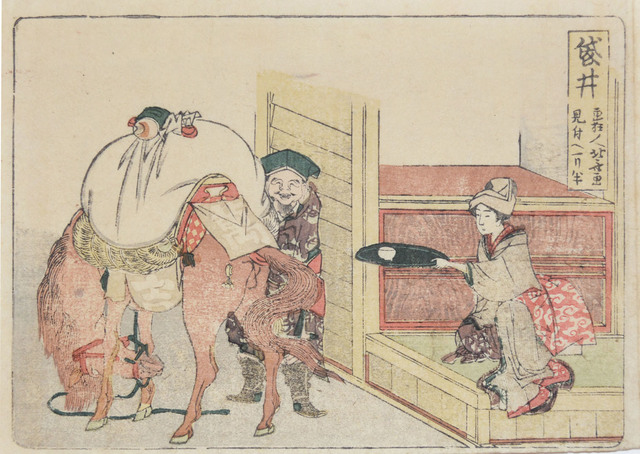
Fukuroi
1804
Japanese woodblock print

The Fishermen of Katase Hauling in Their Nets: The Purple Shell (Murasakigai)
1821
Color woodblock print with metallic pigments; surimono shikishiban

Burdock Root (Kurama gobo), from the series "A Selection of Horses (Uma-zukushi)"
1822
Color woodblock print; shikishiban, surimono
More Figures Prints
Featured in Collections
Curated cross-cuts that include this print.
Frequently Asked Questions
The gods of fortune Ebisu and Daikoku was created by Katsushika Hokusai (葛飾北斎) in 1797.
The gods of fortune Ebisu and Daikoku depicts figures, religious, and mythology.