Japanese Ghost and Yōkai Prints
幽霊・妖怪
Ghosts (yūrei) and supernatural creatures (yōkai) constitute a major genre of Japanese woodblock printing, particularly in the late-Edo and early-Meiji period. Tsukioka Yoshitoshi's 'New Forms of Thirty-Six Ghosts,' Utagawa Kuniyoshi's bakeneko cats, and Hokusai's 'Hundred Tales' are the genre's defining works.
About This Collection
Japanese supernatural printmaking has its own taxonomy. Yūrei (幽霊) are the spirits of the dead — typically depicted as legless, white-clad female figures with disordered black hair, haunting either the living who wronged them or the locations of their death. Yōkai (妖怪) are a broader category: monsters, shape-shifters, animal spirits, demons, and the ambiguous beings of folk belief. Both gained particular prominence in late-Edo and early-Meiji ukiyo-e as kabuki ghost plays drew large urban audiences and as Western contact created new appetites for distinctively Japanese subject matter.
Tsukioka Yoshitoshi (1839–1892) is the genre's defining figure. His 'New Forms of Thirty-Six Ghosts' (Shinkei sanjūrokkaisen, 1889–1892) — produced in the final years of his life and during periods of severe mental illness — combine technical virtuosity with psychological intensity unmatched in Japanese printmaking. The series depicts ghosts and supernatural figures from Japanese and Chinese literature with the careful attention to historical costume, anatomy, and dramatic lighting that characterised Yoshitoshi's mature work.
Earlier and contemporary work covers similar ground from different angles. Utagawa Kuniyoshi produced extensive bakeneko (monster cat) and yōkai prints, often with political satire embedded. Hokusai's 'Hundred Tales' (Hyaku monogatari) treats the formal ghost-story tradition in supernatural-print form. Kawanabe Kyōsai's late-Meiji yōkai works extend the genre into the modern period. This collection gathers the Hanga catalogue's holdings across all of these strands.
Prints in This Collection (60)
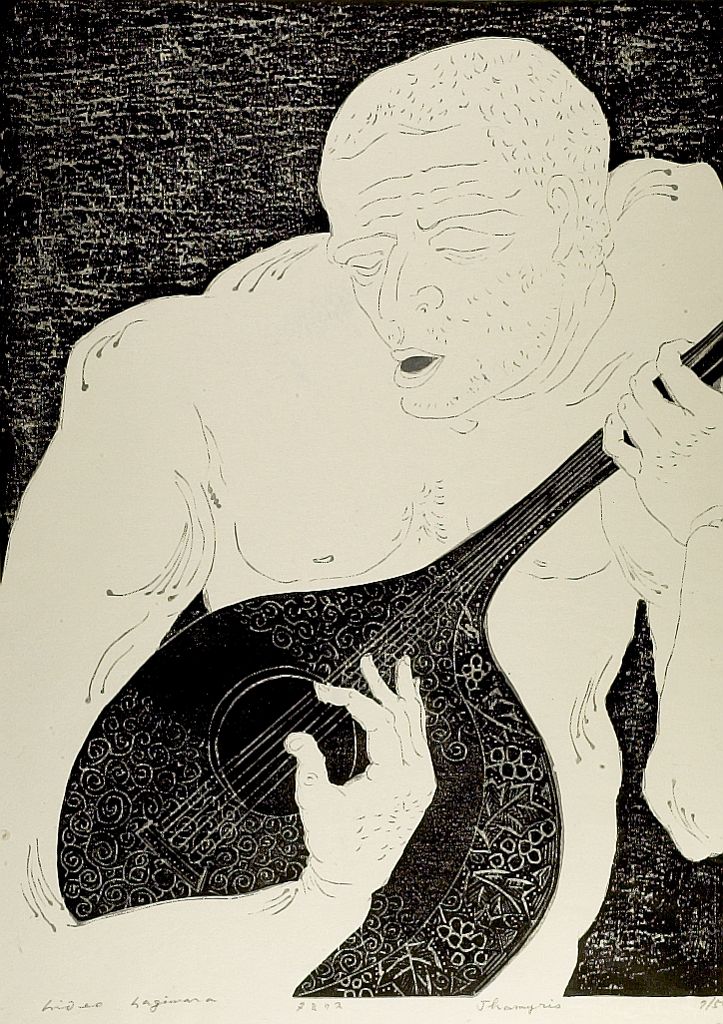
Shamyris, Shôwa period, dated 1965?
Woodblock print

Arugori; Koronbusu no tamago (Allegory: Columbus's Egg) / Ichimoku-shu (First Thursday Collection, Vol 4)
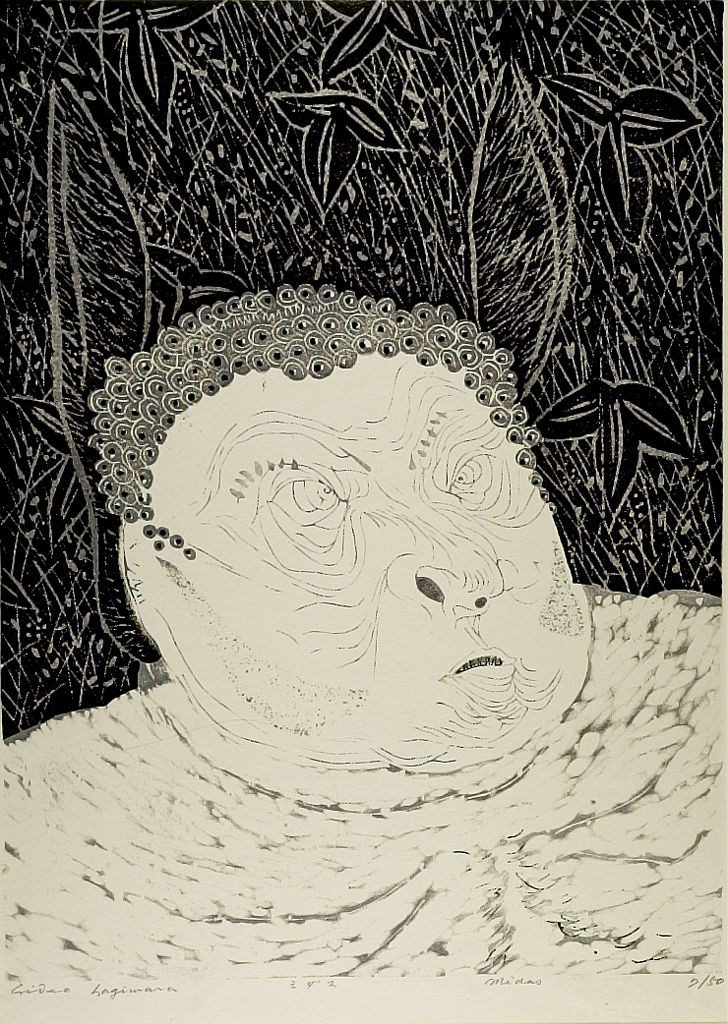
Midas, Shôwa period, dated 1965?
Woodblock print
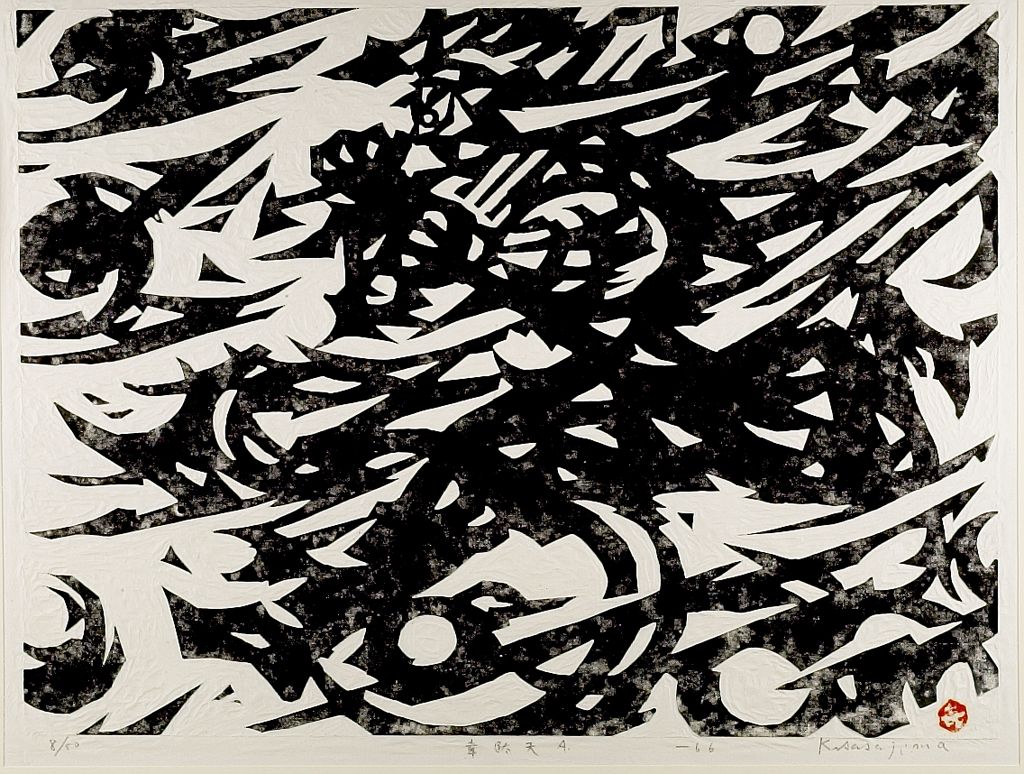
Windy Deity, Shôwa period, dated 1966
Woodblock print
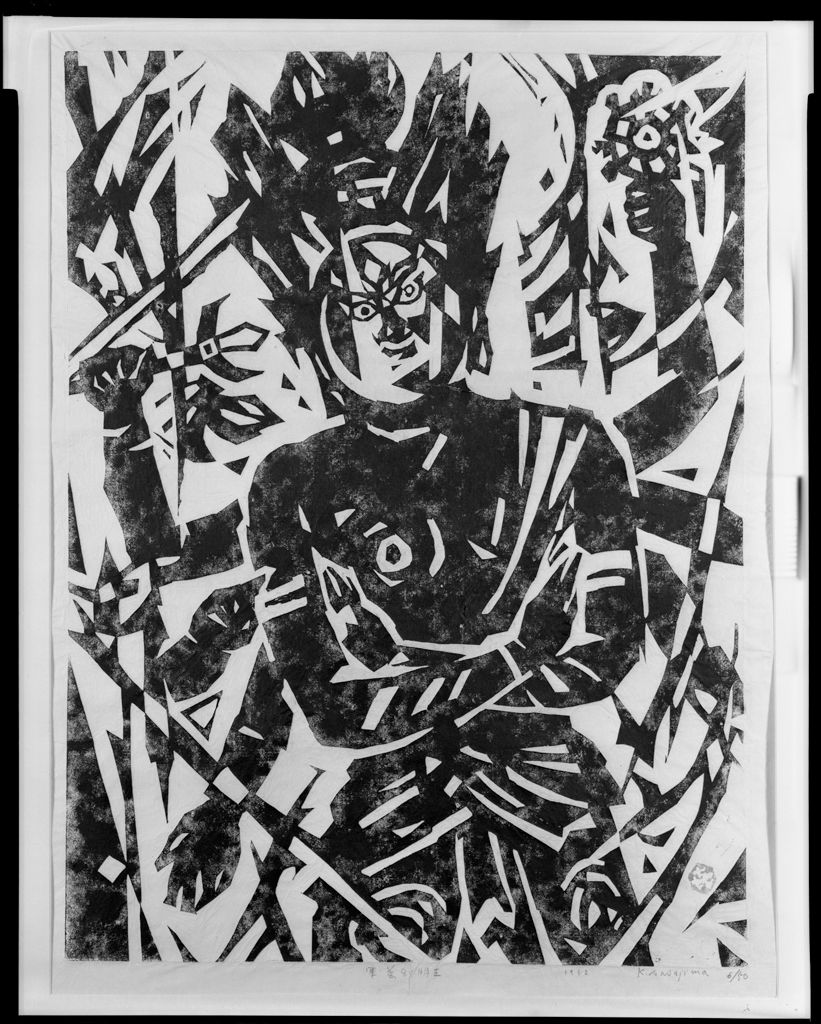
Gundari Myôô, Shôwa period, dated 1962
Woodblock print
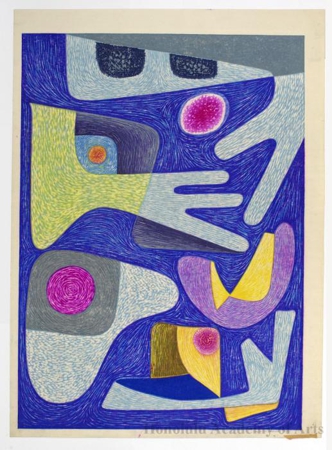
Ghost Story
Woodblock print
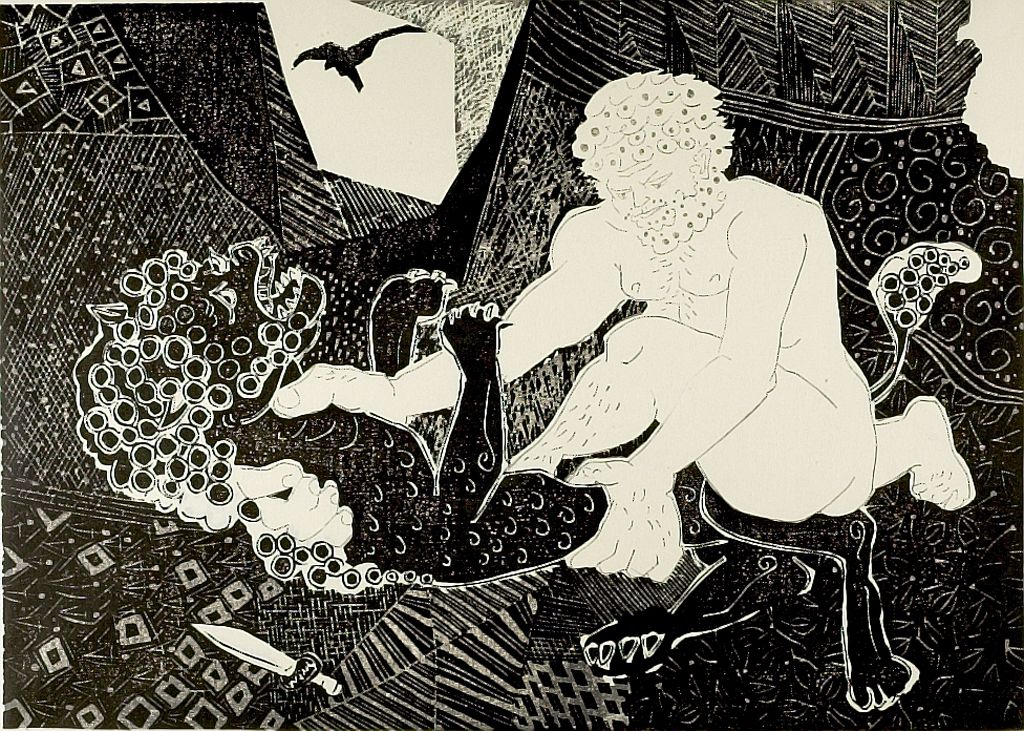
Herakles, Shôwa period, dated 1965?
Woodblock print
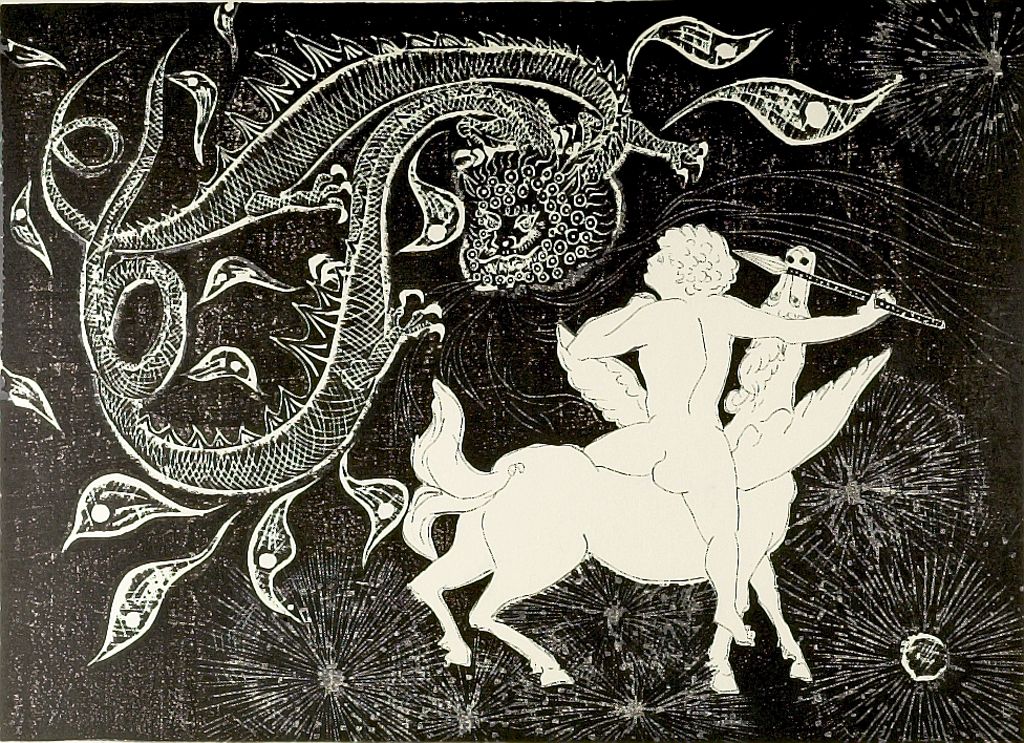
Bellerophon, Shôwa period, dated 1965?
Woodblock print
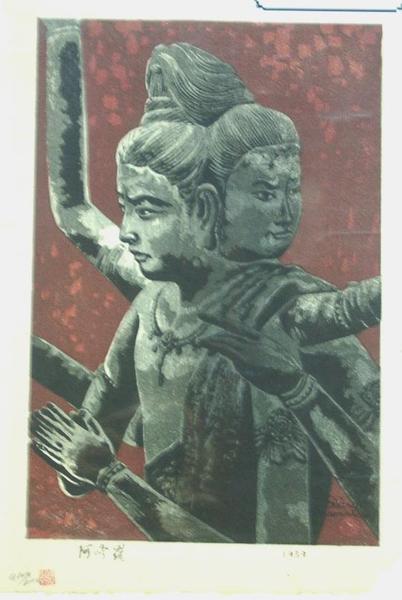
Three-Headed Deity In Ashura Temple
Woodblock print

Guardian Deity
1964
Stencil on paper
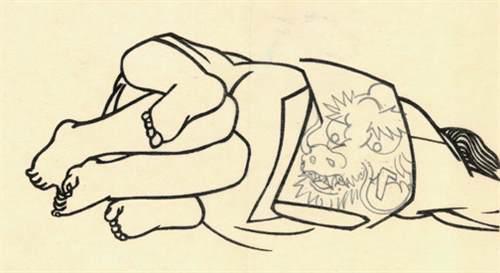
Zodiac Series of Erotica: Dragon
Showa - Contemporary 1970's
Drawing
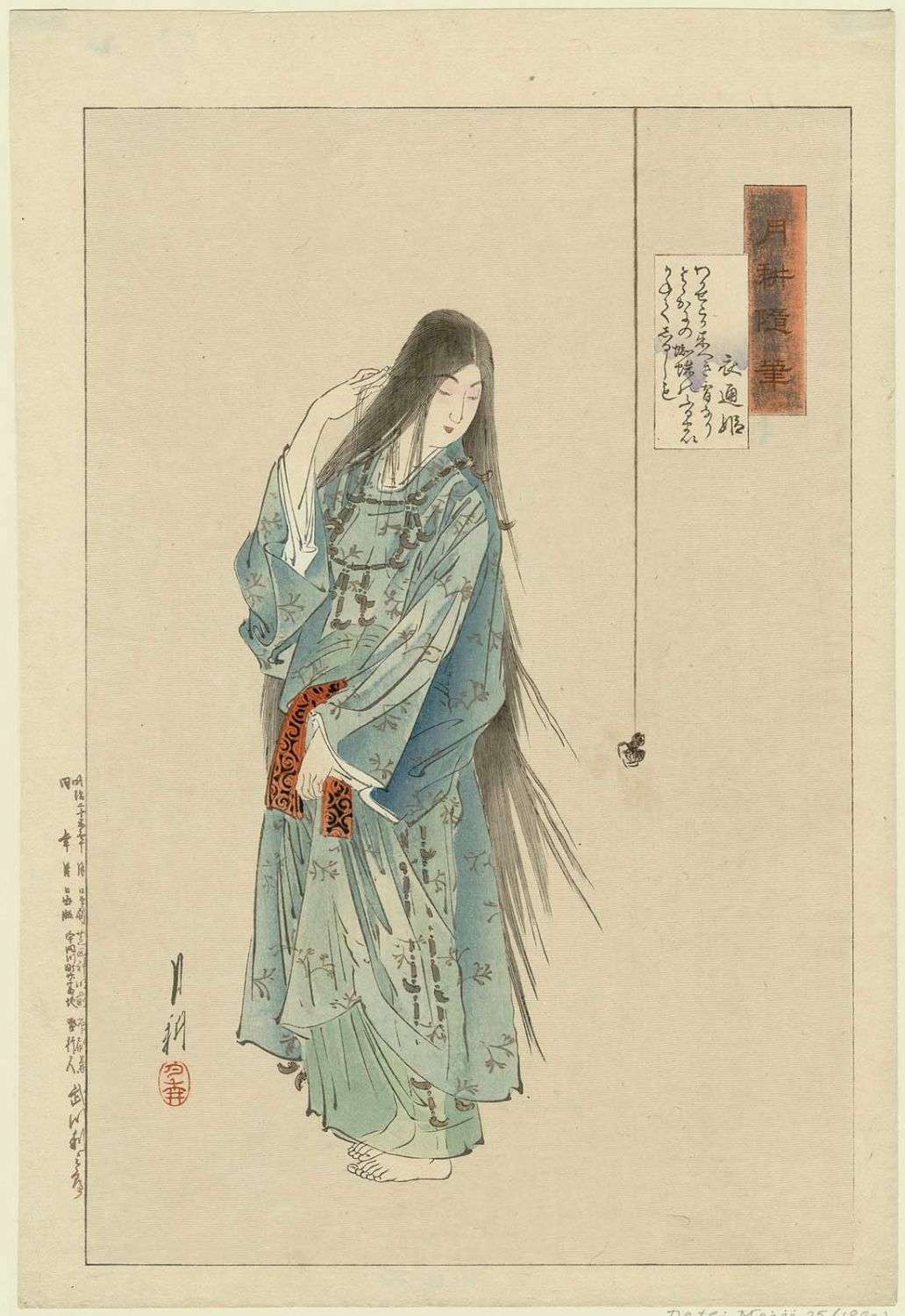
Princess Sotoori (Sotoori-hime), from the series Sketches by Gekkô (Gekkô zuihitsu)
Woodblock print
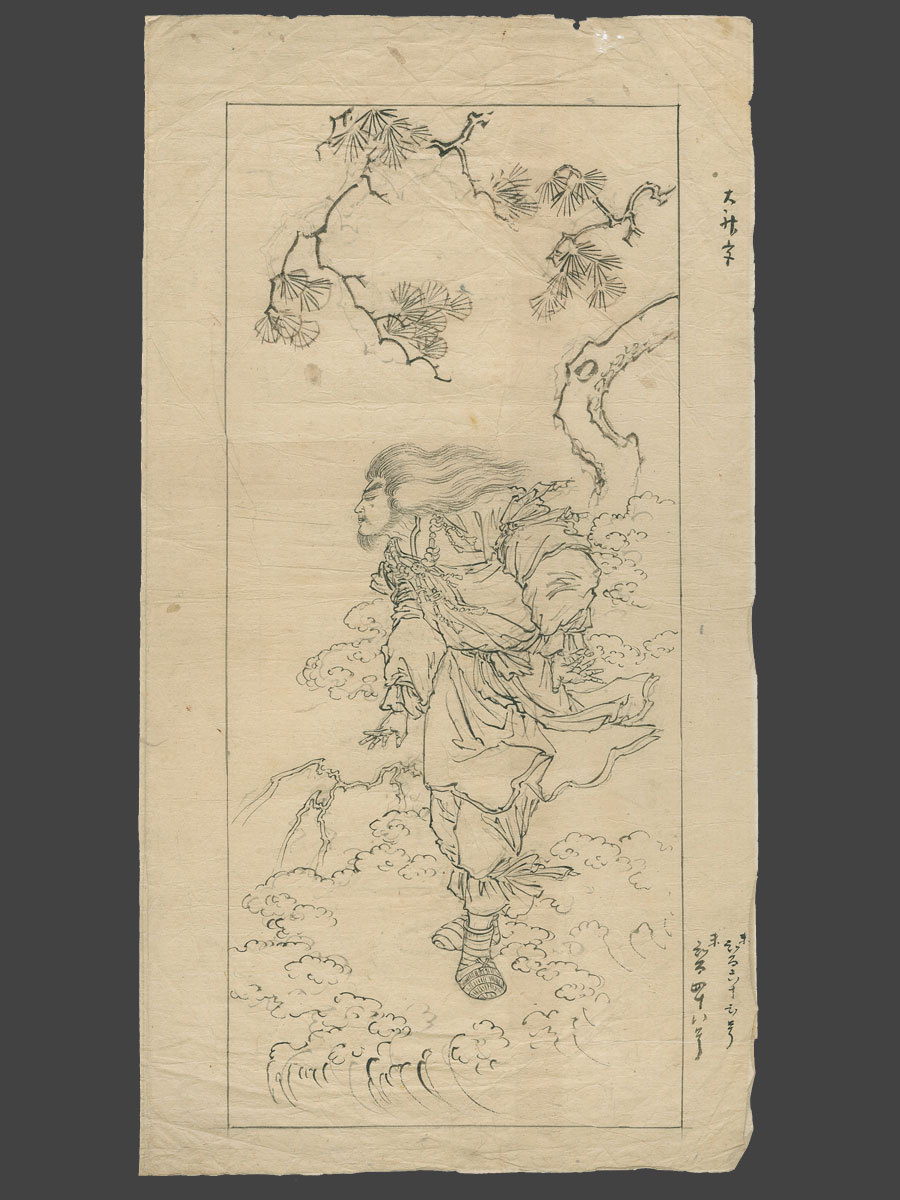
"Susano-o no Mikoto, Shinto's Mythical Ruler of the Tides"
Woodblock print
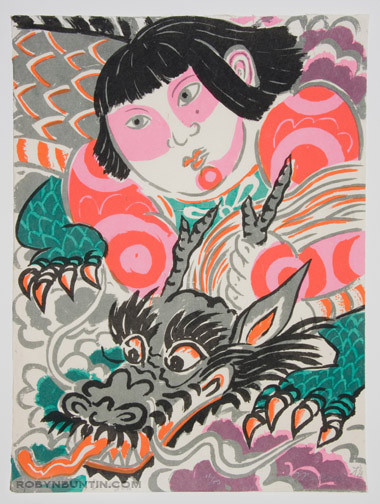
Girls Kite, Dragon (11/50)
Woodblock print
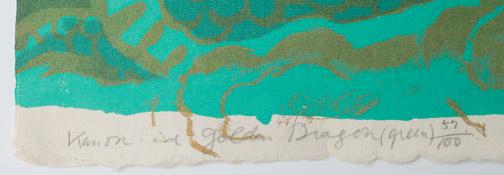
Kannon and Golden Dragon, Green (57/100)
Woodblock print
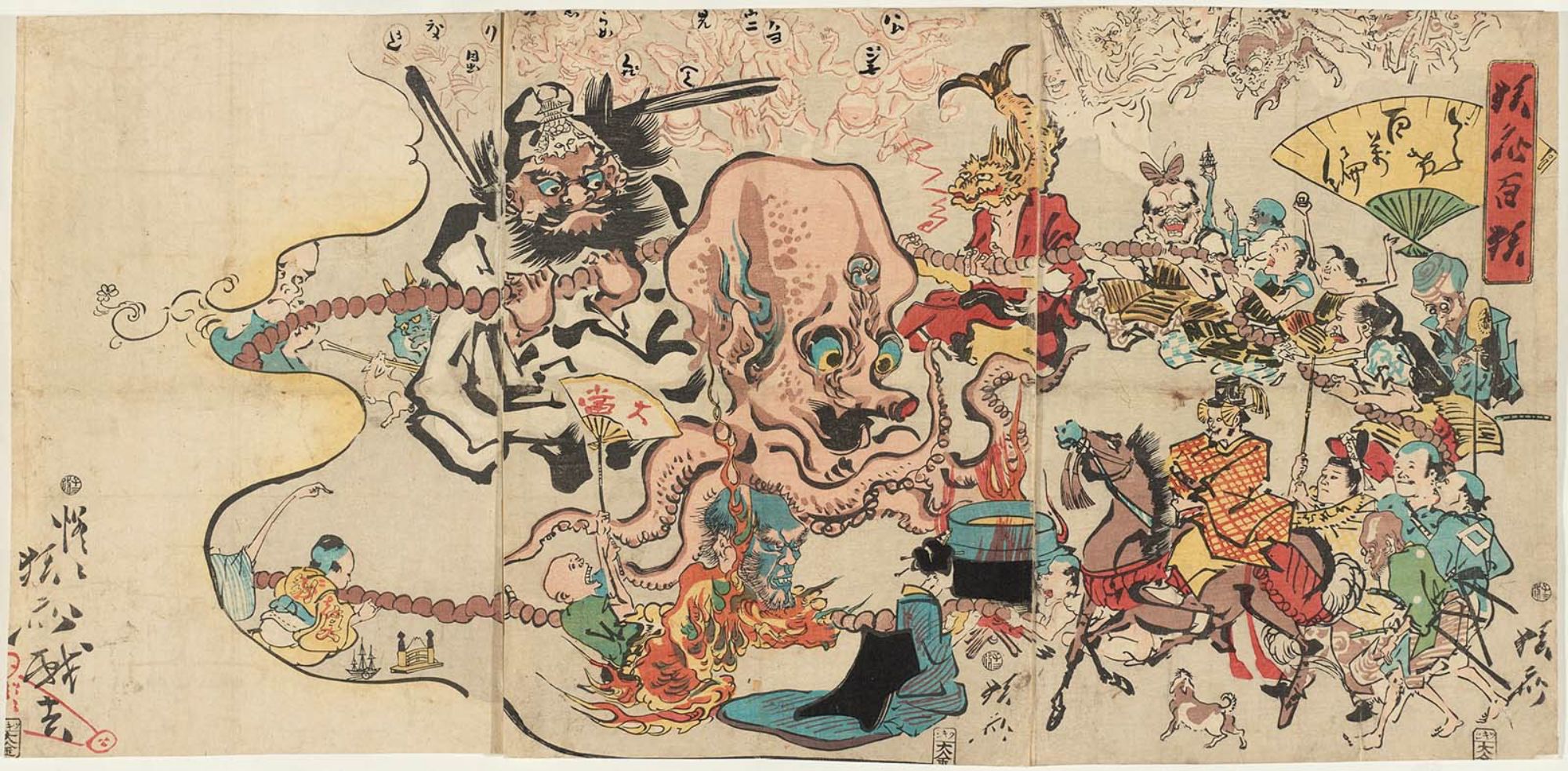
Comic One Hundred Turns of the Rosary (Dôke hyakumanben), from the series One Hundred Wildnesses by Kyôsai (Kyôsai hyakkyô)
Woodblock print
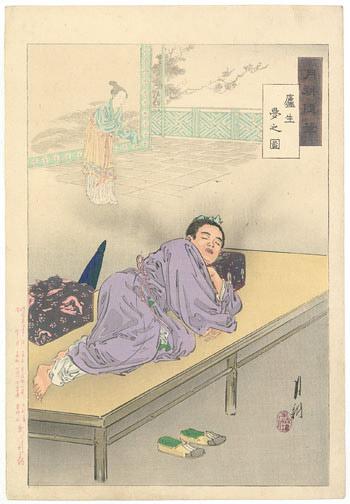
"Rosei's Dream"
Woodblock print
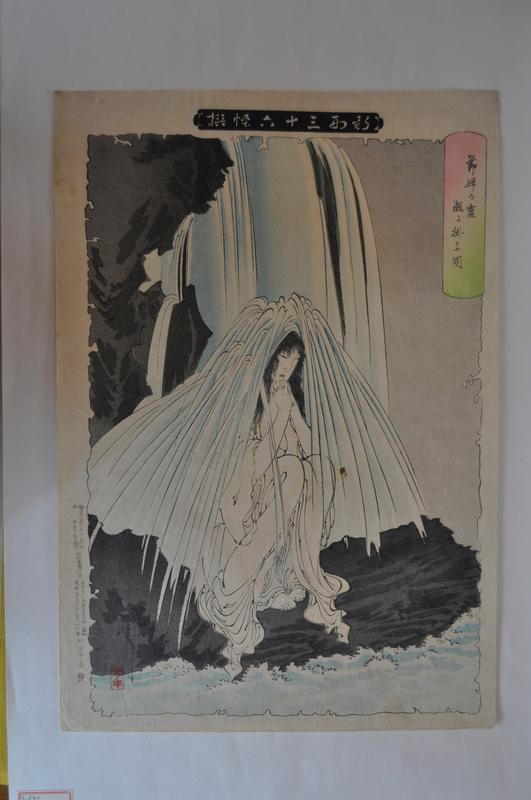
Spirit of a Faithful Wife in a Waterfall
1892
Woodblock print (nishiki-e), ink and color on paper
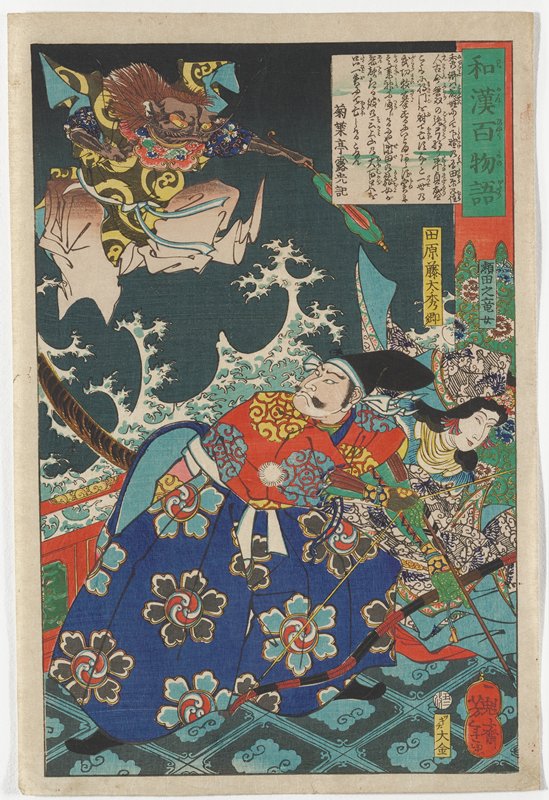
Tawara Tōda Hidesato and the Dragon Woman of Seta
1865, 2nd lunar month
Woodblock print (nishiki-e), ink and color on paper

Female Samurai Ghost
Woodblock print
Demon in Disguise as an Old Woman Fleeing with a Severed Arm (Rōba kiwan o mochisaru zu), from the series New Forms of Thirty-Six Ghosts (Shinkei sanjūroku kaisen)
1889
Woodblock print (nishiki-e); ink, color and gauffrage on paper

No. 2: Ushiwakamaru Learns Swordsplay from the Tengu at Sojogatani on Mount Kurama (Nikai, Kuramayama Sojogatani ni oite Ushiwakamaru ijin yori kenpo o manabu), from the series "The Life of Yoshitsune (Yoshitsune ichidai zue)"
c. 1832/34
Color woodblock print; oban
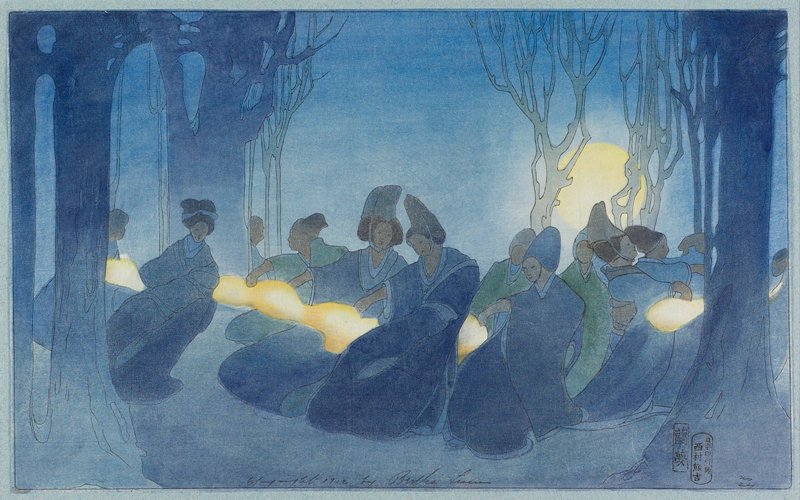
Goblin Dance
1912
Color woodcut

Kimono—Shishi to Ryu (Lion and Dragon)
2012
Mezzotint diptych
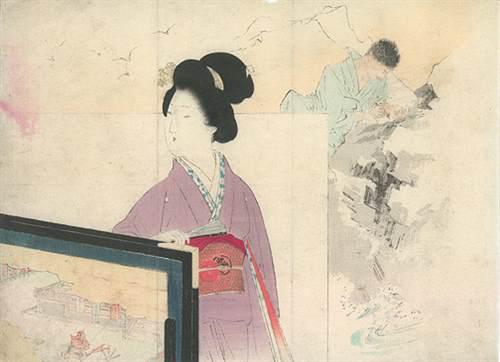
Water Dragon Chronicle
Woodblock print

Oni No Mamako, from the series "Fifty Kyogen Plays (Kyogen gojuban)"
1927 (Published)
Color woodblock print
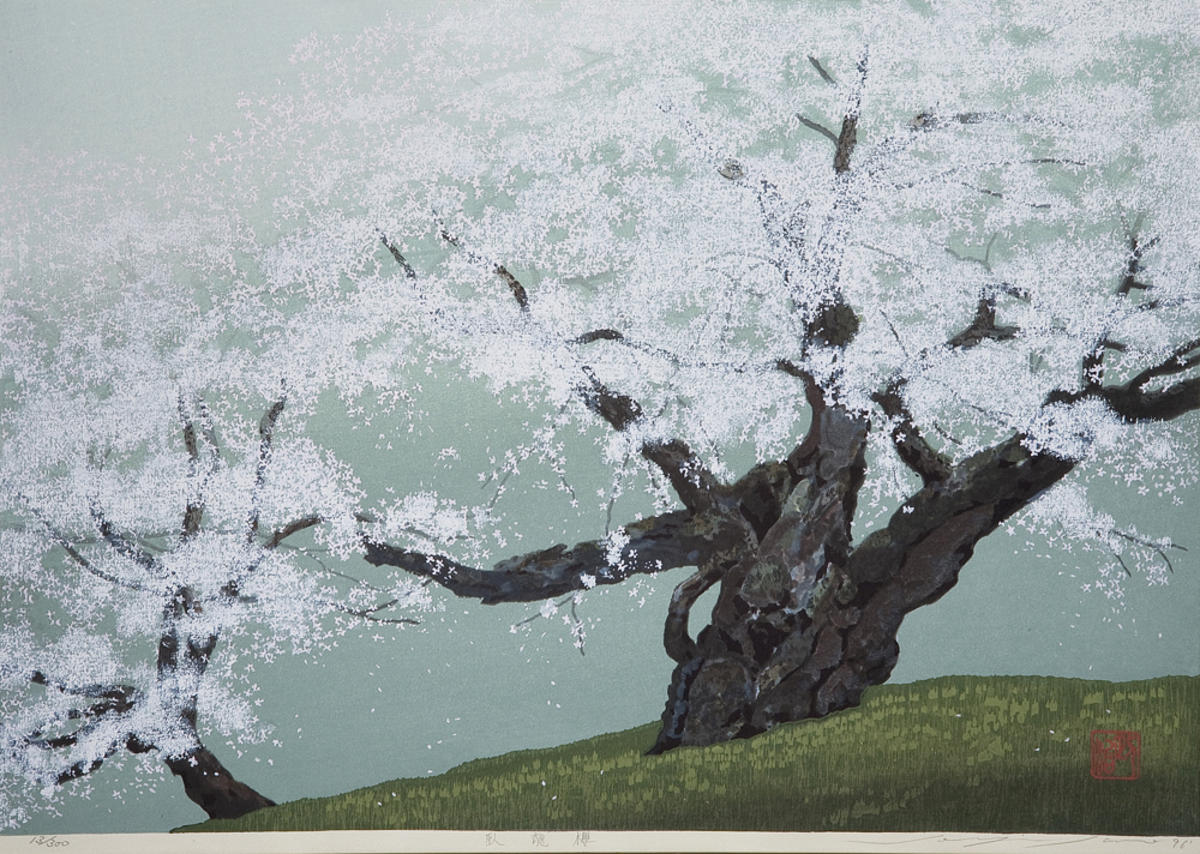
Lying Dragon Sakura — 臥龍桜
1996
Woodblock print

Mitate No.83 - Word Spirit (Kotodama)
2007

Phoenix Hall, Byodo Temple, Udi, from the series "Collection of Scenic Views of Japan II, Kansai Edition" (Nihon fukei shu II Kansai hen, Uji Byodoin Hoodo)
September 1933
Color woodblock print

Deity in Chinese Dress
1945 L
Woodblock print
Myth (Expression of the Sea)
1946
Woodblock print; ink and colors printed on paper; with artist’s stamp reading "Onzi" impressed in black ink within the image (in the lower left corner)
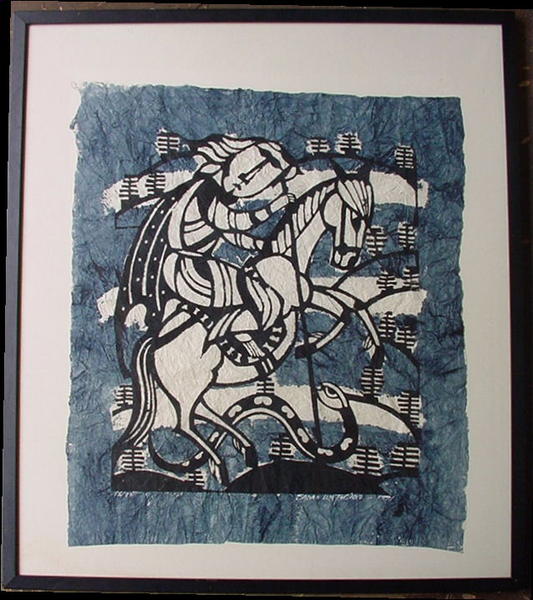
Saint George and the Dragon
Woodblock print
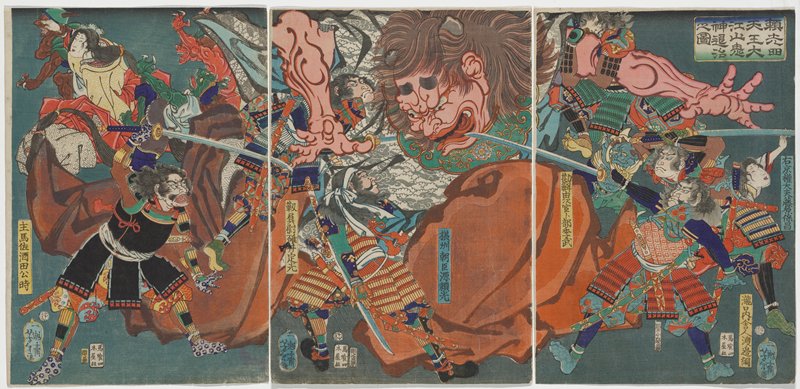
Picture of Raikō and his Four Companions Conquering the Demon of Mount Ōe
1864, 10th lunar month
Woodblock print (nishiki-e), ink and color on paper

Picture of Shōki Capturing a Demon in the Dream
1890
Woodblock print (nishiki-e), ink and color on paper

Supernatural Beings at Shirazunoyabu in Yawata
1881
Color woodblock print

The Ghost of Genji's lover
19th century

Urashima Taro Returning Home from the Palace of the Dragon King (Urashima Taro no ko kikoku ju Ryugujo no zu)
1886
Color woodblock print; oban diptych
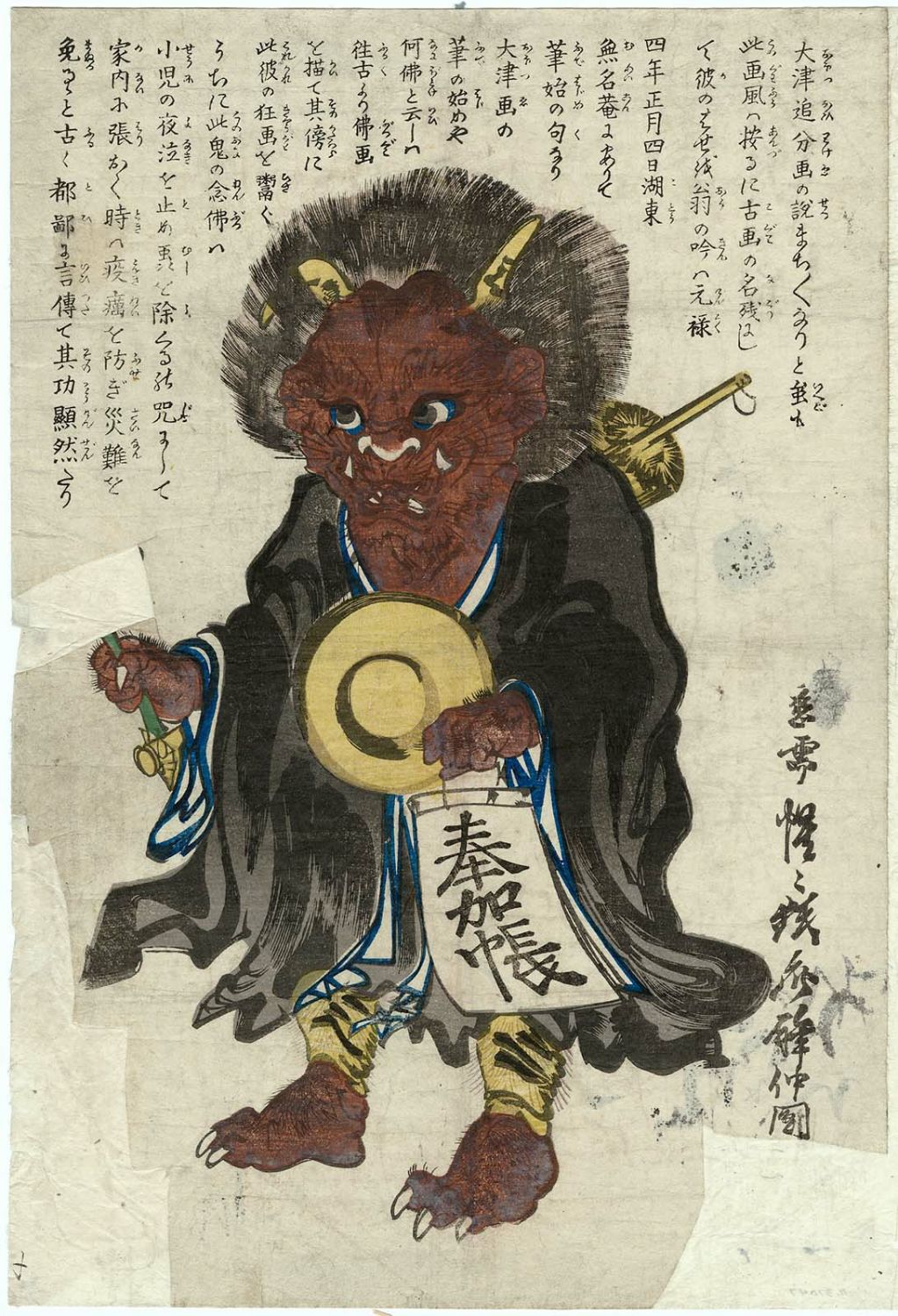
Ôtsu-e Figure: Demon Converted to Buddhism (Oni no nenbutsu)
Woodblock print

Design for the songlet Dragon Gorges
c. 1930
Woodblock print, ink and color on paper
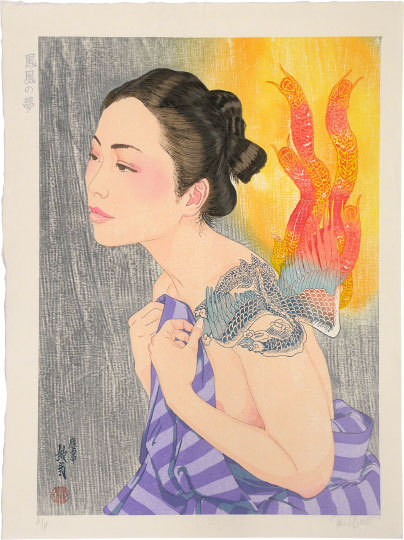
Phoenix Dream (Ho-o no yume)
Woodblock print
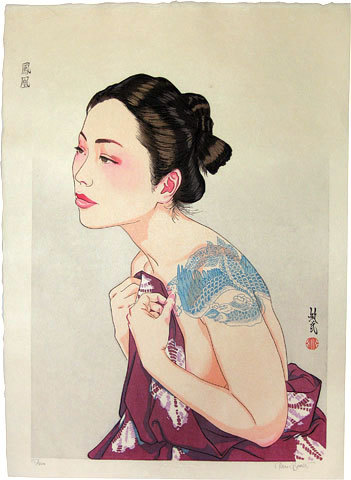
Phoenix (Ho-o)
Woodblock print
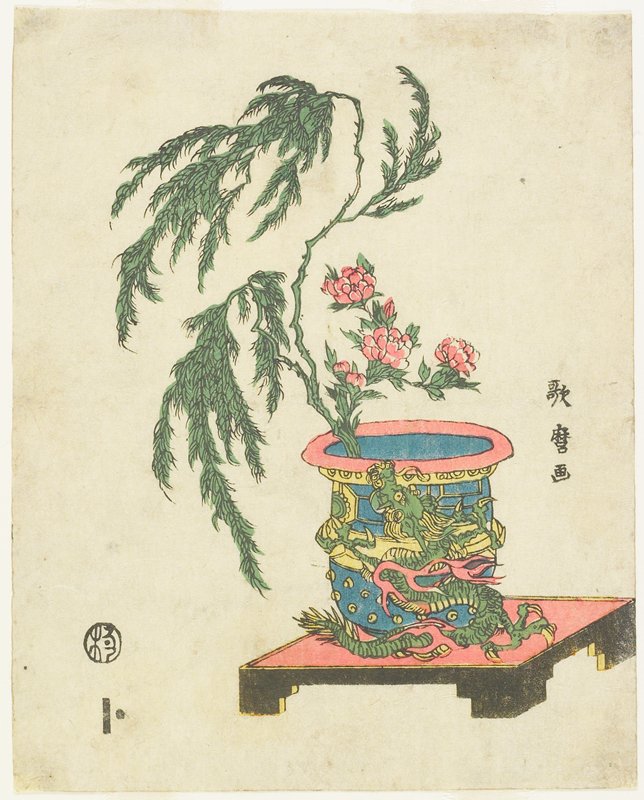
Ikebana arrangement of Peony and Willow in Dragon Pot
1781–1806
Woodblock print (nishiki-e), ink and color on paper
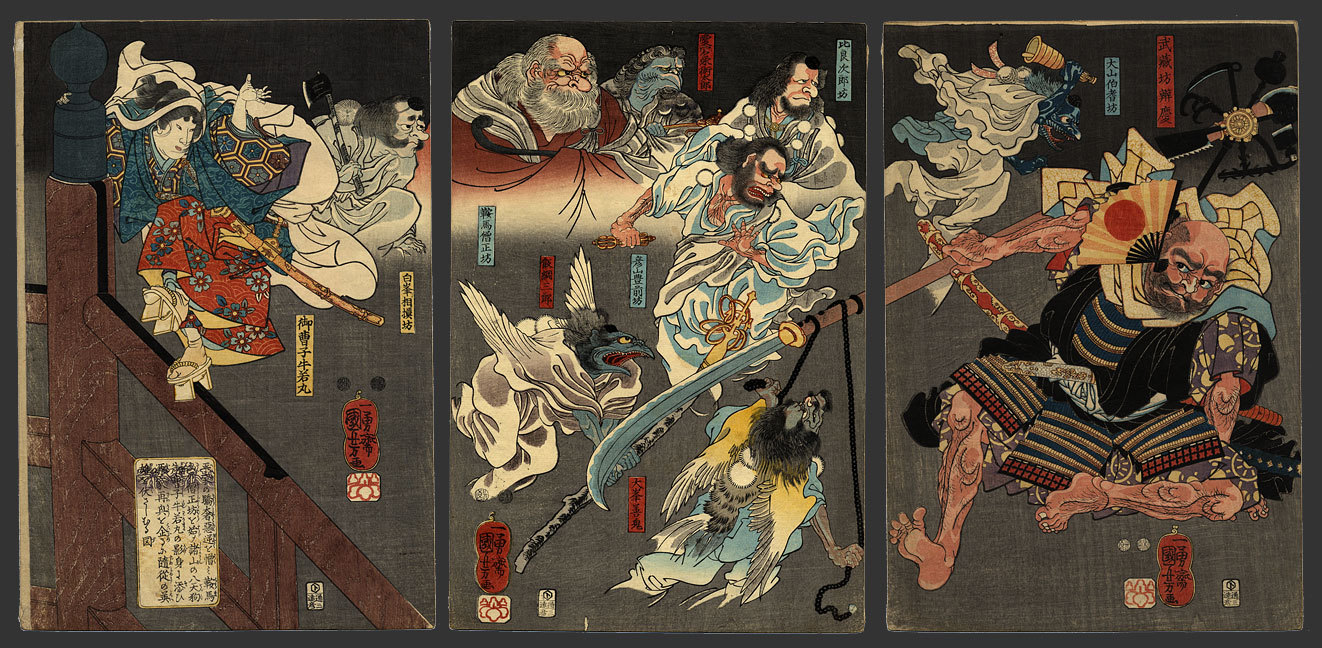
Discomfiture of Benkei on Gojo Bridge by Yoshitsune, assisted by the Tengu
Woodblock print
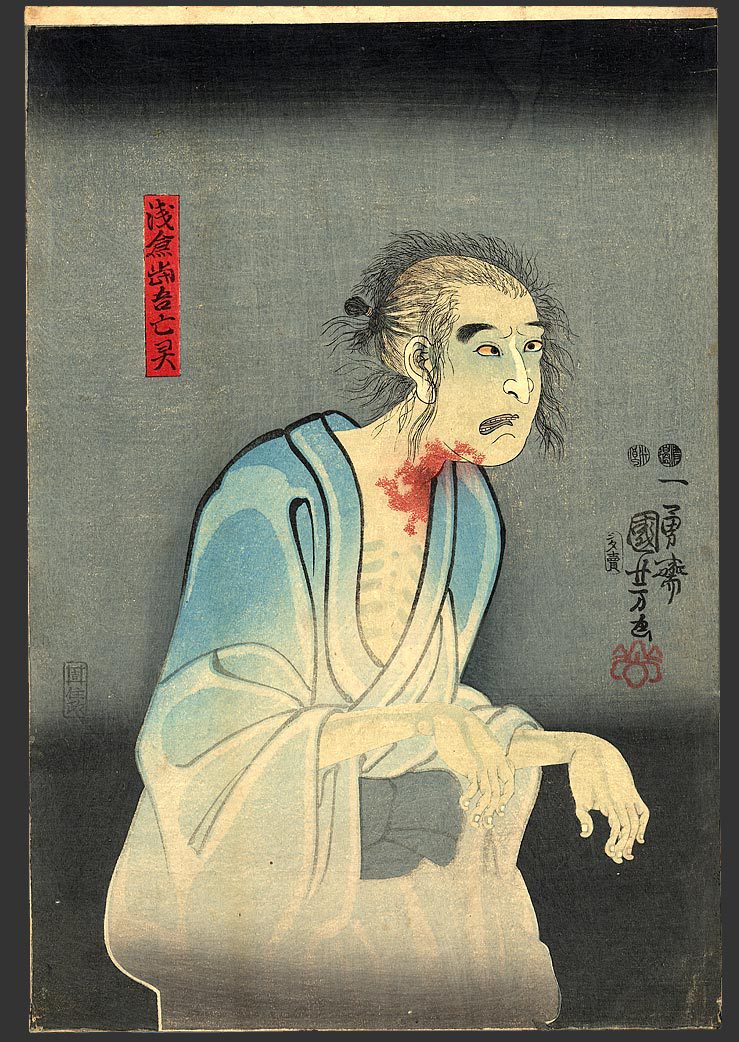
Ichikawa Kadanji IV as the ghost of Sakura Sogoro
Woodblock print
Kohada Koheiji Konoshiro Tomobei kataki uchi maboroshi sōshi (Ghost Story of Konoshiro Tomobei), draft and printed edition
Edo period, 1812 and 1845
Pair of books: draft and printed edition; ink and light color on paper

Nitta Tadatsune Encounters the Goddess of Mt. Fuji and Her Dragon in Her Cave on Mt. Fuji.
Woodblock print
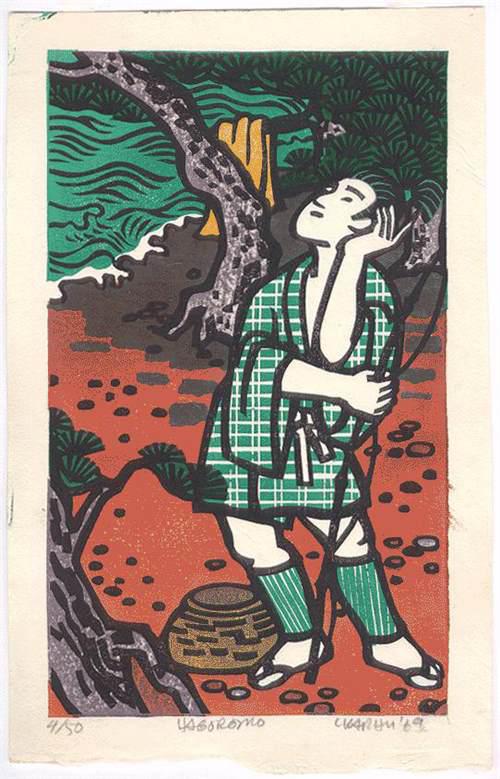
Hagoromo
Contemporary - 1969
Woodblock print
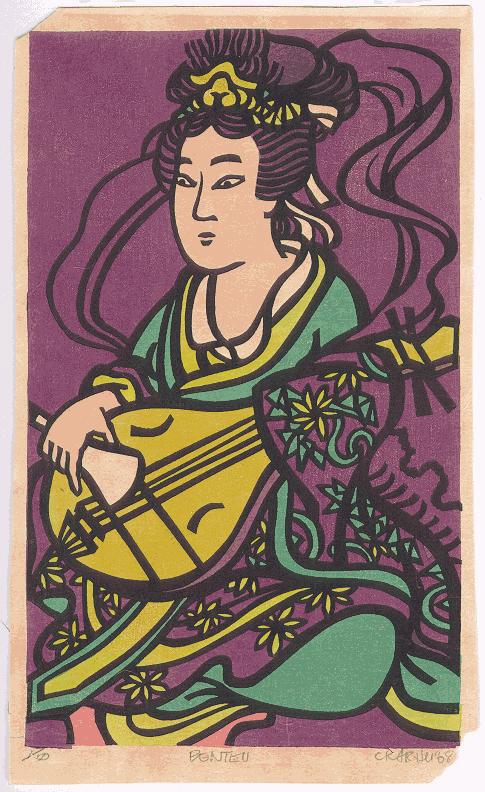
Benten (One of the Seven Gods of Happiness)
Contemporary - 1968
Woodblock print
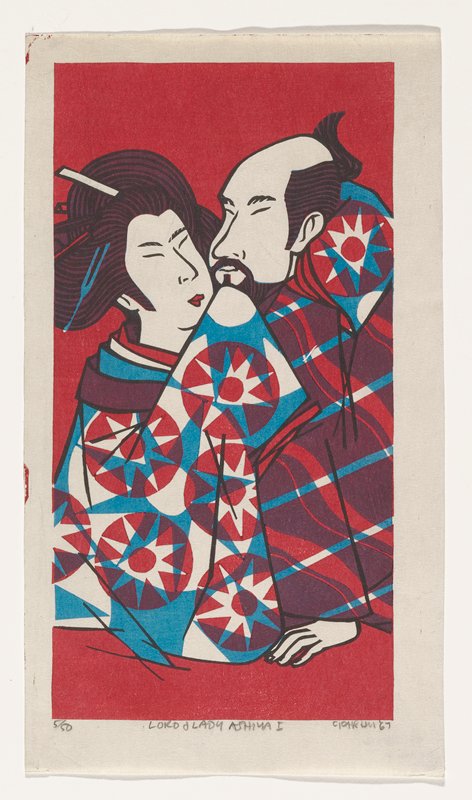
Lord and Lady Ashiya I
1967
Woodblock print, ink and color on paper
Once Upon a Time (Mukashi mukashi)
Woodblock print

Heroine Toragozin in SOGA
Woodblock print
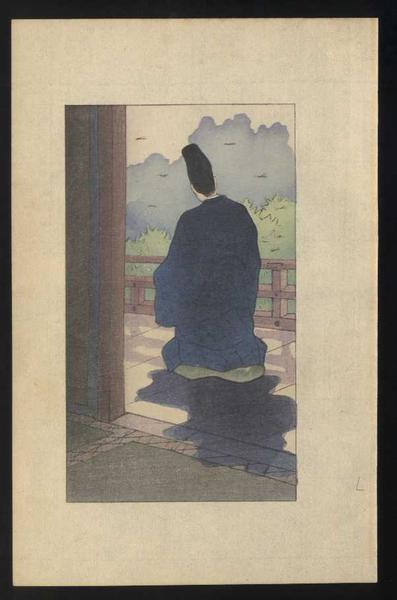
Genji Monogatari
Woodblock print
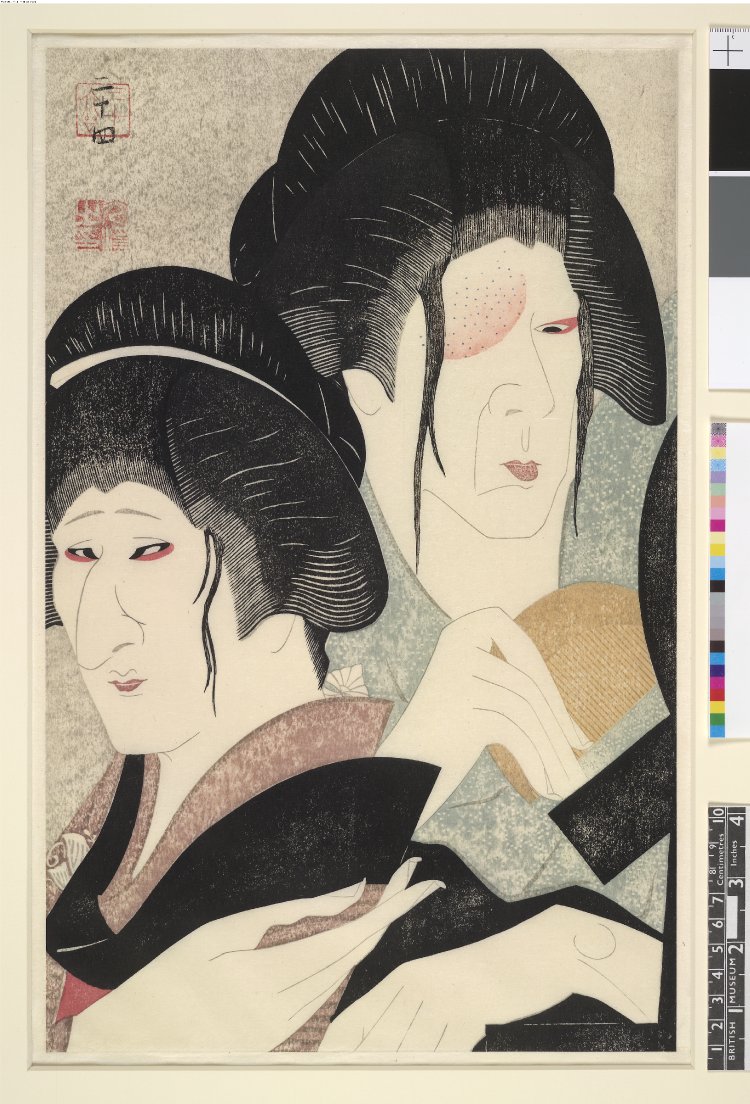
Yotsuya kaidan
June 1983
Woodblock print

The gods of fortune Ebisu and Daikoku
1797
Color woodblock print; surimono, egoyomi

Illustration of The Bluebell (Asagao), Chapter 20 of the Tale of Genji (Genji monogatari)
19th century
Almost looks like a painting/drawing

Yang Kuei Fei
1978
Color woodblock print

Parody of the play "Musume Dojoji"
c. 1801/05
Color woodblock print; kokonotsugiri-ban, surimono
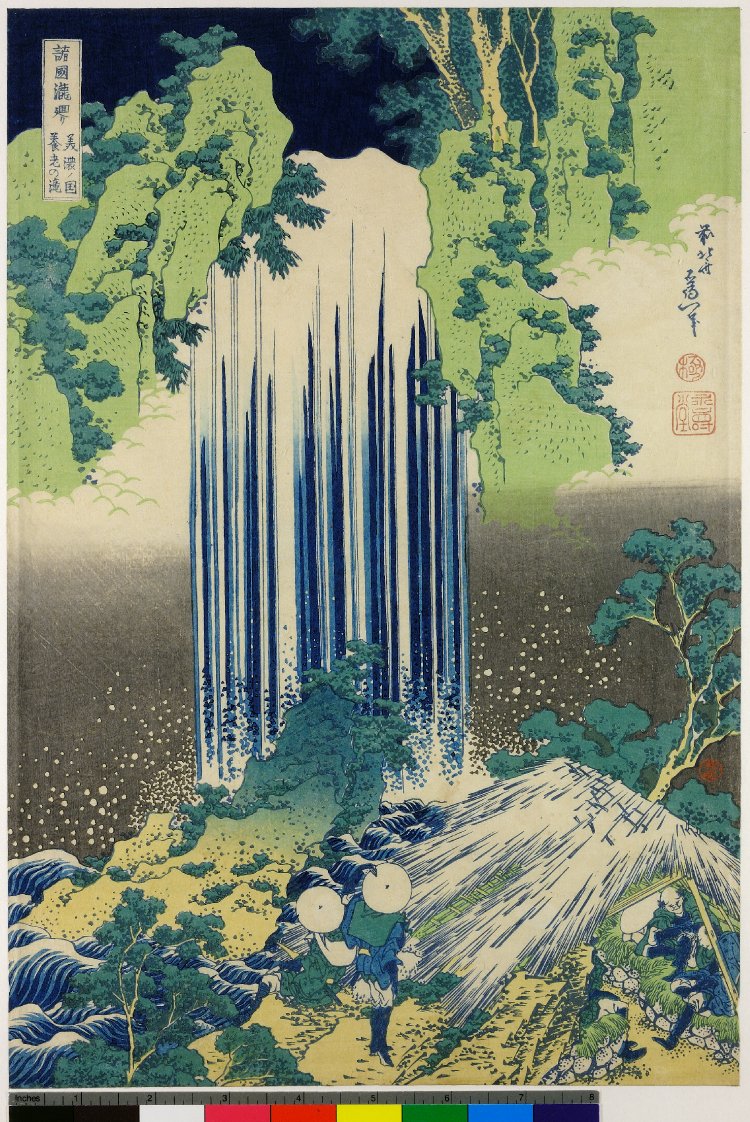
Mino-no-kuni Yoro-no-Taki 美濃ノ国養老の瀧 / Shokoku Taki-meguri 諸国瀧廻り
Woodblock print

Flying Over the Mountains (Yamagoe), from the series "The Tale of the Auklet (Uto Hanga-kan)"
1960
Woodblock print
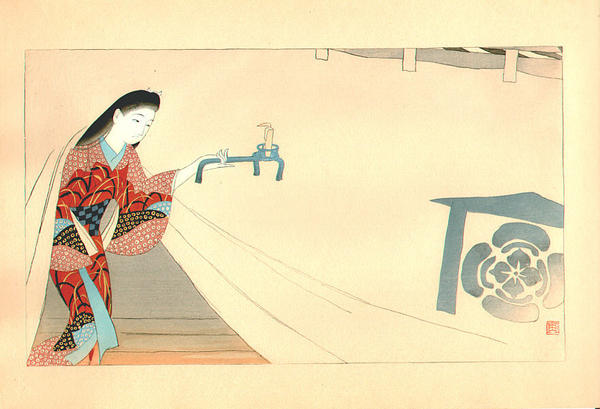
Heroine Toragozen
Woodblock print
Frequently Asked Questions
Yūrei (幽霊) are the spirits of the dead — typically legless, white-clad female figures with long black hair, returning to haunt the living. Yōkai (妖怪) is a broader category of supernatural beings including shape-shifters, animal spirits, demons, monsters, and the ambiguous figures of Japanese folk belief. All yūrei are yōkai in the broadest sense, but most yōkai are not yūrei.
Tsukioka Yoshitoshi (1839–1892) is the most famous yōkai print artist. His 'New Forms of Thirty-Six Ghosts' (1889–1892) is the genre's defining series. Utagawa Kuniyoshi (1797–1861), Katsushika Hokusai, and Kawanabe Kyōsai are the other major historical figures.
Kabuki ghost plays (kaidan-mono) drew large audiences from the early-nineteenth century, and the prints capitalised on the theatrical demand. The late-Edo and early-Meiji period also saw a deliberate cultivation of distinctively Japanese subject matter as Western contact intensified, and yōkai provided a vocabulary that had no European equivalent.