
The Laughing Demoness (Warai Hannya), from the series "One Hundred Ghost Tales (Hyaku monogatari)"
- Date:
- 1831-32
- Medium:
- Color woodblock print; chuban
- Source:
- Art Institute of Chicago
Description
The Laughing Demoness (Warai Hannya), printed in 1831 as part of Katsushika Hokusai's series One Hundred Ghost Tales (Hyaku monogatari), gives unforgettable visual form to one of the most feared figures in Japanese folklore. The hannya is a horned female demon traditionally associated with the jealous rage of a wronged woman, and Hokusai shows her cradling the severed head of a child while laughing through long, predatory teeth. The pale flesh tones of the demoness contrast sharply with the dark void behind her, and the print's almost theatrical close-up exploits the same compositional strategy Hokusai used elsewhere in the series to compress horror into a single intense face. As an Edo ukiyo-e print, Warai Hannya updates noh and kabuki masking traditions by translating their carved features into the precise lines and graded inks of woodblock printing. The Art Institute of Chicago impression preserves the unsettling sheen of the demoness's skin and the saturated reds that punctuate the design. Katsushika Hokusai's ability to dignify the grotesque without sentimentalizing it is on full display, and the print exemplifies how he expanded the thematic range of the ukiyo-e print beyond beautiful women and famous places. Together with Oiwa, Sara-yashiki, and the other surviving Hyaku monogatari designs, this image established a template for Japanese ghost imagery that would inform later artists and continue to inspire horror cinema and contemporary manga. Surviving impressions are highly sought by collectors because the Hyaku monogatari series ended after only five known designs, leaving Warai Hannya as one of the rarest and most influential demonological prints of late Edo Japan.
More Prints by Katsushika Hokusai
Hokusai manga (Hokusai Sketchbooks)
19th century
Woodblock-printed book; ink and light color on paper
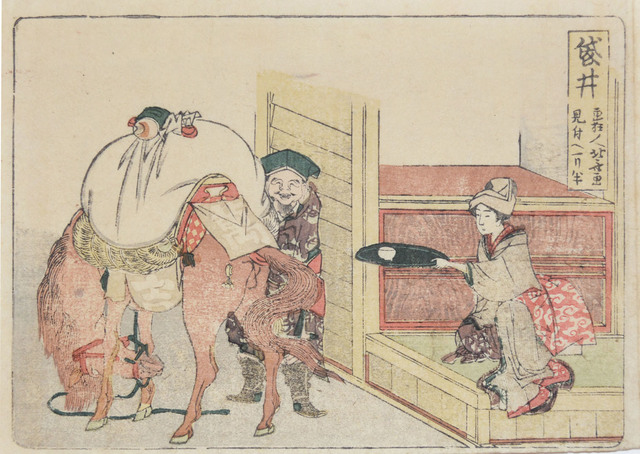
Fukuroi
1804
Japanese woodblock print

The Fishermen of Katase Hauling in Their Nets: The Purple Shell (Murasakigai)
1821
Color woodblock print with metallic pigments; surimono shikishiban

Burdock Root (Kurama gobo), from the series "A Selection of Horses (Uma-zukushi)"
1822
Color woodblock print; shikishiban, surimono
More Landscapes Prints

Lake Kugushi in Wakasa Province (Wakasa Kugushiko), from the series Souvenirs of Travel I (Tabi miyage dai isshu)"
Wakasa Kugushiko
1920
Color woodblock print; oban
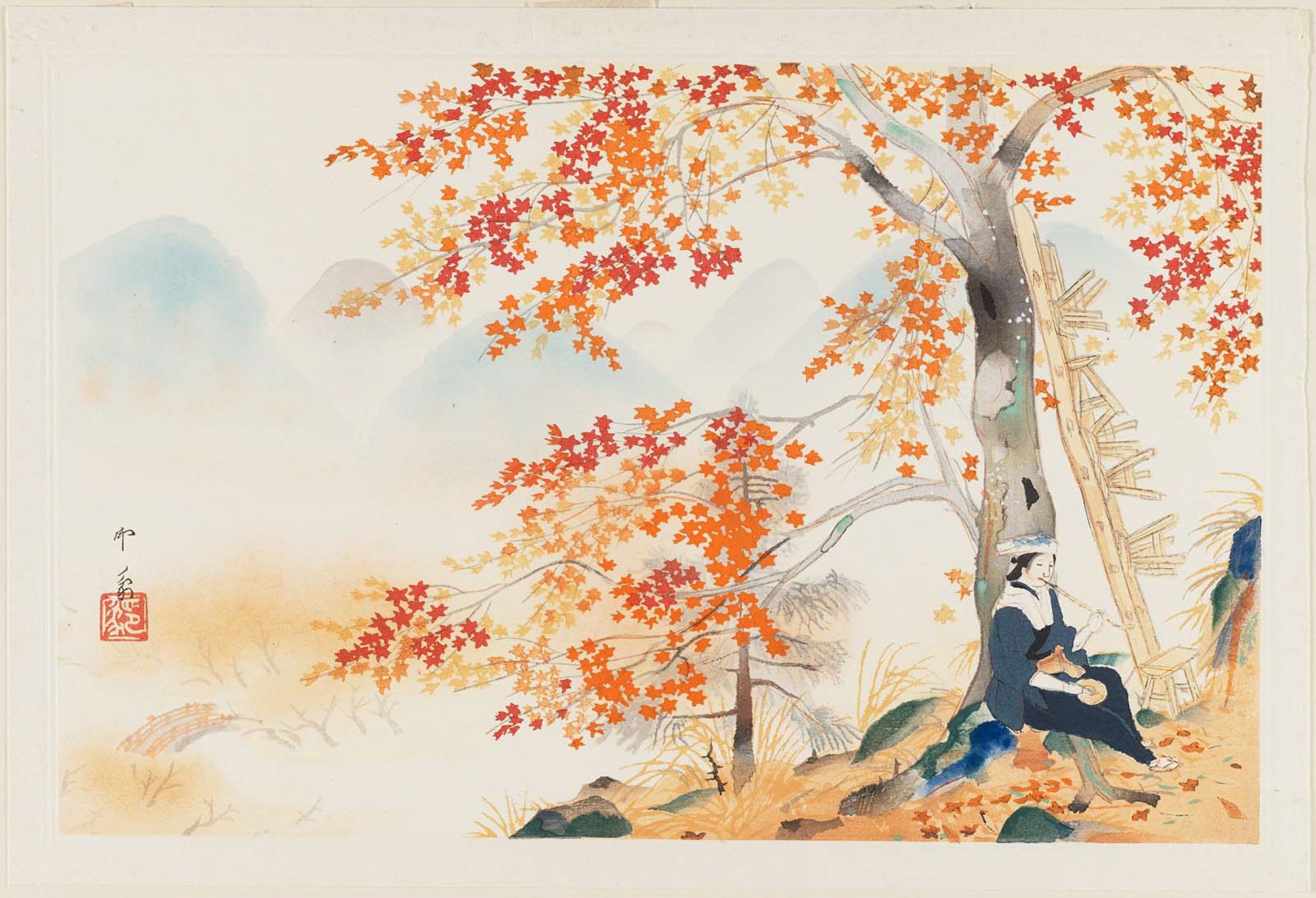
Autumn Maple Leaves at Takao, from the album Eight Views of Kyoto (Kyôto hakkei)
Woodblock print

The Beach at Kaiganji in Sanuki Province (Sanuki Kaiganji no hama), from the series "Collection of Views of Japan II, Kansai Edition (Nihon fukei shu II Kansai hen)"
1934
Color woodblock print; oban

Tea Kettle, section of a sheet from the series "Mirror of Stone Rubbings of Views of the Provinces" (Kohon meihitsu ishizuri kagami)
n.d.
Woodblock print; ishizuri-e, section of harimaze sheet
Featured in Collections
Curated cross-cuts that include this print.
Frequently Asked Questions
The Laughing Demoness (Warai Hannya), from the series "One Hundred Ghost Tales (Hyaku monogatari)" was created by Katsushika Hokusai (葛飾北斎) in 1831-32.
The Laughing Demoness (Warai Hannya), from the series "One Hundred Ghost Tales (Hyaku monogatari)" depicts landscapes.