
The Toy Seller, illustration for The Fresh-Water Clam (Shijimigai), from the series "A Matching Game with Genroku-period Poem Shells (Genroku kasen kai awase)"
- Date:
- 1821
- Medium:
- Color woodblock print with metallic pigments; surimono shikishiban
- Source:
- Art Institute of Chicago
Description
The Toy Seller, illustration for The Fresh-Water Clam, comes from Katsushika Hokusai's celebrated surimono series A Matching Game with Genroku-period Poem Shells, designed around 1816. The kai awase set pairs each named shell with a contemporary urban subject, and the modest shijimigai, a freshwater clam beloved in Edo street life, is matched here with a wandering toy seller. Hokusai pictures the vendor with his back-rack of cheap papier-mache figures and folk toys, carrying his trade through the streets of the capital in a way that any Edo townsperson would have recognized at once. The composition is intimate and economical, focusing on the seller's posture, the textures of his bundle, and the variety of toys piled on his back. As a surimono, the sheet was privately commissioned by a poetry circle and printed with the finest pigments, often including silver and gold and refined embossing, well beyond commercial Edo ukiyo-e standards. The design exemplifies Hokusai's skill in linking high literary tradition to plebeian street life, transforming a humble peddler into a worthy literary companion for an antique shell. The Art Institute of Chicago preserves this ukiyo-e print as part of its surimono holdings, where Katsushika Hokusai's contributions to the genre are documented across many years and poetry groups.
More Prints by Katsushika Hokusai
Hokusai manga (Hokusai Sketchbooks)
19th century
Woodblock-printed book; ink and light color on paper
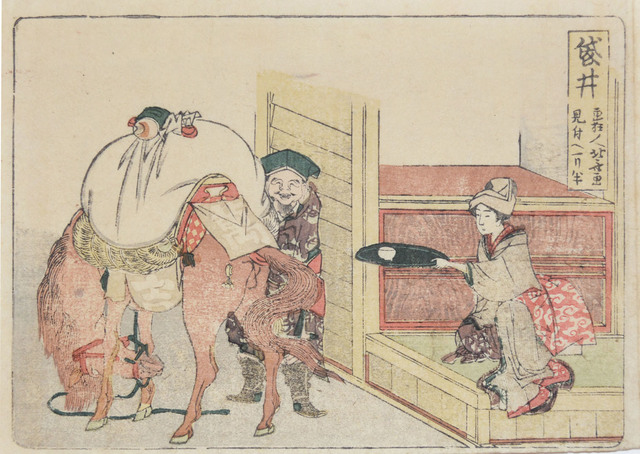
Fukuroi
1804
Japanese woodblock print

The Fishermen of Katase Hauling in Their Nets: The Purple Shell (Murasakigai)
1821
Color woodblock print with metallic pigments; surimono shikishiban

Burdock Root (Kurama gobo), from the series "A Selection of Horses (Uma-zukushi)"
1822
Color woodblock print; shikishiban, surimono
More Landscapes Prints

Lake Kugushi in Wakasa Province (Wakasa Kugushiko), from the series Souvenirs of Travel I (Tabi miyage dai isshu)"
Wakasa Kugushiko
1920
Color woodblock print; oban
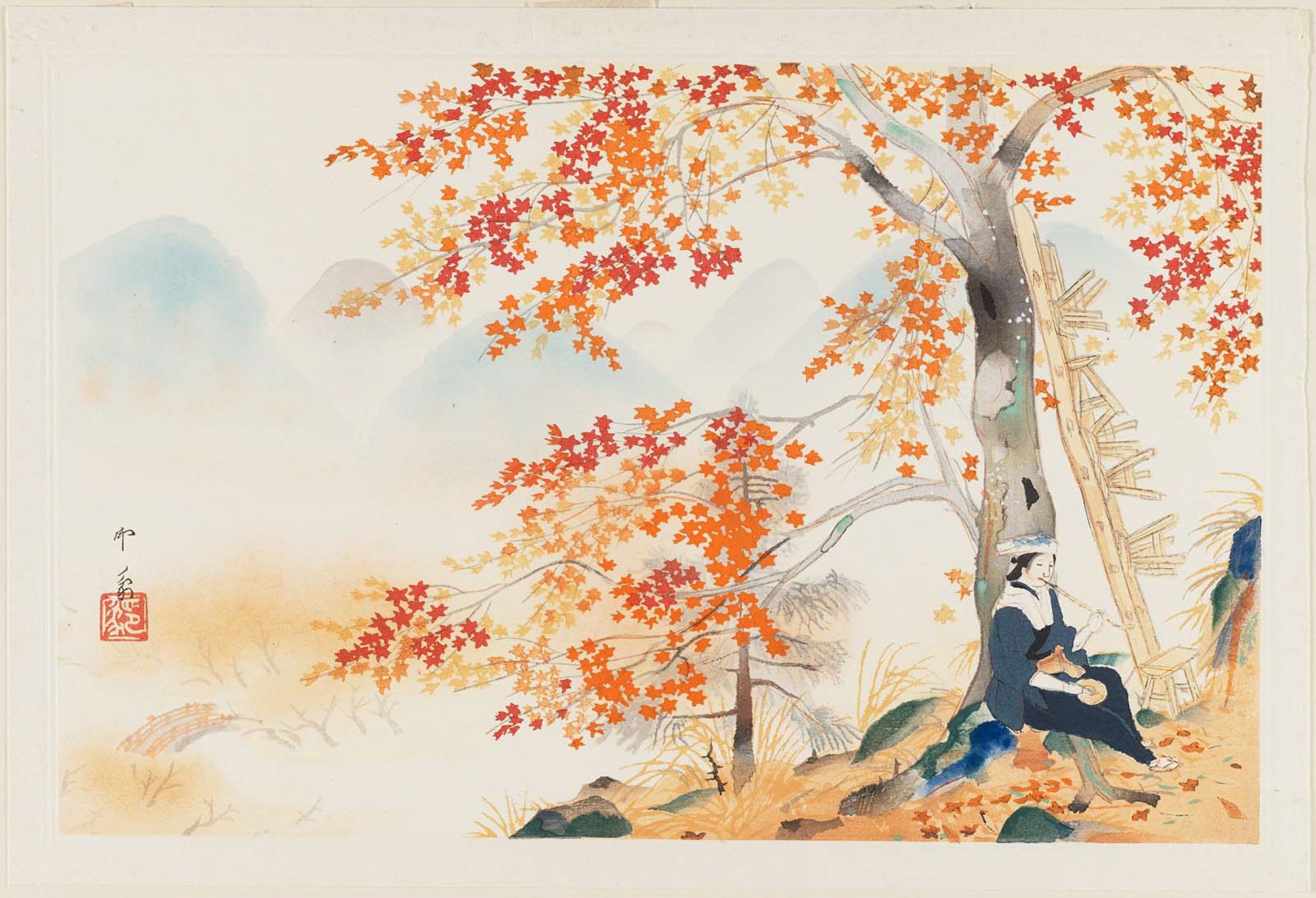
Autumn Maple Leaves at Takao, from the album Eight Views of Kyoto (Kyôto hakkei)
Woodblock print

The Beach at Kaiganji in Sanuki Province (Sanuki Kaiganji no hama), from the series "Collection of Views of Japan II, Kansai Edition (Nihon fukei shu II Kansai hen)"
1934
Color woodblock print; oban

Tea Kettle, section of a sheet from the series "Mirror of Stone Rubbings of Views of the Provinces" (Kohon meihitsu ishizuri kagami)
n.d.
Woodblock print; ishizuri-e, section of harimaze sheet
Featured in Collections
Curated cross-cuts that include this print.
Frequently Asked Questions
The Toy Seller, illustration for The Fresh-Water Clam (Shijimigai), from the series "A Matching Game with Genroku-period Poem Shells (Genroku kasen kai awase)" was created by Katsushika Hokusai (葛飾北斎) in 1821.
The Toy Seller, illustration for The Fresh-Water Clam (Shijimigai), from the series "A Matching Game with Genroku-period Poem Shells (Genroku kasen kai awase)" depicts landscapes.