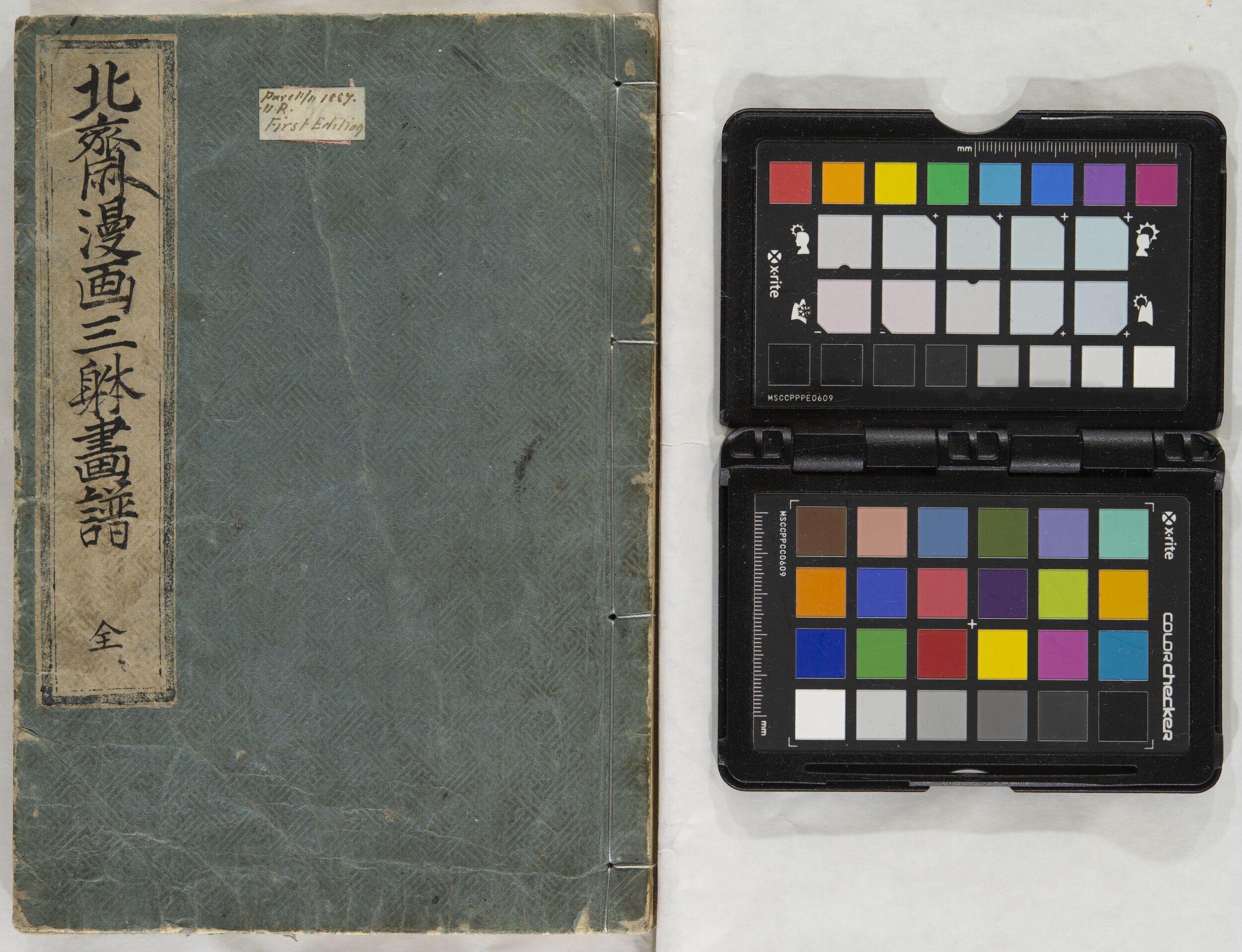
Three Styles of Drawing (Santai gafu)
- Date:
- 1816
- Medium:
- Source:
- Victoria and Albert Museum
Description
Published in 1816, the Three Styles of Drawing, or Santai gafu, is one of Katsushika Hokusai's many illustrated picture books and serves as a manual demonstrating distinct manners of representation: a careful and formal style, an abbreviated cursive style, and an intermediate mode between them. Throughout the volume, Hokusai applies these three approaches to figures, landscapes, plants, animals, and architectural subjects, allowing the reader to see how a single motif can be transformed by handling. As an Edo ukiyo-e print project, the book is part of a substantial tradition of pictorial manuals through which Hokusai shared his methods with students, fellow artists, and the broader literate public; the Manga series, begun in 1814, is the best known of these works, but the Santai gafu sits within the same pedagogical impulse. The Victoria and Albert Museum preserves a copy of the book in its collection of Japanese illustrated books. The Santai gafu reveals how seriously Hokusai took the teaching dimension of his career and how confidently he could shift between disciplined draughtsmanship and lively shorthand within a single subject. The book also documents a moment when print publishing in Edo had matured to the point that artists could expect a market for theoretical and instructional works as well as for narrative fiction and visual entertainment. For students of Hokusai's style, the volume is a kind of skeleton key, exposing the underlying principles that govern his diverse output. For modern readers, it provides a remarkable demonstration of how a single artist commanded multiple registers of representation, all in service of an underlying aesthetic vision that united the floating world of Edo with classical Japanese painting traditions.
More Prints by Katsushika Hokusai
Hokusai manga (Hokusai Sketchbooks)
19th century
Woodblock-printed book; ink and light color on paper
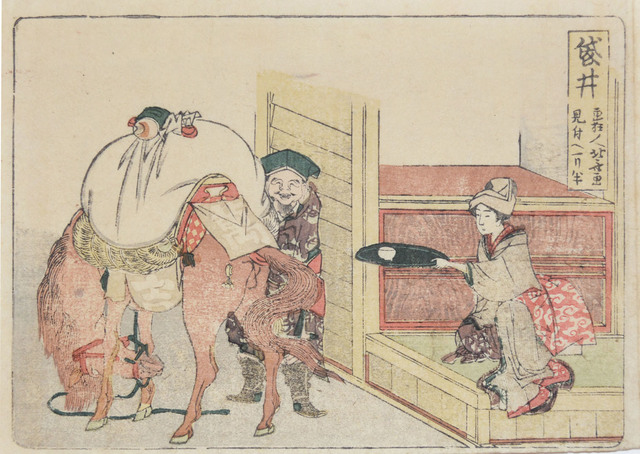
Fukuroi
1804
Japanese woodblock print

The Fishermen of Katase Hauling in Their Nets: The Purple Shell (Murasakigai)
1821
Color woodblock print with metallic pigments; surimono shikishiban

Burdock Root (Kurama gobo), from the series "A Selection of Horses (Uma-zukushi)"
1822
Color woodblock print; shikishiban, surimono
More Landscapes Prints

Lake Kugushi in Wakasa Province (Wakasa Kugushiko), from the series Souvenirs of Travel I (Tabi miyage dai isshu)"
Wakasa Kugushiko
1920
Color woodblock print; oban
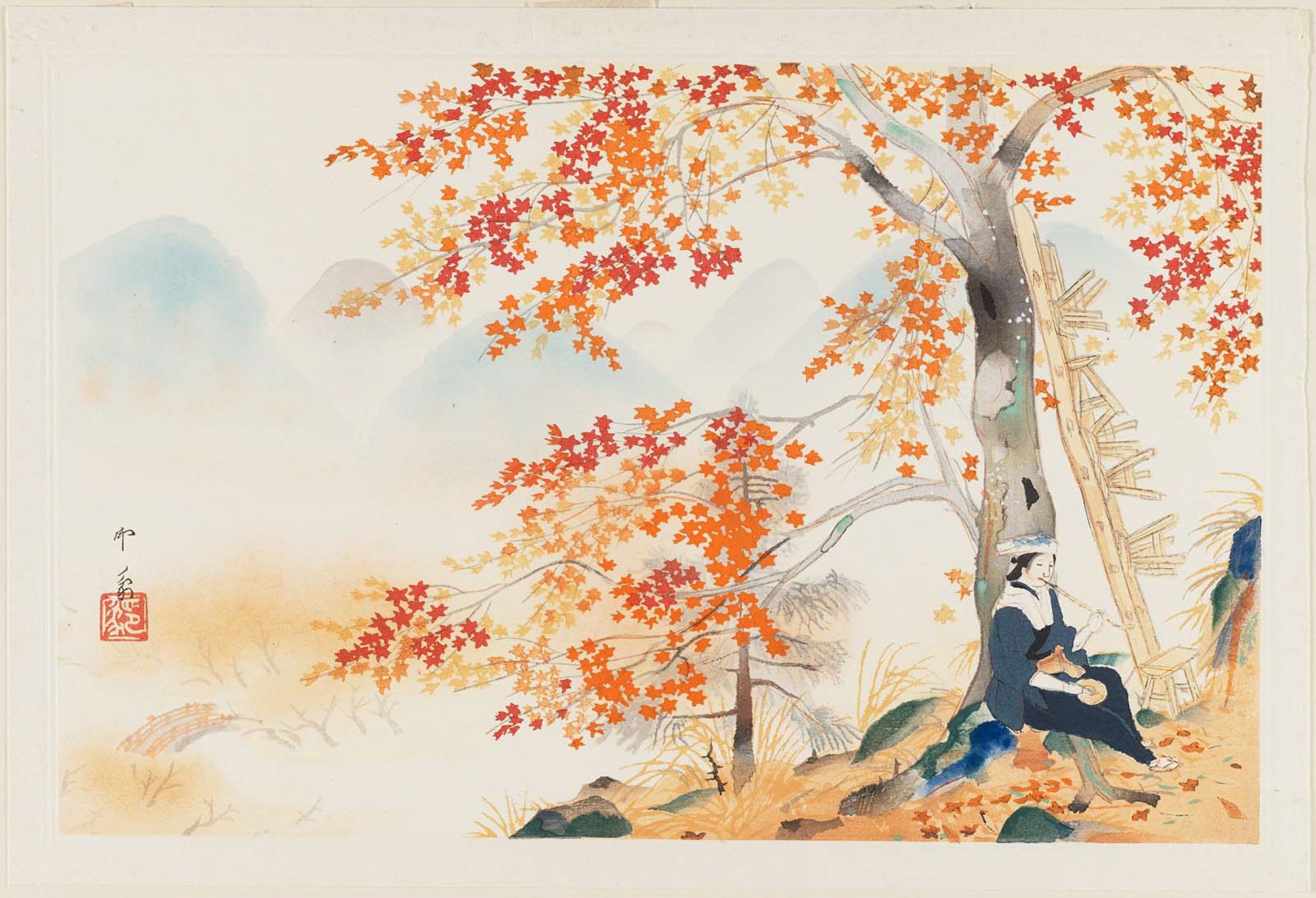
Autumn Maple Leaves at Takao, from the album Eight Views of Kyoto (Kyôto hakkei)
Woodblock print

The Beach at Kaiganji in Sanuki Province (Sanuki Kaiganji no hama), from the series "Collection of Views of Japan II, Kansai Edition (Nihon fukei shu II Kansai hen)"
1934
Color woodblock print; oban

Tea Kettle, section of a sheet from the series "Mirror of Stone Rubbings of Views of the Provinces" (Kohon meihitsu ishizuri kagami)
n.d.
Woodblock print; ishizuri-e, section of harimaze sheet
Featured in Collections
Curated cross-cuts that include this print.
Frequently Asked Questions
Three Styles of Drawing (Santai gafu) was created by Katsushika Hokusai (葛飾北斎) in 1816.
Three Styles of Drawing (Santai gafu) depicts landscapes.