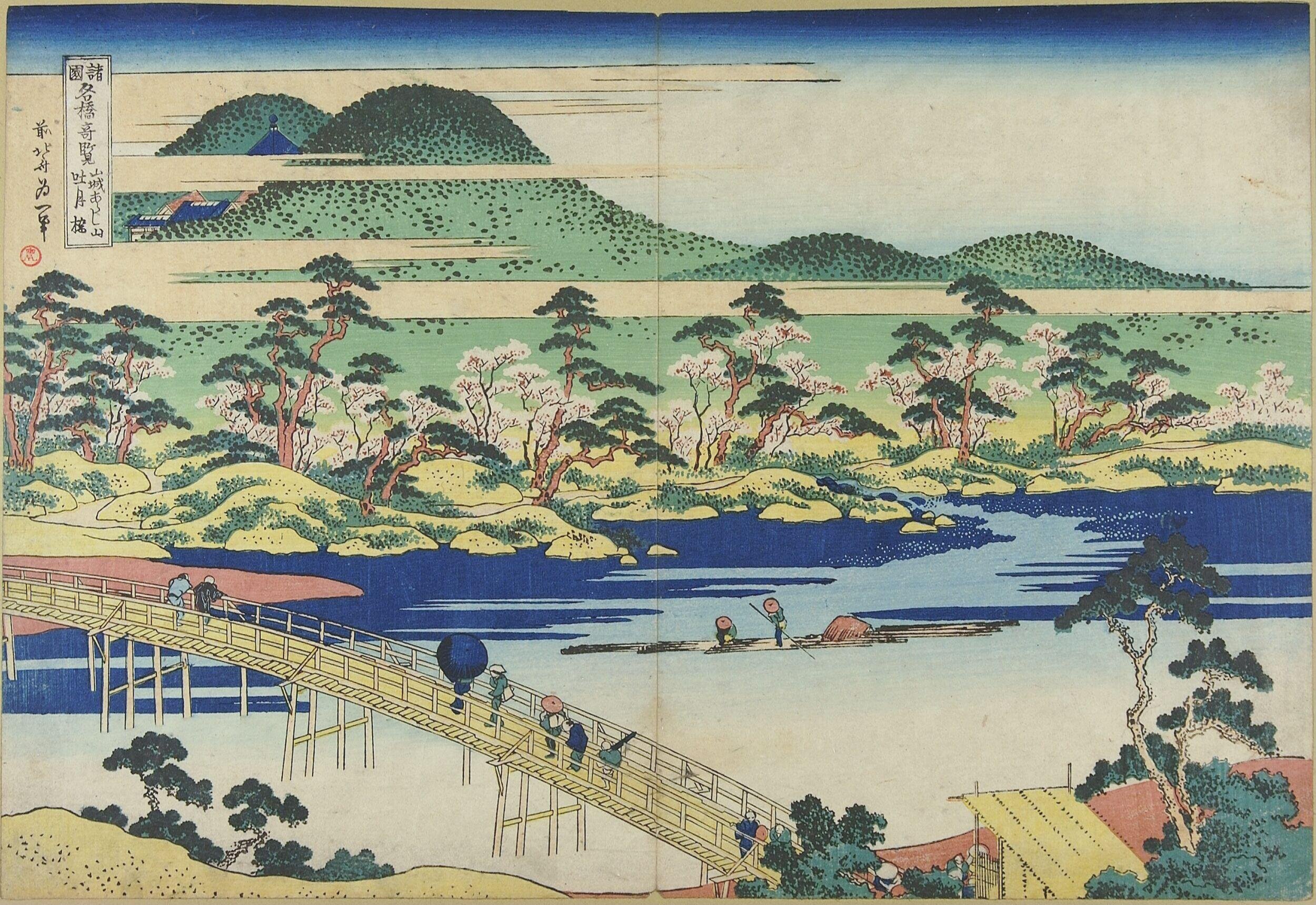
Togetsu Bridge at Arashiyama in Yamashiro Province (Yamashiro Arashiyama no Togetsu-kyō)
- Date:
- ca. 1834
- Medium:
- Source:
- Victoria and Albert Museum
Description
A steeply pitched wooden bridge with slatted railings crosses diagonally from the lower left toward a wide blue river, carrying several travelers on foot, including one with a large dark bundle or umbrella on their back; two more figures pole a raft of logs across the water below. Rounded pine trees with reddish trunks and clusters of pale blossoming trees line the near shore, giving way to green hills and rooftops in the middle distance and low mountains under a sky banded in blue, cream, and white. Vertical text cartouches with the series and print titles appear in the upper left corner. Katsushika Hokusai, 1834, woodblock print.
More Prints by Katsushika Hokusai
Hokusai manga (Hokusai Sketchbooks)
19th century
Woodblock-printed book; ink and light color on paper
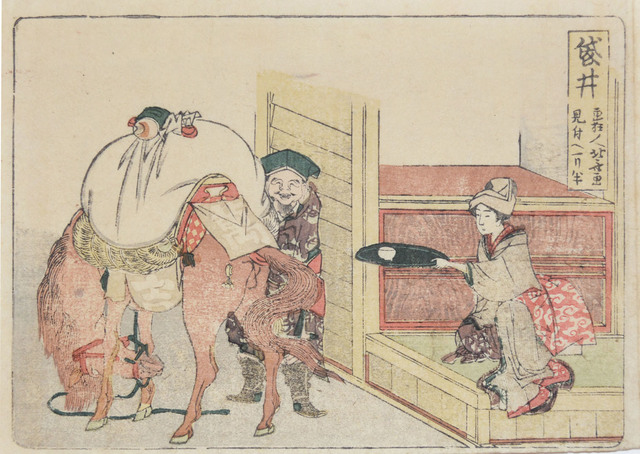
Fukuroi
1804
Japanese woodblock print

The Fishermen of Katase Hauling in Their Nets: The Purple Shell (Murasakigai)
1821
Color woodblock print with metallic pigments; surimono shikishiban

Burdock Root (Kurama gobo), from the series "A Selection of Horses (Uma-zukushi)"
1822
Color woodblock print; shikishiban, surimono
More Landscapes Prints

Lake Kugushi in Wakasa Province (Wakasa Kugushiko), from the series Souvenirs of Travel I (Tabi miyage dai isshu)"
Wakasa Kugushiko
1920
Color woodblock print; oban
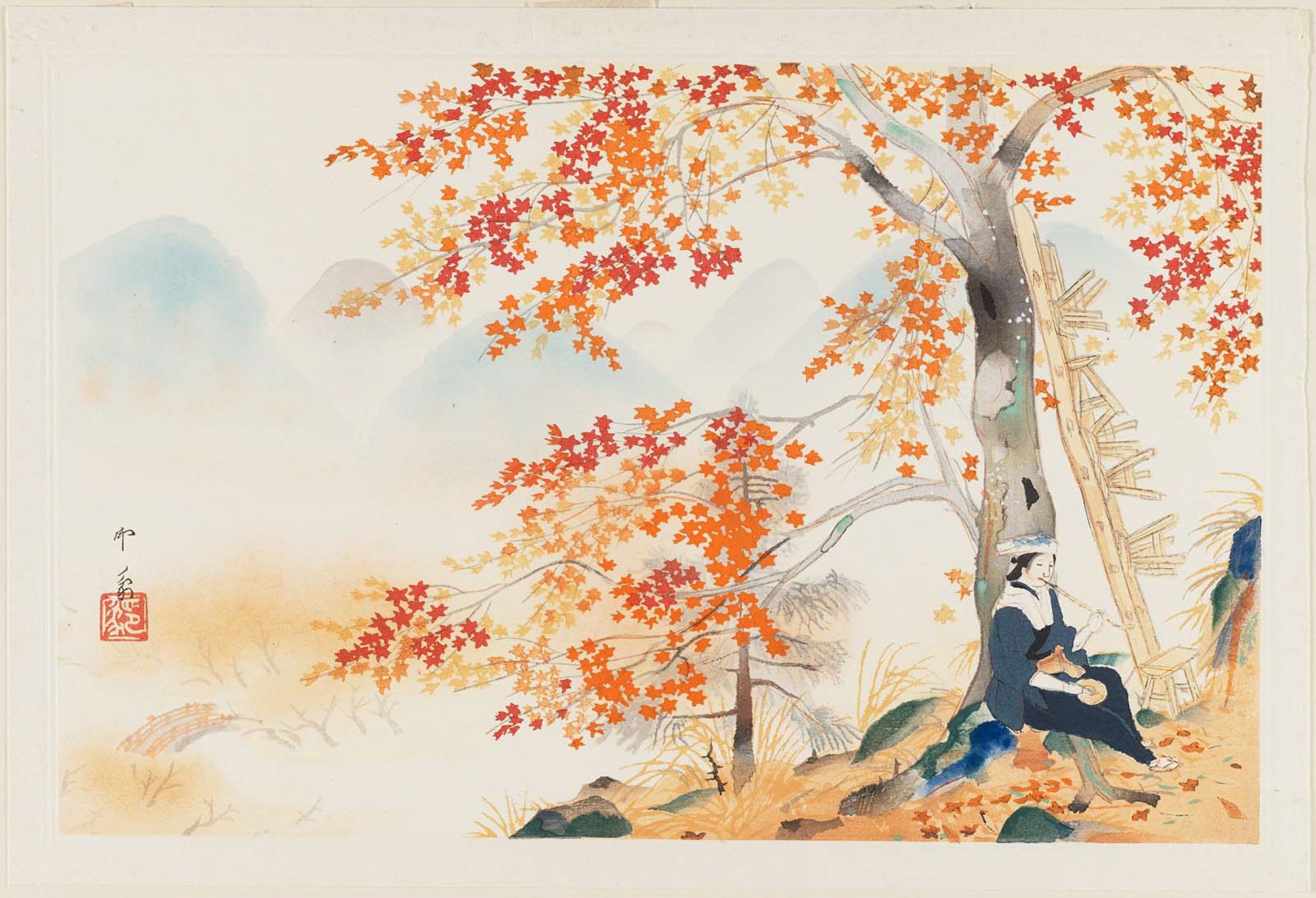
Autumn Maple Leaves at Takao, from the album Eight Views of Kyoto (Kyôto hakkei)
Woodblock print

The Beach at Kaiganji in Sanuki Province (Sanuki Kaiganji no hama), from the series "Collection of Views of Japan II, Kansai Edition (Nihon fukei shu II Kansai hen)"
1934
Color woodblock print; oban

Tea Kettle, section of a sheet from the series "Mirror of Stone Rubbings of Views of the Provinces" (Kohon meihitsu ishizuri kagami)
n.d.
Woodblock print; ishizuri-e, section of harimaze sheet
Featured in Collections
Curated cross-cuts that include this print.
Frequently Asked Questions
Togetsu Bridge at Arashiyama in Yamashiro Province (Yamashiro Arashiyama no Togetsu-kyō) was created by Katsushika Hokusai (葛飾北斎) in ca. 1834.
Togetsu Bridge at Arashiyama in Yamashiro Province (Yamashiro Arashiyama no Togetsu-kyō) depicts landscapes and bridges.