
Vanity of Vanities
- Date:
- 1839
- Medium:
- Color woodblock print
- Source:
- Art Institute of Chicago
Description
Vanity of Vanities is one of the small group of moralizing or allegorical designs by Katsushika Hokusai that fall outside his familiar landscape series. Dated around 1835, the print uses imagery of the Buddhist concept of mujo, or impermanence, to comment on the ephemerality of wealth, beauty, and fame in late Edo society. Such themes were closely tied to Pure Land and Zen iconography that Hokusai engaged with throughout his life, particularly in the decade leading up to his great Hundred Views of Mount Fuji books. The composition pairs symbolic objects, figures, or skeletal imagery with text in a manner familiar from Edo ukiyo-e prints intended as much for contemplation as for entertainment, and it relies on Hokusai's signature linework rather than elaborate color blocks. The Art Institute of Chicago example preserves the relatively restrained palette and crisp keyblock impression typical of the artist's late-career work in this register. While Vanity of Vanities does not have the wide popular recognition of the Mount Fuji prints, it is invaluable for understanding the philosophical undercurrent that runs through Hokusai's mature output. As an ukiyo-e print it shows how the form, often associated with hedonism and the floating world, could equally carry images of transience and self-reflection. It also illustrates how, even within a single decade, Hokusai moved between commercial landscape commissions and more private, religiously inflected designs without ever losing his commanding sense of pictorial structure.
More Prints by Katsushika Hokusai

The Fishermen of Katase Hauling in Their Nets: The Purple Shell (Murasakigai)
1821
Color woodblock print with metallic pigments; surimono shikishiban

Burdock Root (Kurama gobo), from the series "A Selection of Horses (Uma-zukushi)"
1822
Color woodblock print; shikishiban, surimono

Horse Shells (Umagai), from the series "A Selection of Horses (Uma-zukushi)"
1822
Color woodblock print; shikishiban, surimono

Orange Orchids, from an untitled series of flowers
c. 1832
Color woodblock print; oban
More Landscapes Prints

Lake Kugushi in Wakasa Province (Wakasa Kugushiko), from the series Souvenirs of Travel I (Tabi miyage dai isshu)"
Wakasa Kugushiko
1920
Color woodblock print; oban
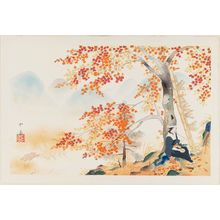
Autumn Maple Leaves at Takao, from the album Eight Views of Kyoto (Kyôto hakkei)
Woodblock print

The Beach at Kaiganji in Sanuki Province (Sanuki Kaiganji no hama), from the series "Collection of Views of Japan II, Kansai Edition (Nihon fukei shu II Kansai hen)"
1934
Color woodblock print; oban

Tea Kettle, section of a sheet from the series "Mirror of Stone Rubbings of Views of the Provinces" (Kohon meihitsu ishizuri kagami)
n.d.
Woodblock print; ishizuri-e, section of harimaze sheet
Featured in Collections
Curated cross-cuts that include this print.
Frequently Asked Questions
Vanity of Vanities was created by Katsushika Hokusai (葛飾北斎) in 1839.
Vanity of Vanities depicts landscapes.