
Village on the Yoshino River, illustration for The Brocade Shell (Nishiki-gai), from the series "A Matching Game with Genroku-period Poem Shells (Genroku kasen kai awase)"
- Date:
- 1821
- Medium:
- Color woodblock print with metallic pigments; surimono shikishiban
- Source:
- Art Institute of Chicago
Description
Village on the Yoshino River, illustration for The Brocade Shell (Nishiki-gai), is an ukiyo-e print by Katsushika Hokusai from the series A Matching Game with Genroku-period Poem Shells (Genroku kasen kai awase), about 1816 and held in the Art Institute of Chicago. The Yoshino River and its surrounding mountains in Yamato Province were long celebrated in classical Japanese poetry for spring cherry blossoms and autumn brocade-like leaves, a poetic resonance perfectly matched to the nishiki-gai, or brocade shell, that names the print. Hokusai's design depicts a riverside village nestled at the foot of forested slopes, with rafts or boats on the water and figures moving along the banks. The painterly attention to tonal recessions, layered mountains, drifting mist, low clouds, gives the surimono the gravity of a classical landscape painting compressed into a single sheet. The waka poem on the print invites educated viewers to read the landscape as a meditation on seasonal beauty and the layered meanings of 'brocade' (silken cloth and patterned foliage alike). As an Edo ukiyo-e print, the work demonstrates how privately commissioned surimono pulled together classical literary culture, refined printing technique, and Hokusai's painterly landscape vision. The Art Institute of Chicago's impression preserves the subtle tonal printing and metallic accents that distinguish surimono from ordinary commercial editions.
More Prints by Katsushika Hokusai
Hokusai manga (Hokusai Sketchbooks)
19th century
Woodblock-printed book; ink and light color on paper
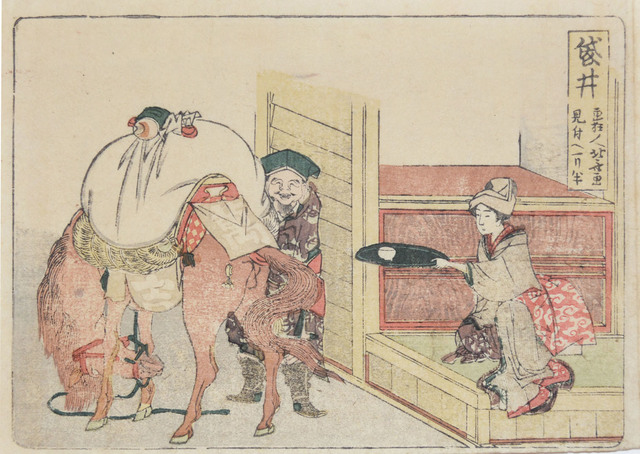
Fukuroi
1804
Japanese woodblock print

The Fishermen of Katase Hauling in Their Nets: The Purple Shell (Murasakigai)
1821
Color woodblock print with metallic pigments; surimono shikishiban

Burdock Root (Kurama gobo), from the series "A Selection of Horses (Uma-zukushi)"
1822
Color woodblock print; shikishiban, surimono
More Landscapes Prints

Lake Kugushi in Wakasa Province (Wakasa Kugushiko), from the series Souvenirs of Travel I (Tabi miyage dai isshu)"
Wakasa Kugushiko
1920
Color woodblock print; oban
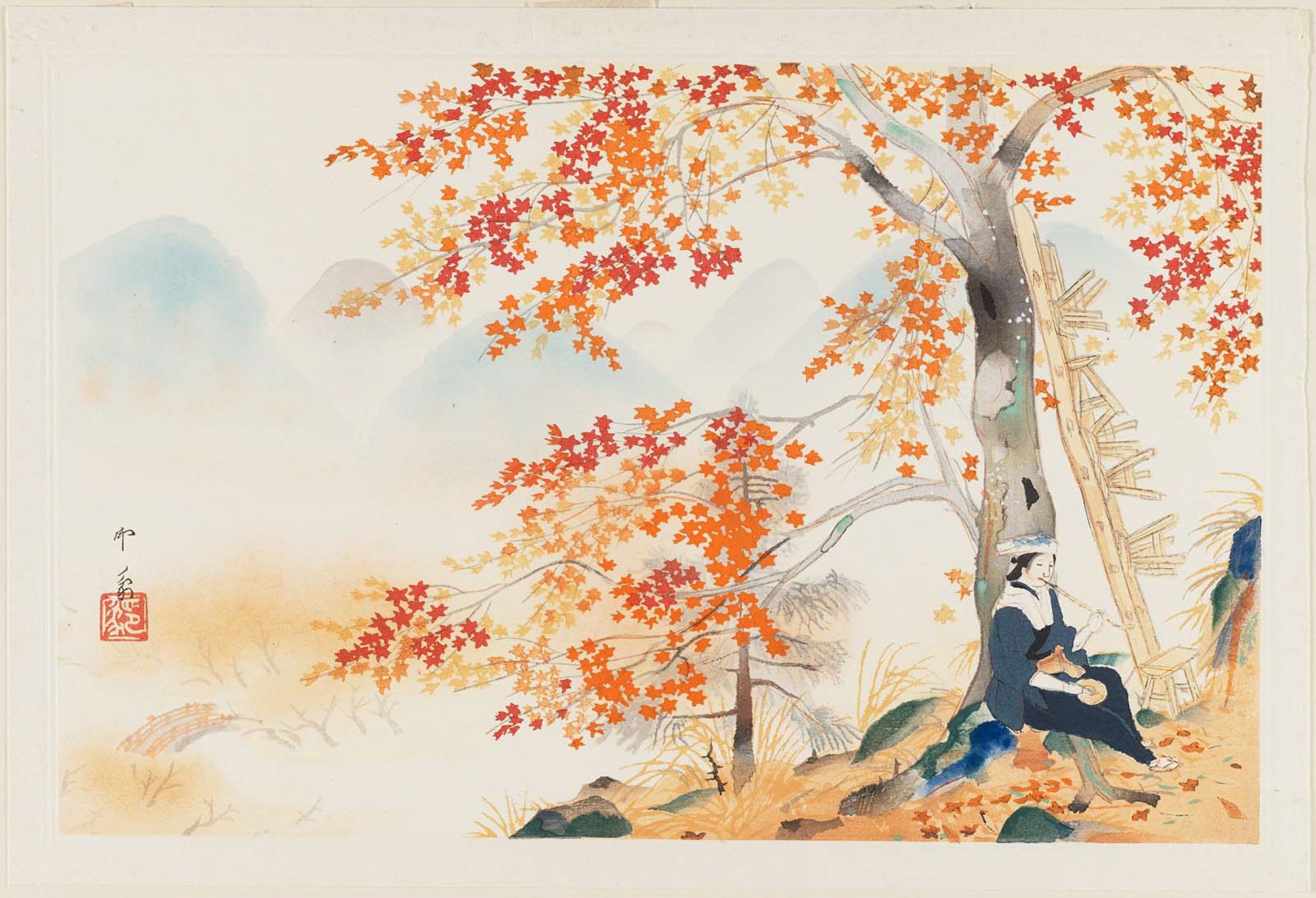
Autumn Maple Leaves at Takao, from the album Eight Views of Kyoto (Kyôto hakkei)
Woodblock print

The Beach at Kaiganji in Sanuki Province (Sanuki Kaiganji no hama), from the series "Collection of Views of Japan II, Kansai Edition (Nihon fukei shu II Kansai hen)"
1934
Color woodblock print; oban

Tea Kettle, section of a sheet from the series "Mirror of Stone Rubbings of Views of the Provinces" (Kohon meihitsu ishizuri kagami)
n.d.
Woodblock print; ishizuri-e, section of harimaze sheet
Featured in Collections
Curated cross-cuts that include this print.
Frequently Asked Questions
Village on the Yoshino River, illustration for The Brocade Shell (Nishiki-gai), from the series "A Matching Game with Genroku-period Poem Shells (Genroku kasen kai awase)" was created by Katsushika Hokusai (葛飾北斎) in 1821.
Village on the Yoshino River, illustration for The Brocade Shell (Nishiki-gai), from the series "A Matching Game with Genroku-period Poem Shells (Genroku kasen kai awase)" depicts landscapes.