
Visitors to Enoshima
- Date:
- c. 1801/04
- Medium:
- Color woodblock print; ebangire, surimono
- Format:
- Oban
- Source:
- Art Institute of Chicago
Description
Visitors make the pilgrimage to Enoshima island — crossing the sandy causeway exposed at low tide, or perhaps arriving by boat — in this ebangire surimono from around 1801–04. Enoshima's cave shrine to the sea goddess Benten drew pilgrims from across the Kanto region, and the journey from Edo (a half-day's walk to the coast, then the tidal crossing) was itself regarded as part of the spiritual experience.
More Prints by Katsushika Hokusai
Hokusai manga (Hokusai Sketchbooks)
19th century
Woodblock-printed book; ink and light color on paper
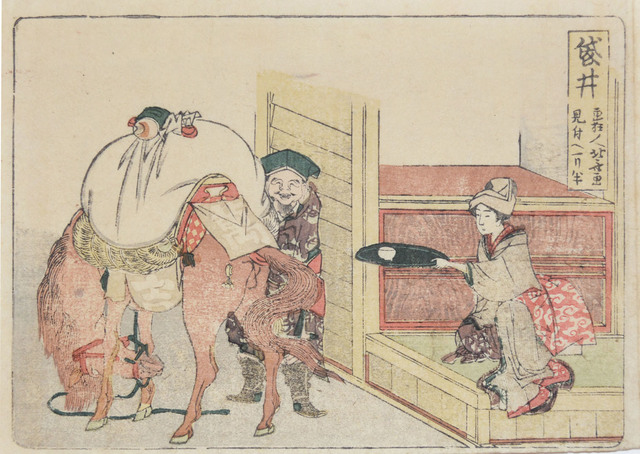
Fukuroi
1804
Japanese woodblock print

The Fishermen of Katase Hauling in Their Nets: The Purple Shell (Murasakigai)
1821
Color woodblock print with metallic pigments; surimono shikishiban

Burdock Root (Kurama gobo), from the series "A Selection of Horses (Uma-zukushi)"
1822
Color woodblock print; shikishiban, surimono
More Religious Prints

The Great Buddha, Kamakura (Kamakura Daibutsu)
Kamakura Daibutsu
1930
Color woodblock print

Hall of the Great Buddha (Nara Daibutsuden)
1950
Color woodblock print
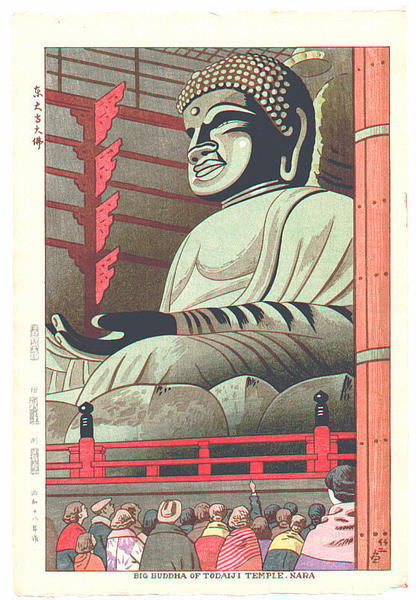
Great Buddha
大仏
Woodblock print

Clearing after a Snowfall at the Kannon Temple in Asakusa (Asakusa Kannon no yukibare), from the series "Twenty Views of Tokyo (Tokyo nijukkei)"
1926
Color woodblock print; oban
Frequently Asked Questions
Visitors to Enoshima was created by Katsushika Hokusai (葛飾北斎) in c. 1801/04.
Visitors to Enoshima depicts religious, seascapes, and travel scenes.