
Votive Pictures (Ema), from the series "A Selection of Horses (Uma-zukushi)"
- Date:
- 1822
- Medium:
- Color woodblock print; shikishiban, surimono
- Source:
- Art Institute of Chicago
Description
From around 1822, this Katsushika Hokusai print belongs to the series A Selection of Horses (Uma-zukushi) and depicts ema, the votive wooden tablets that worshippers traditionally hung at Shinto shrines bearing images of horses. The composition shows the ema themselves as objects of careful observation, their painted horse images visible within the frame of the wooden tablets, suspended at a shrine where pilgrims have left them as offerings. As an Edo ukiyo-e print, the sheet exemplifies the kyoka surimono and related private-commission traditions that flourished in the early nineteenth century, in which artists and poets collaborated on prints exploring specialized themes for refined audiences. The Uma-zukushi series surveyed horses in all their cultural guises: as warriors' mounts, as agricultural workhorses, as subjects of folk belief and religious practice, and as objects of veneration in their own right. The Art Institute of Chicago holds an impression of the print within its collection of Hokusai surimono and related works. The ema tradition itself reaches back to ancient Japan, when actual horses were sometimes offered to shrines as gifts to the kami; over time, painted or carved images of horses on wooden tablets substituted for the live animals, and these tablets became a familiar fixture of shrine precincts throughout the country. Hokusai's print thus operates on multiple levels: as a documentation of religious practice, as a self-referential commentary on the painted image of the horse, and as a beautifully composed still life of the tablets themselves. The work shows the artist's continued fascination with the intersections of folk belief, daily life, and visual representation, and it stands as a small but rich example of the surimono tradition of refined collaborative ukiyo-e printmaking.
More Prints by Katsushika Hokusai
Hokusai manga (Hokusai Sketchbooks)
19th century
Woodblock-printed book; ink and light color on paper
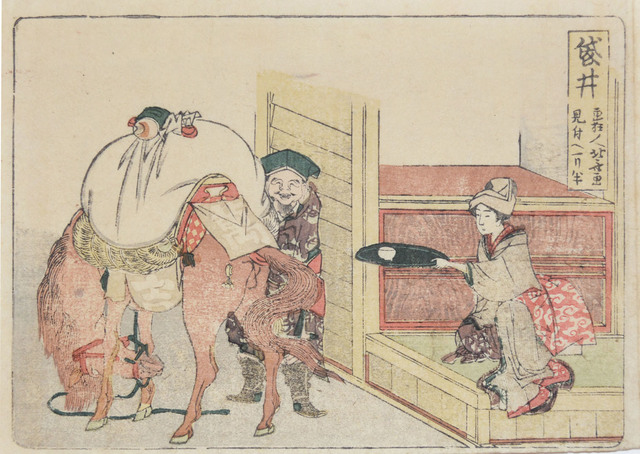
Fukuroi
1804
Japanese woodblock print

The Fishermen of Katase Hauling in Their Nets: The Purple Shell (Murasakigai)
1821
Color woodblock print with metallic pigments; surimono shikishiban

Burdock Root (Kurama gobo), from the series "A Selection of Horses (Uma-zukushi)"
1822
Color woodblock print; shikishiban, surimono
More Landscapes Prints

Lake Kugushi in Wakasa Province (Wakasa Kugushiko), from the series Souvenirs of Travel I (Tabi miyage dai isshu)"
Wakasa Kugushiko
1920
Color woodblock print; oban
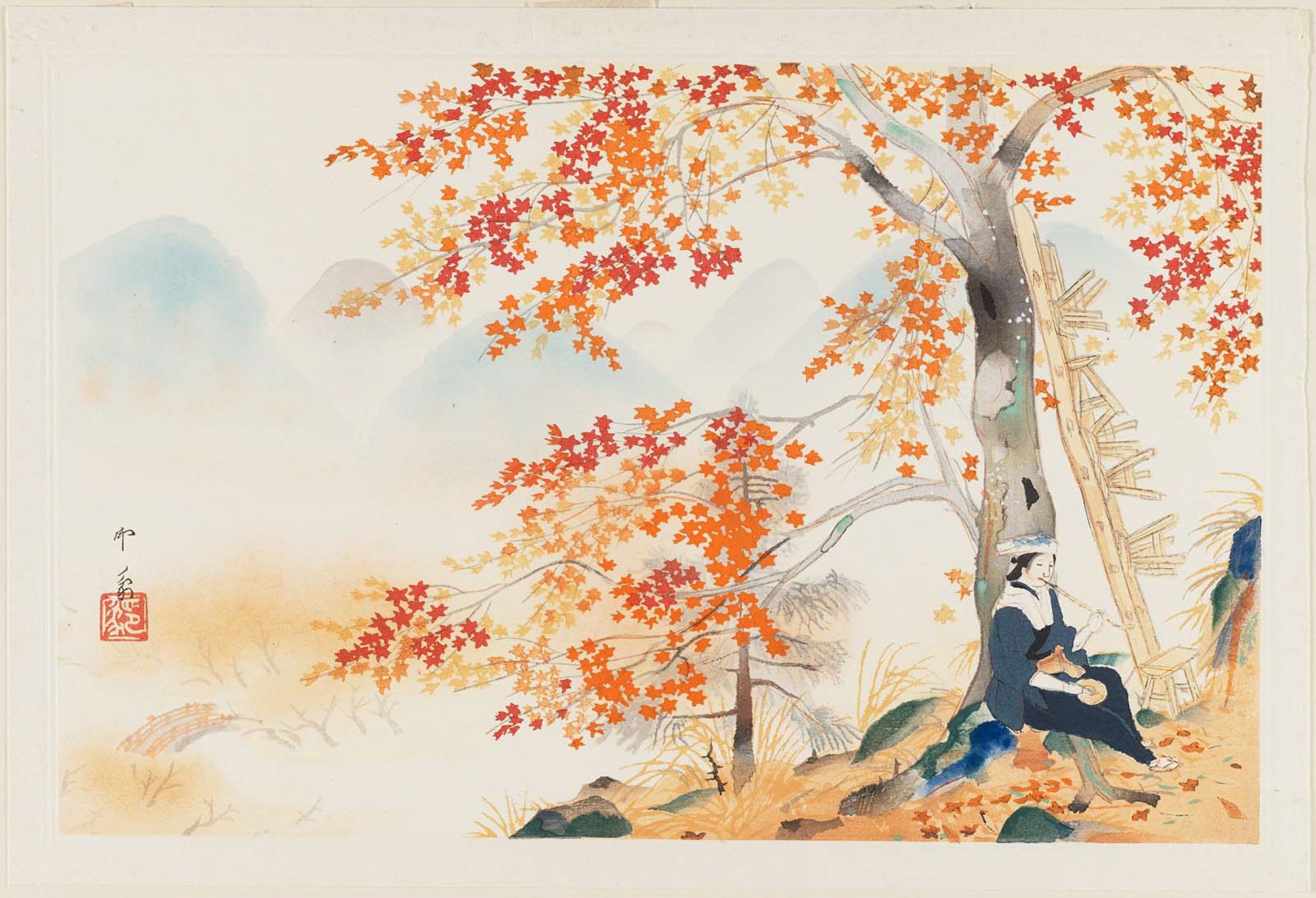
Autumn Maple Leaves at Takao, from the album Eight Views of Kyoto (Kyôto hakkei)
Woodblock print

The Beach at Kaiganji in Sanuki Province (Sanuki Kaiganji no hama), from the series "Collection of Views of Japan II, Kansai Edition (Nihon fukei shu II Kansai hen)"
1934
Color woodblock print; oban

Tea Kettle, section of a sheet from the series "Mirror of Stone Rubbings of Views of the Provinces" (Kohon meihitsu ishizuri kagami)
n.d.
Woodblock print; ishizuri-e, section of harimaze sheet
Featured in Collections
Curated cross-cuts that include this print.
Frequently Asked Questions
Votive Pictures (Ema), from the series "A Selection of Horses (Uma-zukushi)" was created by Katsushika Hokusai (葛飾北斎) in 1822.
Votive Pictures (Ema), from the series "A Selection of Horses (Uma-zukushi)" depicts landscapes.