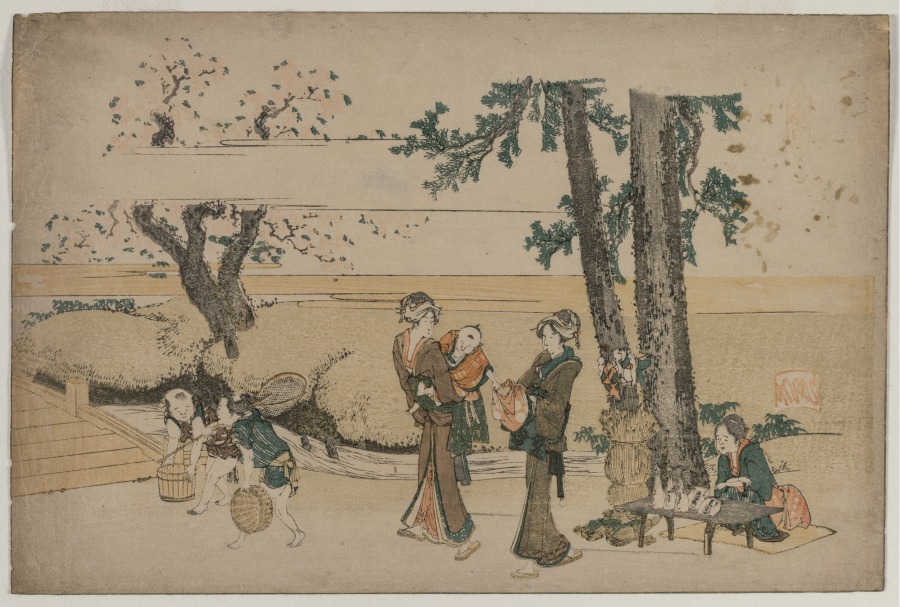
Woman Passing a Roadside Shop Near Oji
- Date:
- early 1800s
- Medium:
- color woodblock print
- Source:
- Cleveland Museum of Art
Description
Woman Passing a Roadside Shop Near Oji is an early genre subject by Katsushika Hokusai, attributed around 1800 and held by the Cleveland Museum of Art. Oji, a village in the northern outskirts of Edo, was famous for its waterfall, its Inari shrine, and its scenic role as a stop for excursions out of the city. In this design, Hokusai depicts a fashionable young woman walking past a small wayside teahouse or shop, where attendants pause as she approaches. The print belongs to the period when Hokusai was still working largely in figural and bijinga modes, before his great landscape series of the late 1820s and 1830s, and it shows the influence of his teacher Katsukawa Shunsho and of the bijinga tradition of Kitagawa Utamaro. As an Edo ukiyo-e print, this image documents both fashion - the cut of the woman's kimono, the way her sash is tied - and a particular suburban leisure destination that Edo residents would have recognized immediately. The Cleveland Museum of Art impression preserves the soft palette and finely drawn linework characteristic of Hokusai's turn-of-the-century work. For viewers most familiar with the elderly Hokusai of the Mount Fuji landscapes, this print offers a striking contrast: a younger artist refining his observational eye on figures in a recognizable Edo setting, and beginning to weave landscape and bijin into the single picture plane that would become his hallmark.
More Prints by Katsushika Hokusai
Hokusai manga (Hokusai Sketchbooks)
19th century
Woodblock-printed book; ink and light color on paper
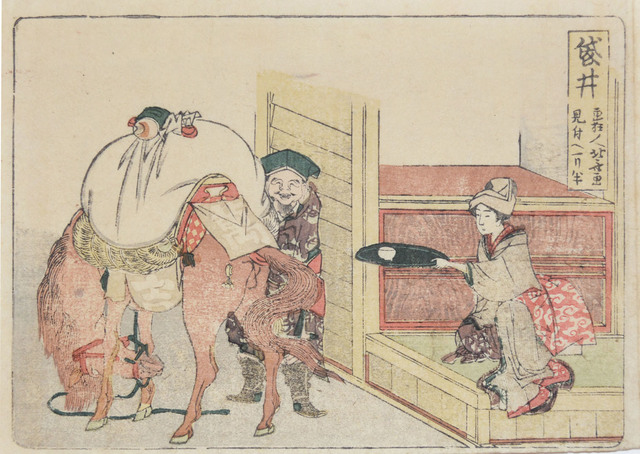
Fukuroi
1804
Japanese woodblock print

The Fishermen of Katase Hauling in Their Nets: The Purple Shell (Murasakigai)
1821
Color woodblock print with metallic pigments; surimono shikishiban

Burdock Root (Kurama gobo), from the series "A Selection of Horses (Uma-zukushi)"
1822
Color woodblock print; shikishiban, surimono
More Landscapes Prints

Lake Kugushi in Wakasa Province (Wakasa Kugushiko), from the series Souvenirs of Travel I (Tabi miyage dai isshu)"
Wakasa Kugushiko
1920
Color woodblock print; oban
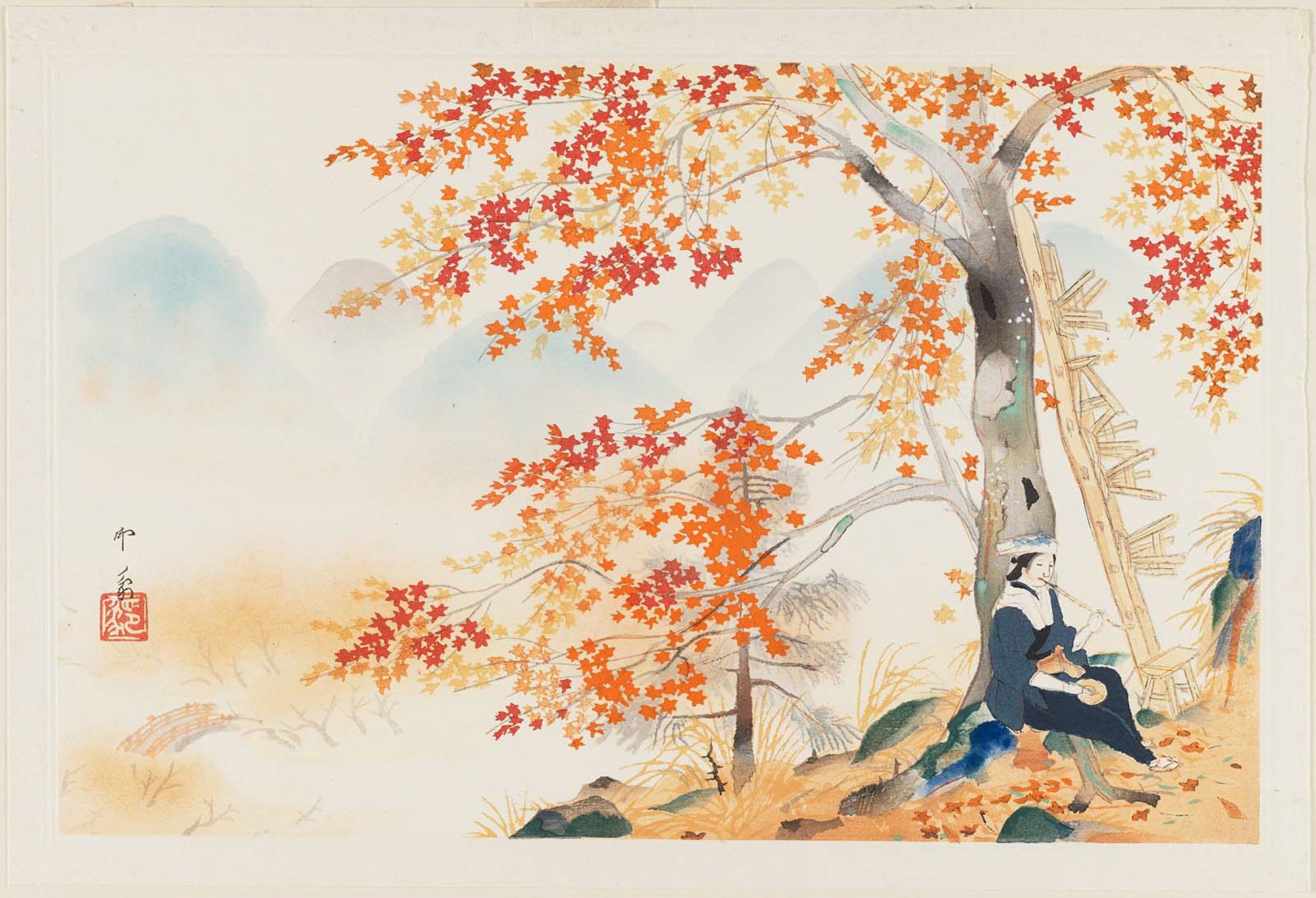
Autumn Maple Leaves at Takao, from the album Eight Views of Kyoto (Kyôto hakkei)
Woodblock print

The Beach at Kaiganji in Sanuki Province (Sanuki Kaiganji no hama), from the series "Collection of Views of Japan II, Kansai Edition (Nihon fukei shu II Kansai hen)"
1934
Color woodblock print; oban

Tea Kettle, section of a sheet from the series "Mirror of Stone Rubbings of Views of the Provinces" (Kohon meihitsu ishizuri kagami)
n.d.
Woodblock print; ishizuri-e, section of harimaze sheet
Featured in Collections
Curated cross-cuts that include this print.
Frequently Asked Questions
Woman Passing a Roadside Shop Near Oji was created by Katsushika Hokusai (葛飾北斎) in early 1800s.
Woman Passing a Roadside Shop Near Oji depicts landscapes.