
Women and Attendents by the Beach of Tanakawa
- Date:
- 1800-10
- Medium:
- Color woodblock print; long surimono
- Source:
- Art Institute of Chicago
Description
Women and Attendents by the Beach of Tanakawa is a ukiyo-e print designed by Katsushika Hokusai around 1800, during a transitional moment in his career when he was moving away from formal Katsukawa school training toward a more independent style. The composition gathers elegantly dressed women and their accompanying servants along a stretch of coastline, balancing the languid bearing of the leisured figures against the working postures of their attendants. Hokusai uses the open expanse of beach and sea to organize the scene, with figures stepping carefully across sand while distant waves and a quiet horizon establish the seasonal pleasure-outing setting that Edo viewers prized. Costume details receive particular care, the patterned robes and folded sashes drawn with the linear refinement Hokusai had inherited from earlier figure printmakers, while the relaxed grouping shows his growing interest in narrative incident over courtesan portraiture alone. As an Edo ukiyo-e print from the turn of the nineteenth century, the work belongs to a current of bijin-ga that increasingly placed beautiful women in open landscape rather than indoor parlors, anticipating the landscape mastery for which Katsushika Hokusai would later become famous. The impression is preserved in the collection of the Art Institute of Chicago, where it documents the breadth of Hokusai's early subject matter before his great series of the 1820s and 1830s. For collectors and students of ukiyo-e print culture, the sheet offers an opportunity to see Hokusai handling figure, fabric, and shoreline with equal attention, a useful counterpoint to the canonical Fuji landscapes that dominate his later reputation.
More Prints by Katsushika Hokusai
Hokusai manga (Hokusai Sketchbooks)
19th century
Woodblock-printed book; ink and light color on paper
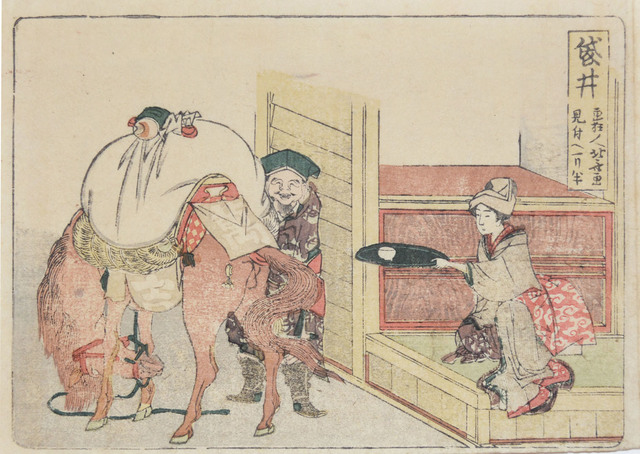
Fukuroi
1804
Japanese woodblock print

The Fishermen of Katase Hauling in Their Nets: The Purple Shell (Murasakigai)
1821
Color woodblock print with metallic pigments; surimono shikishiban

Burdock Root (Kurama gobo), from the series "A Selection of Horses (Uma-zukushi)"
1822
Color woodblock print; shikishiban, surimono
More Landscapes Prints

Lake Kugushi in Wakasa Province (Wakasa Kugushiko), from the series Souvenirs of Travel I (Tabi miyage dai isshu)"
Wakasa Kugushiko
1920
Color woodblock print; oban
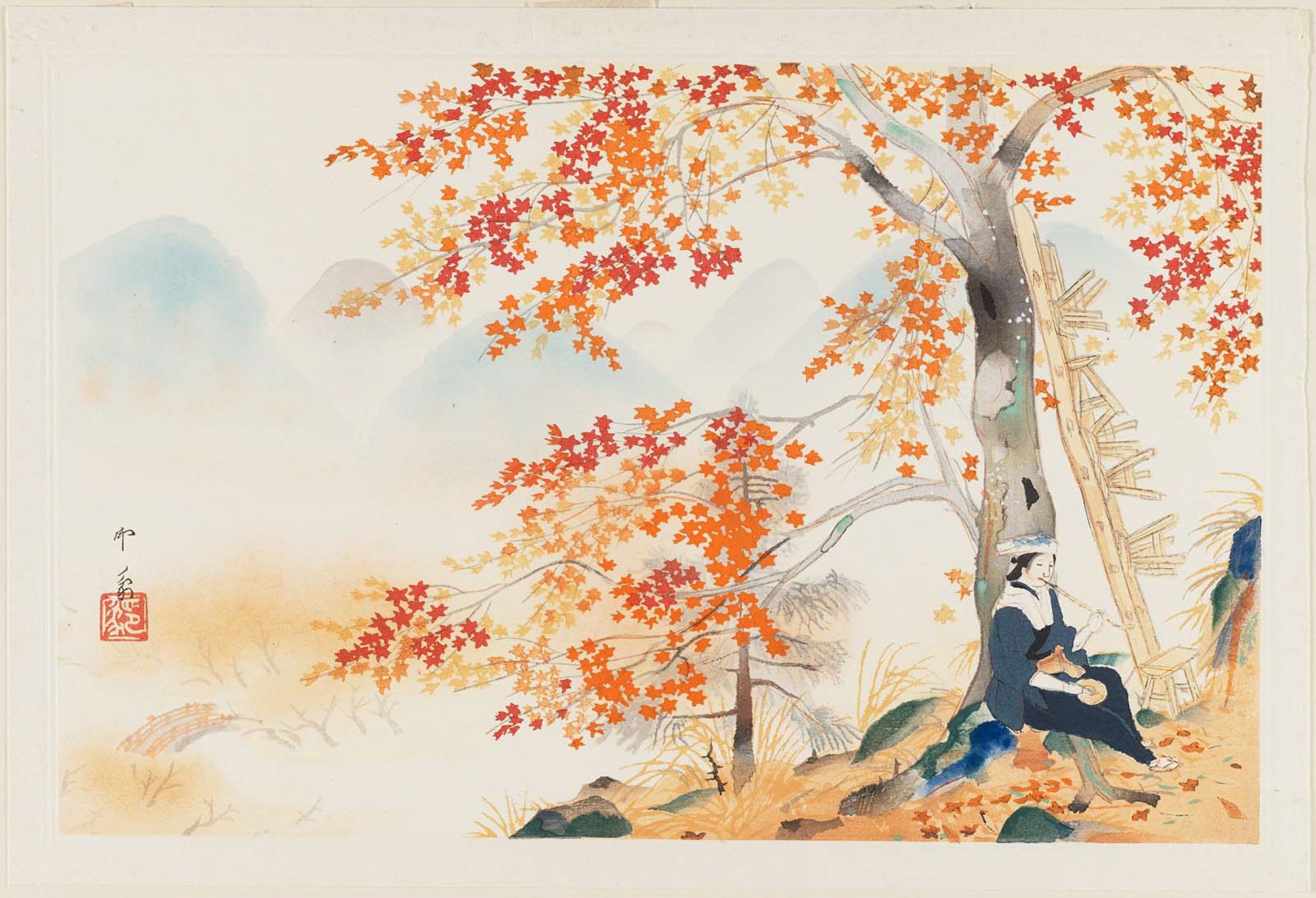
Autumn Maple Leaves at Takao, from the album Eight Views of Kyoto (Kyôto hakkei)
Woodblock print

The Beach at Kaiganji in Sanuki Province (Sanuki Kaiganji no hama), from the series "Collection of Views of Japan II, Kansai Edition (Nihon fukei shu II Kansai hen)"
1934
Color woodblock print; oban

Tea Kettle, section of a sheet from the series "Mirror of Stone Rubbings of Views of the Provinces" (Kohon meihitsu ishizuri kagami)
n.d.
Woodblock print; ishizuri-e, section of harimaze sheet
Featured in Collections
Curated cross-cuts that include this print.
Frequently Asked Questions
Women and Attendents by the Beach of Tanakawa was created by Katsushika Hokusai (葛飾北斎) in 1800-10.
Women and Attendents by the Beach of Tanakawa depicts landscapes.