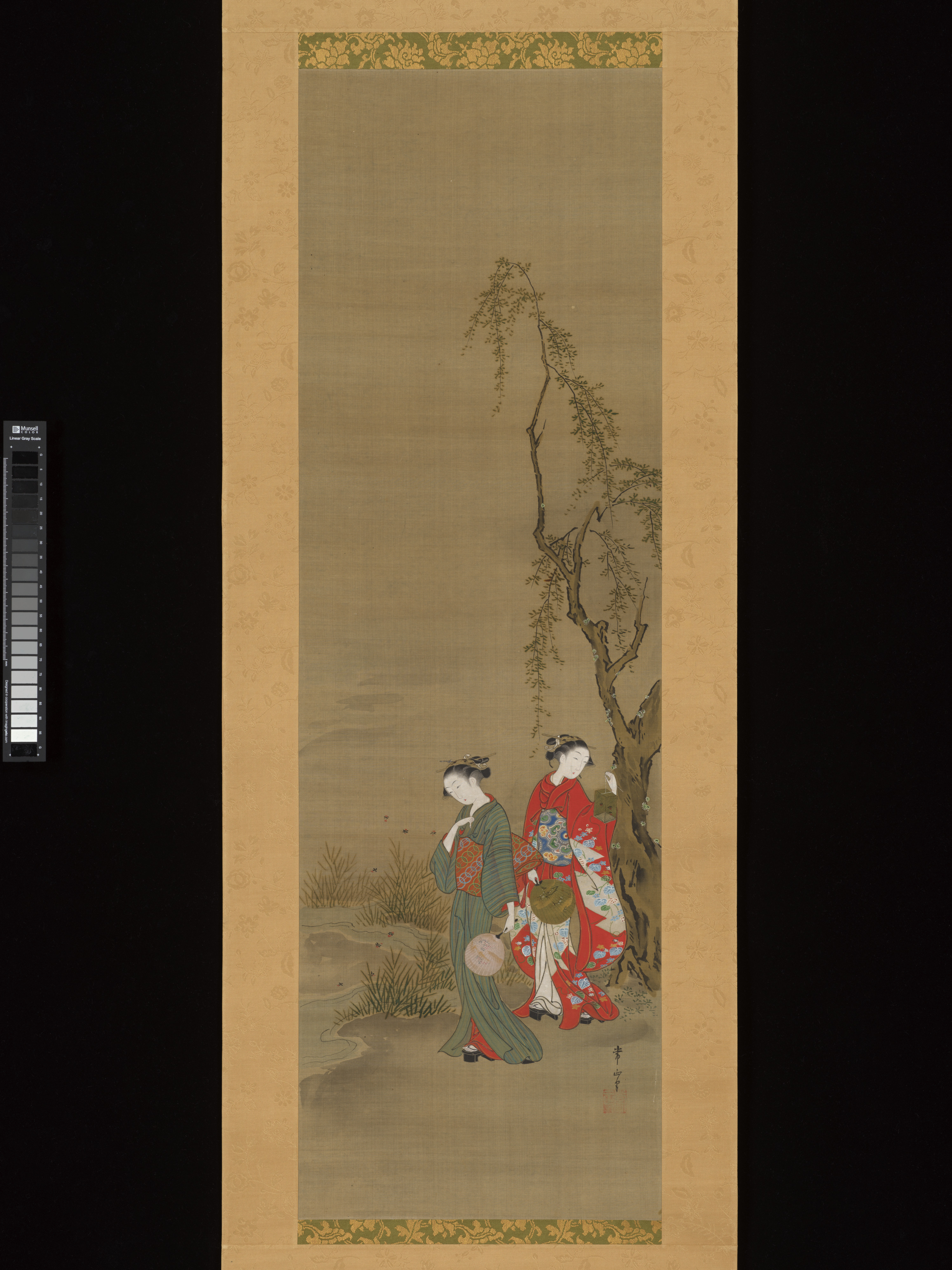
Two Girls Catching Fireflies
- Date:
- first half of the 18th century
- Medium:
- Hanging scroll; ink, color, and gold on silk
- Source:
- Metropolitan Museum of Art
Description
This first-half-of-the-eighteenth-century hanging scroll in the Metropolitan Museum of Art, Two Girls Catching Fireflies, depicts one of the quintessential seasonal pastimes of summertime Edo, the firefly-hunting (hotaru-gari) excursion that drew young women out into the riverside marshes and gardens in the warm evenings of late summer to capture the luminous insects in folding fans and tiny cages. Painted in ink, color, and gold on silk in the refined Kawamata-school manner, the work documents the painted bijinga genre at its most intimate and lyrical, removed from the formal courtesan-procession iconography of the Yoshiwara and operating instead in the more domestic register of seasonal genre painting that artists like Miyagawa Chōshun and Hanekawa Chinchō were jointly developing in the Kyōhō and Genbun eras. Tsunemasa's composition pairs two young women in summer kimono in a moment of focused attention as they reach upward to catch the fireflies, the gold pigment of the silk ground providing the luminous nocturnal atmosphere that the painted hanging-scroll format made possible. The figures' attenuated proportions, delicately rendered facial features, and patterned summer kimono follow the painted-bijinga conventions that Tsunemasa inherited from the Kaigetsudō line, while the lyrical seasonal subject anticipates the more atmospheric mood that the polychrome nishiki-e of Suzuki Harunobu would later codify in printed form. The Met's example provides one of the strongest surviving documents of Tsunemasa's mature painted style and his engagement with the seasonal genre subjects that were a Kawamata-school specialty.
More Prints by Kawamata Tsunemasa

More Children Prints
Frequently Asked Questions
Two Girls Catching Fireflies was created by Kawamata Tsunemasa (川又常正) in first half of the 18th century.
Two Girls Catching Fireflies depicts children.