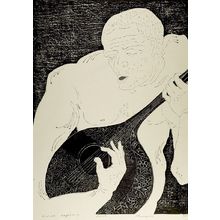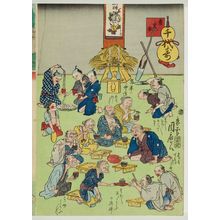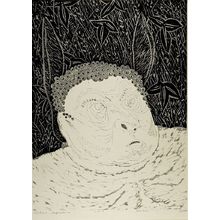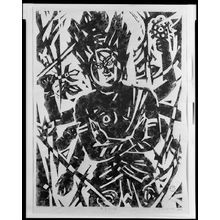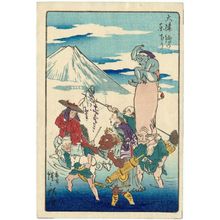
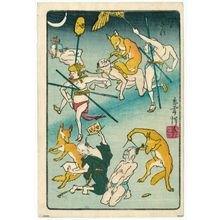
"Figures from Ôtsu-e Paintings in a Parody of Narihira's Journey to the East (Ôtsu-e no azuma kudari), from the series One Hundred Pictures
- Medium:
- Woodblock print
- Source:
- Museum of Fine Arts Boston
A print from Kyosai's One Hundred Pictures series (Kyosai hyakuzu or similar) presenting a mie-tate, or visual parody, in which figures from Ôtsu-e folk paintings are cast in the roles from Ariwara no Narihira's journey eastward as recorded in the Ise Monogatari. Ôtsu-e were inexpensive devotional paintings sold to travelers at Ôtsu on the Tôkaidô, featuring stock subjects including the demon with a shakuhachi, the Fujin (wind god), and armored figures. Kyosai replaces Narihira's courtly companions with these folk-art archetypes, creating comic anachronism between aristocratic literary source and populist pictorial tradition. The parody format (mie-tate-e) was a staple of [ukiyo-e](/glossary/ukiyo-e) humor and allowed Kyosai to display encyclopedic visual knowledge while exercising ironic distance from both the classical and the vernacular traditions he invokes.
Woodblock print
Woodblock print
Woodblock print
Woodblock print
"Figures from Ôtsu-e Paintings in a Parody of Narihira's Journey to the East (Ôtsu-e no azuma kudari), from the series One Hundred Pictures was created by Kawanabe Kyosai (河鍋暁斎).
"Figures from Ôtsu-e Paintings in a Parody of Narihira's Journey to the East (Ôtsu-e no azuma kudari), from the series One Hundred Pictures depicts figures and travel scenes.