
May: Shoki the Demon Queller Riding on a Tiger, Subjugating Goblins, from the series "Of the Twelve Months: the Fifth (Junikagetsu no uchi: gogatsu)"
- Source:
- Art Institute of Chicago
Description
Created in 1887, this Japanese woodblock print by Kawanabe Kyosai depicts Shoki the Demon Queller astride a tiger as he subjugates a host of fleeing goblins. The image belongs to the series "Of the Twelve Months," specifically the fifth installment for the month of May (Junikagetsu no uchi: gogatsu), a sequence in which Kyosai paired each month of the calendar with a corresponding mythological or seasonal subject. Shoki, known in Chinese as Zhong Kui, is a legendary protector figure whose fierce gaze and drawn sword were traditionally invoked to ward off illness and evil spirits during the Boys' Day festival held on the fifth day of the fifth month. Kyosai's interpretation channels the muscular bravado of the warrior-print tradition while injecting his characteristic humor: the demons scatter in exaggerated terror, their grotesque features rendered with the comic specificity that made the artist one of the most distinctive voices in late Meiji ukiyo-e. Trained as a young child in the studio of Utagawa Kuniyoshi and later under Kano school masters, Kyosai fused popular print conventions with the disciplined brushwork of classical Japanese painting, producing imagery that could move effortlessly between satire and reverence. The 1887 date places this Japanese woodblock late in his career, when he had become an international celebrity courted by foreign visitors such as the architect Josiah Conder, and when Meiji ukiyo-e was increasingly confronting the pressures of photography and Western printing techniques. The composition exploits the vertical format to dramatize Shoki's commanding posture, while the tiger's striped flank and the demons' contorted bodies provide a rhythmic interplay of pattern and motion. This impression is preserved in the collection of the Art Institute of Chicago, where it remains a vivid example of Kyosai's ability to renew traditional iconography for a rapidly modernizing audience.
More Prints by Kawanabe Kyosai
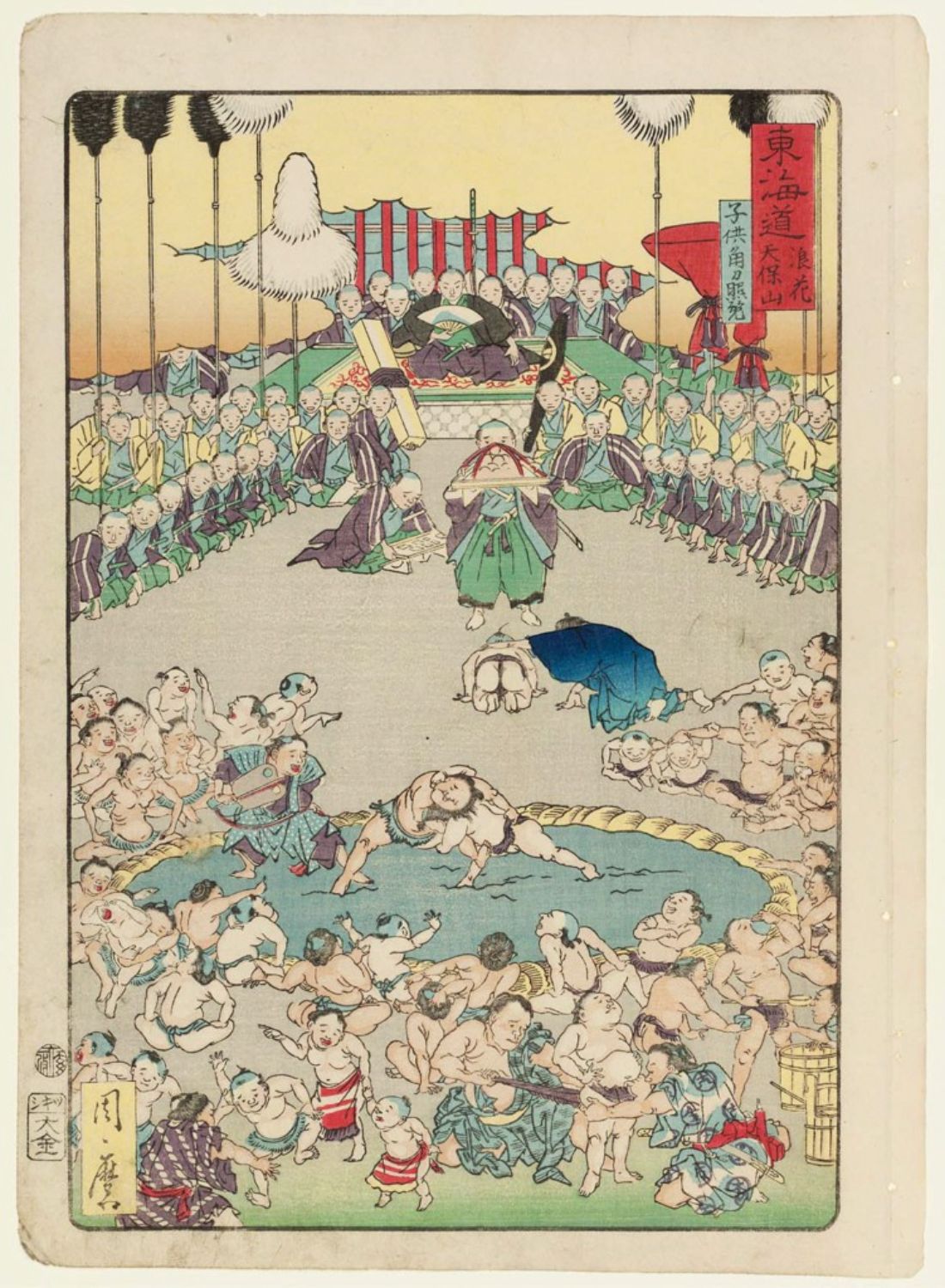
Tenpôzan in Osaka: Viewing Children's Sumo (Naniwa Tenpôzan kodomo sumô shôran), from the series Scenes of Famous Places along the Tôkaidô Road (Tôkaidô meisho fûkei), also known as the Processional Tôkaidô (Gyôretsu Tôkaidô), here called Tôkaidô
1863
Woodblock print
Kyosai, Royal Academy, London, FREE DOMESTIC SHIPPING
2022
Original Museum Lithographic Exhibition Poster
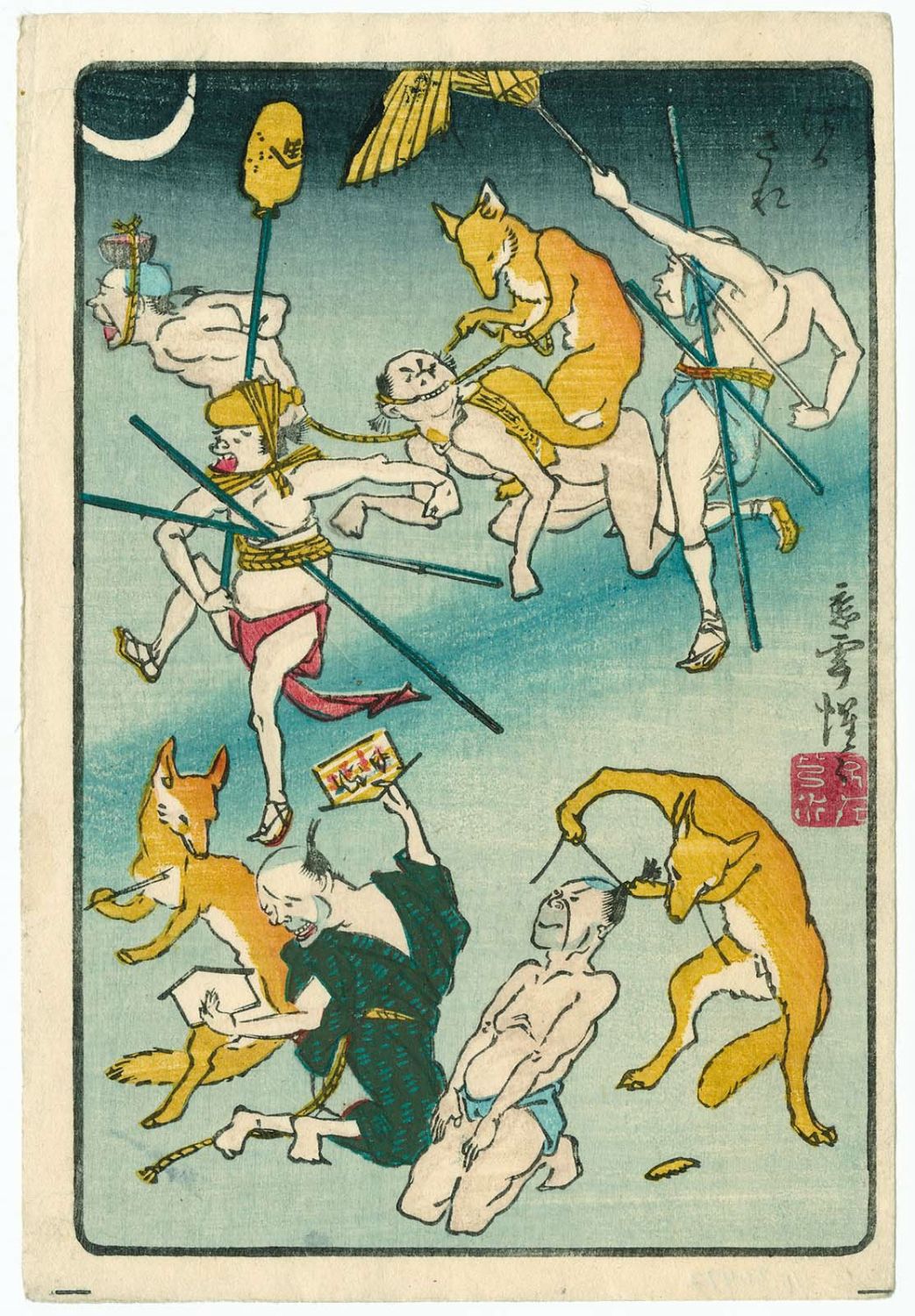
from the series One Hundred Pictures by Kyôsai (Kyôsai hyakuzu)
Woodblock print
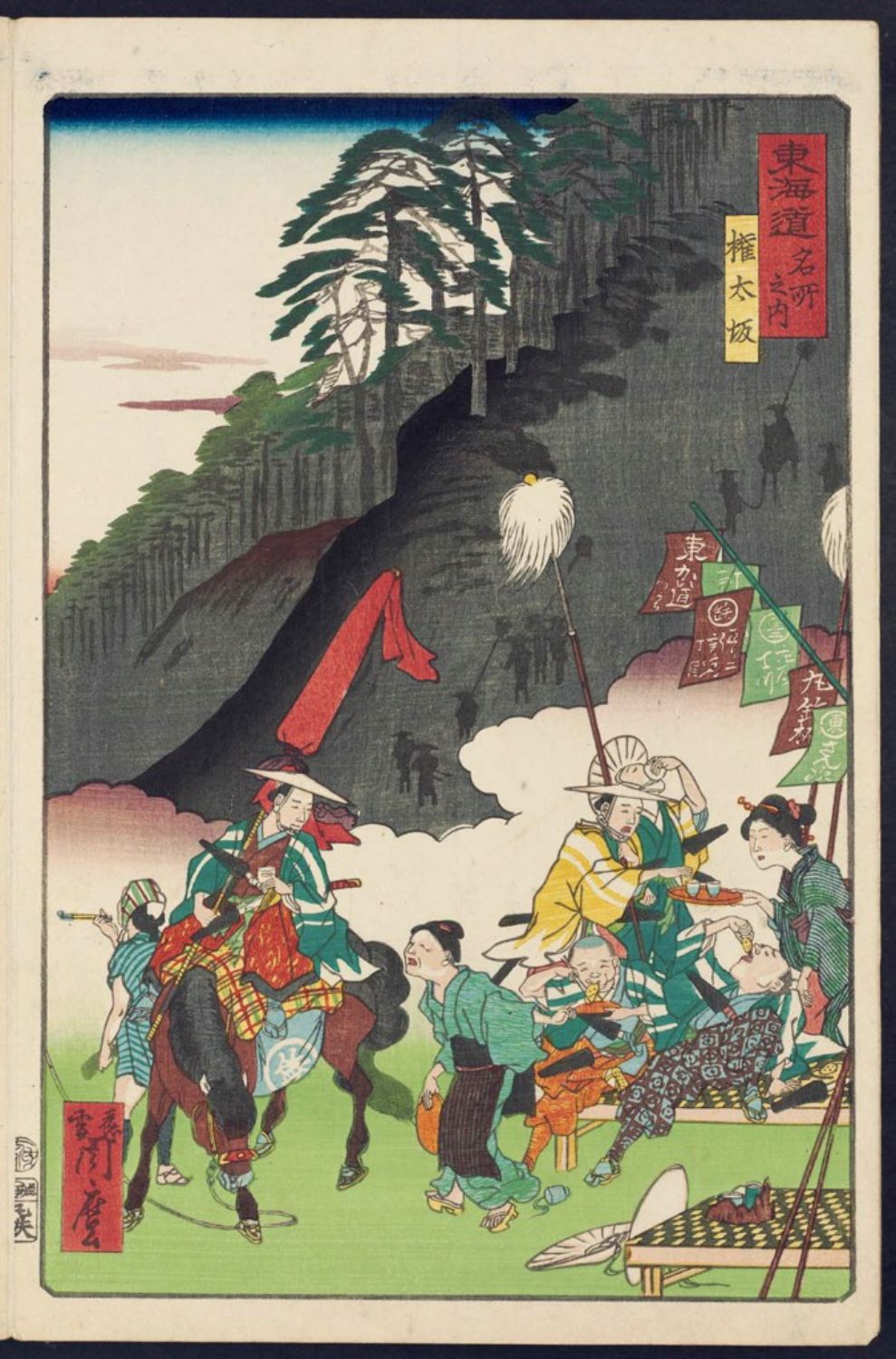
Gontazaka, from the series Scenes of Famous Places along the Tôkaidô Road (Tôkaidô meisho fûkei), also known as the Processional Tôkaidô (Gyôretsu Tôkaidô), here called Tôkaidô meisho no uchi
Woodblock print
Frequently Asked Questions
May: Shoki the Demon Queller Riding on a Tiger, Subjugating Goblins, from the series "Of the Twelve Months: the Fifth (Junikagetsu no uchi: gogatsu)" was created by Kawanabe Kyosai (河鍋暁斎).