
Shinjuku station neighbourhood
- Medium:
- Mokuhanga (Japanese woodblock)
- Image courtesy of
- Saru Gallery
Description
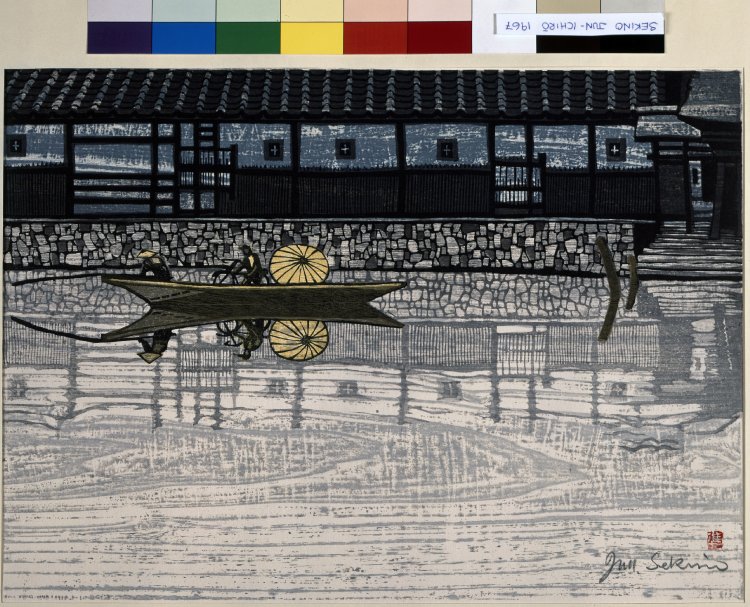
Shinjuku station neighbourhood is an unusual subject for Sasajima, whose sustained interest lay in Buddhist temple architecture and rural landscape rather than dense urban Tokyo. The image likely registers the postwar rebuilding of the district, with low buildings, signage, and rail infrastructure compressed into the flattened spatial logic that sosaku-hanga inherited from early-twentieth-century European modernism. Where commercial shin-hanga printmakers softened the modern city through atmospheric bokashi, Sasajima's idiom is harder: visible gouge marks, blunt colour areas, and registration that admits its own seams. A station-neighbourhood print would foreground the station as a structural fact rather than a romantic destination. The work sits at the edge of Sasajima's body of work and offers a counterpoint to his more characteristic temple meditations -- a reminder that the creative-print movement under Onchi Koshiro engaged with contemporary Japan as well as its sacred sites. Every block is hand-carved and hand-pulled, a discipline Sasajima maintained without exception across more than fifty years.
More Prints by Kihei Sasajima


More Transportation Prints
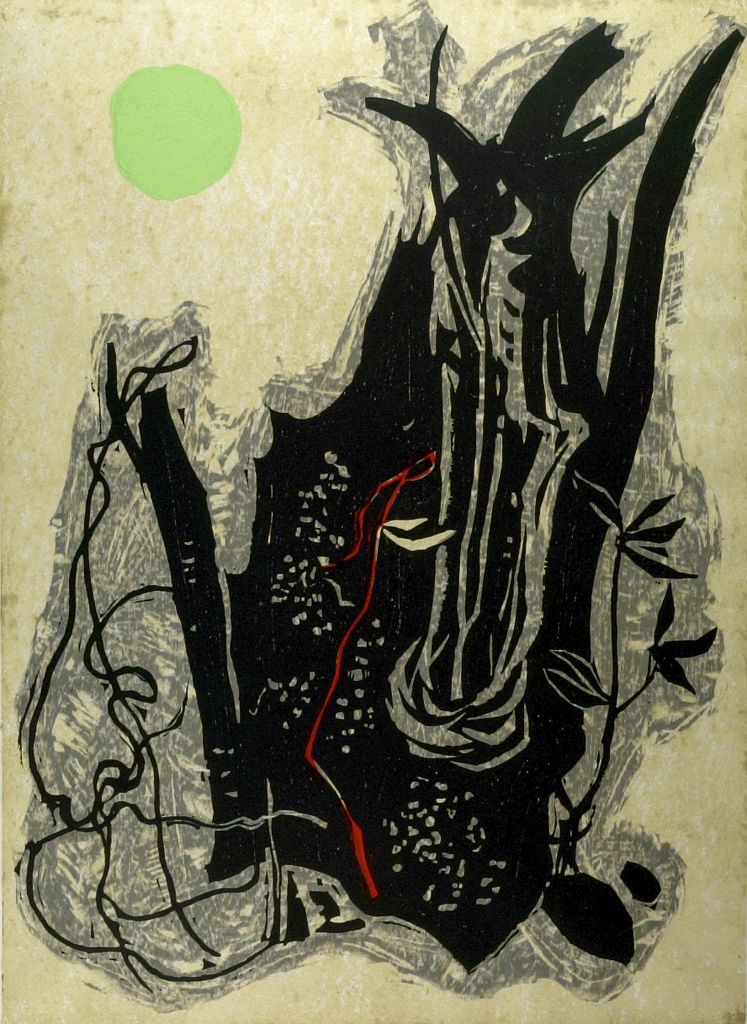
Old Tree and Path of the Sun, Shôwa period, dated 1961
Woodblock print
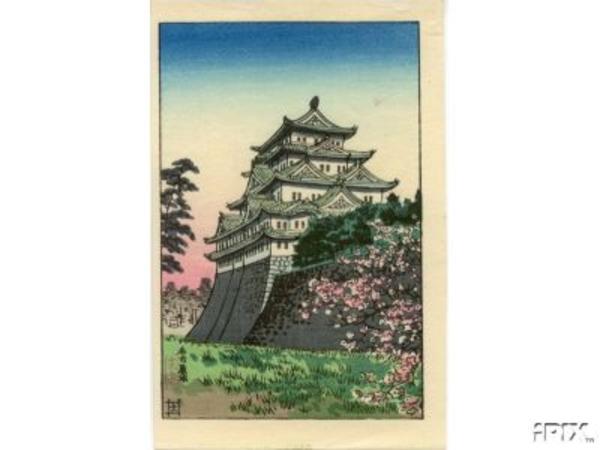
Nagoya Castle
Woodblock print
Battle at Jinzhoucheng on the Road to Port Arthur
1894 (Meiji 27)
Woodblock print (nishiki-e); ink and color on paper
Mitsuke / Tokaido gojusan tsugi ('Fifty-three Stations of the Tokaido Road)
Woodblock print
Featured in Collections
Curated cross-cuts that include this print.
Frequently Asked Questions
Shinjuku station neighbourhood was created by Kihei Sasajima (笹島喜平).
Shinjuku station neighbourhood depicts transportation.