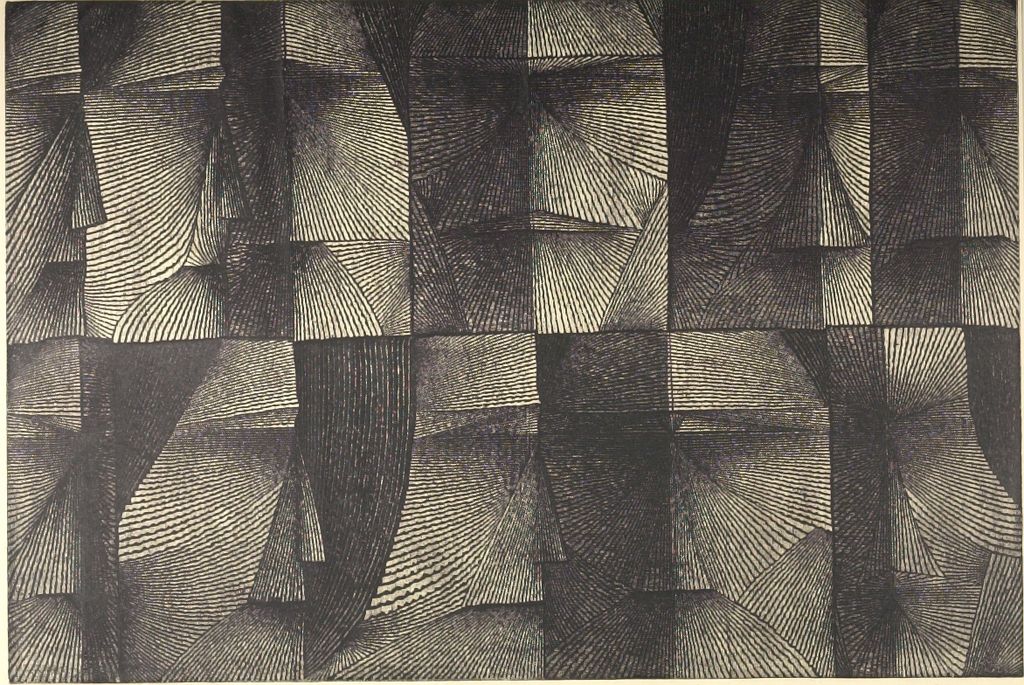
Calamity, Shôwa period, dated 1960
- Medium:
- Woodblock print
- Edition:
- Self-printed
- Source:
- Harvard Art Museums
Description
Dated to 1960, this woodblock print by Kinoshita Tomio takes catastrophe as its subject, responding to or anticipating disaster through visual means. Japan in 1960 was still processing the devastation of World War II and the atomic bombings while simultaneously experiencing the upheaval of rapid industrialization and political turmoil, including massive protests against the U.S.-Japan Security Treaty that year. Kinoshita's abstracted visual language, centered on faces and masks, would have addressed calamity not through literal depiction of destruction but through distorted or fragmented human forms that convey anguish, disorientation, or loss. The woodblock medium's carved surfaces produce an inherent roughness that suits a subject defined by rupture and violence. The Showa-period dating links this print to a moment when Japanese artists were using traditional media to process distinctly modern traumas.
More Prints by Kinoshita Tomio


More Figures Prints
Featured in Collections
Curated cross-cuts that include this print.
Frequently Asked Questions
Calamity, Shôwa period, dated 1960 was created by Kinoshita Tomio (木下富雄).
Calamity, Shôwa period, dated 1960 depicts figures and abstract.