Kayoi, from the series Seven Beautiful Women (Fūryū nana komachi)
- Series:
- Seven Beautiful Women
- Date:
- Late Edo period, late 18th to early 19th century
- Medium:
- Ukiyo-e woodblock print in "ōban" format; ink and color on paper, with printed signature reading "Utamaro hitsu"
- Source:
- Harvard Art Museums
Description
Kayoi, from the series Seven Beautiful Women (Furyu nana komachi), is a color woodblock print designed by Kitagawa Utamaro and held by the Harvard Art Museums. The series draws on the Seven Komachi legend, attaching each of the seven canonical episodes from the life of the poet Ono no Komachi to a contemporary beauty styled in the elegant manner of the late eighteenth-century floating world. Kayoi, the visiting episode, alludes to the story of Komachi requiring a suitor to call on her on a hundred consecutive nights, and Utamaro reframes that legendary endurance as a study of poise in a single fashionable woman. As one of the central designers of Edo bijin-ga, Kitagawa Utamaro made this kind of mitate-e a signature strategy, recasting classical literature as a parade of recognizable contemporary figures. The composition emphasizes face, coiffure, and kimono pattern, the three areas in which Utamaro's drawing and color woodblock craft most rewarded close looking. For collectors and students of ukiyo-e, the Harvard example offers a strong instance of how Utamaro extended the Komachi cycle into a flexible series structure, repurposed for new sets and audiences across his career, and consistently grounded in his attentive portrayal of Edo women.
More Prints by Kitagawa Utamaro
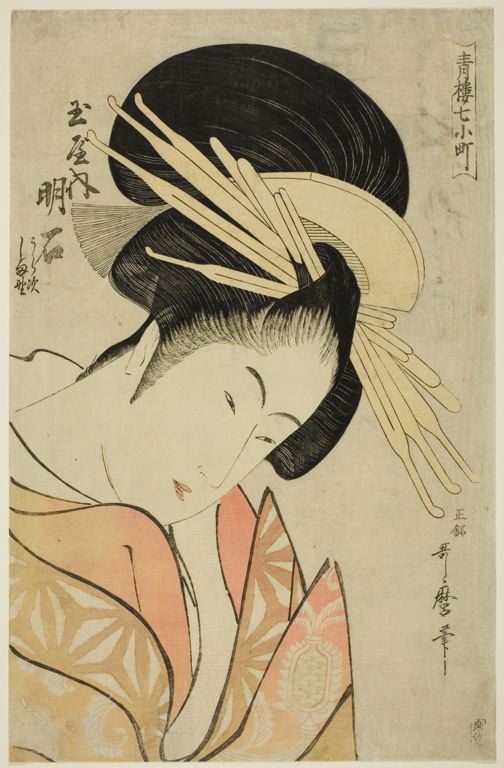
Akashi of the Tamaya, from the series Seven Komachis of Yoshiwara (Seiro nana Komachi) (Tamaya uchi Akashi, Uraji, Shimano)
Woodblock print
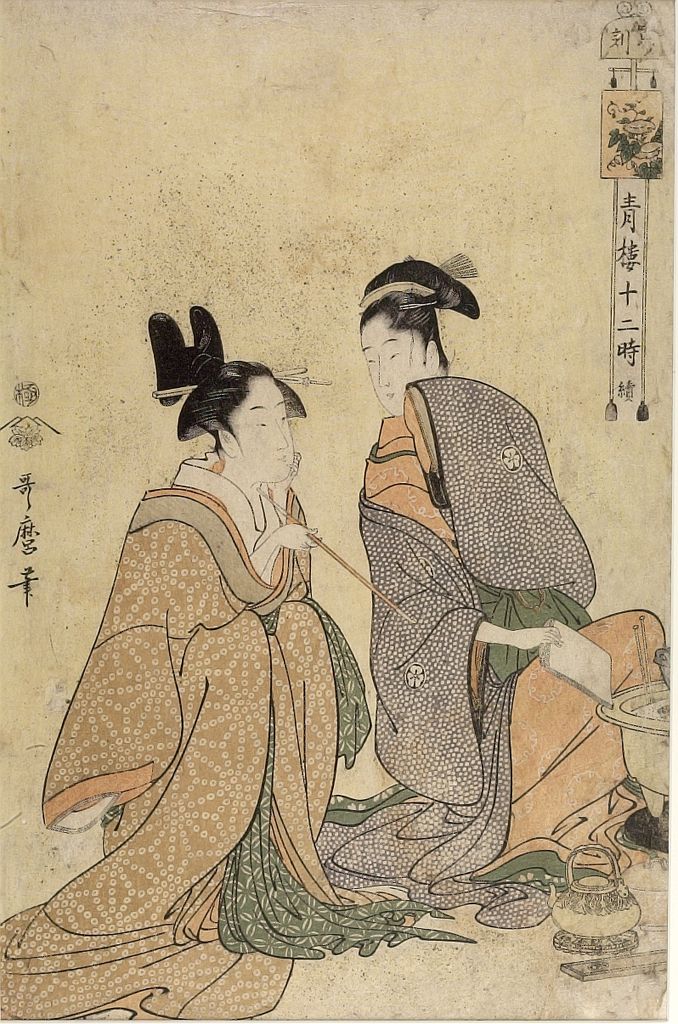
Hour of the Tiger (Tora no koku = 4 AM) from the series Twelve Hours in Yoshiwara (Seirô jûni toki tsuzuki), Late Edo period, circa 1794
Woodblock print
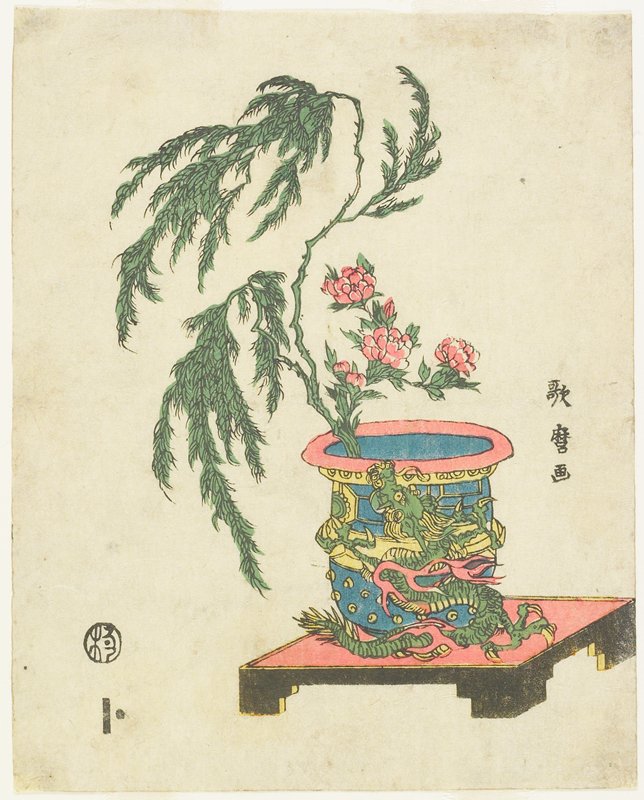
Ikebana arrangement of Peony and Willow in Dragon Pot
1781–1806
Woodblock print (nishiki-e), ink and color on paper
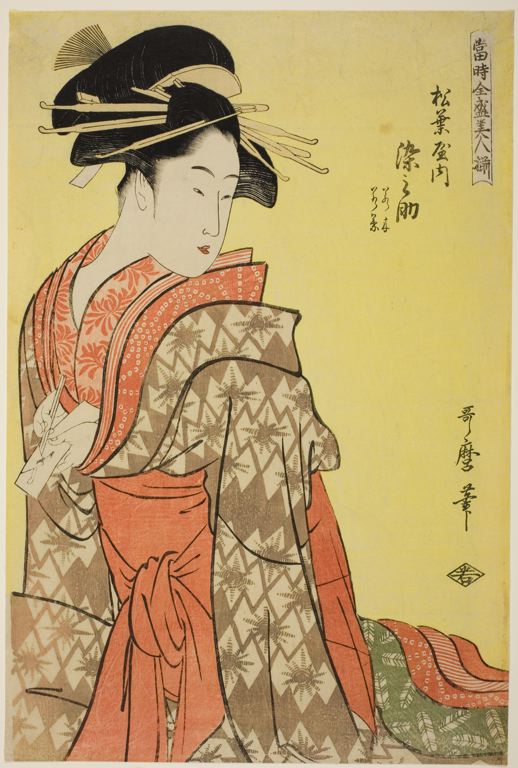
The Greatest Beauties of Our Time (Toji zensei bijin zoroe): Somenosuke of the Matsubaya with Attendants Wakagi and Wakaba
Woodblock print
More Figures Prints
Featured in Collections
Curated cross-cuts that include this print.
Frequently Asked Questions
Kayoi, from the series Seven Beautiful Women (Fūryū nana komachi) was created by Kitagawa Utamaro (喜多川歌麿) in Late Edo period, late 18th to early 19th century.
Yes — Kayoi, from the series Seven Beautiful Women (Fūryū nana komachi) is part of the Seven Beautiful Women series by Kitagawa Utamaro.
Kayoi, from the series Seven Beautiful Women (Fūryū nana komachi) depicts figures, bijin-ga, and portraits.