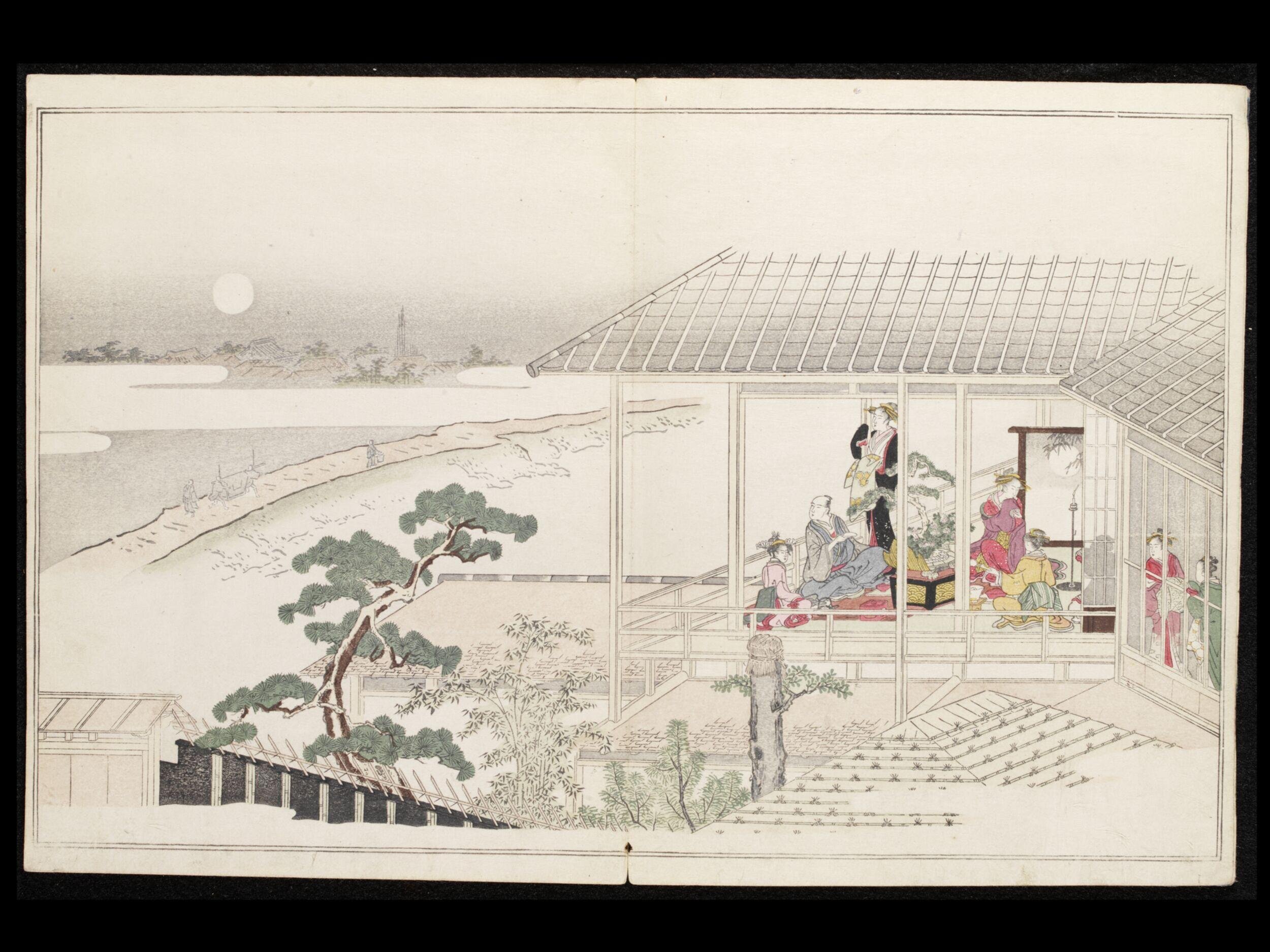
Moon-Mad Monk
- Date:
- 1789
- Medium:
- Source:
- Victoria and Albert Museum
Description
"Moon-Mad Monk," dated to 1789 and preserved in the Victoria and Albert Museum, is an early work by Kitagawa Utamaro that shows the breadth of his ukiyo-e subject matter before he committed himself almost exclusively to Edo bijin-ga. Eccentric religious figures, hermits, and tsuki-kichigai (moon-mad) recluses appear throughout the painting and printmaking tradition of Edo as representatives of unorthodox sensibility, blending Buddhist devotion with poetic transport. The conceit of being driven into ecstasy by the moon belonged to a venerable East Asian literary culture admired by the kyoka poets and waka enthusiasts who patronized Utamaro through his publisher Tsutaya Juzaburo. The 1780s were the period in which Utamaro was establishing his independent voice, moving past the influences of Sekien and Kiyonaga toward the distinctive elegance of his later style. The monk's distinctive posture and the spareness of his setting suggest the inheritance of haiga ink-painting traditions absorbed into woodblock prints. While the V&A's London collection of ukiyo-e was assembled across many decades, this print stands among its valuable witnesses to Utamaro's range. Reading it alongside his celebrated bijin reminds us that the artist who would become synonymous with Yoshiwara beauties was at home with monks, gods, animals, and seasonal flora.
More Prints by Kitagawa Utamaro
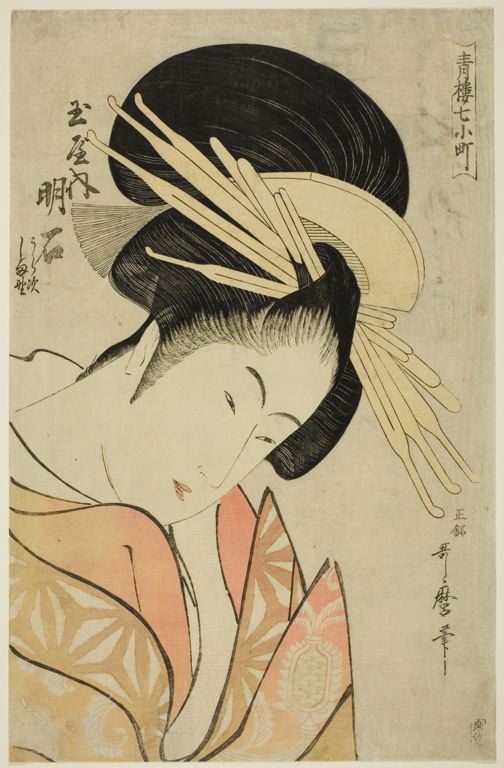
Akashi of the Tamaya, from the series Seven Komachis of Yoshiwara (Seiro nana Komachi) (Tamaya uchi Akashi, Uraji, Shimano)
Woodblock print
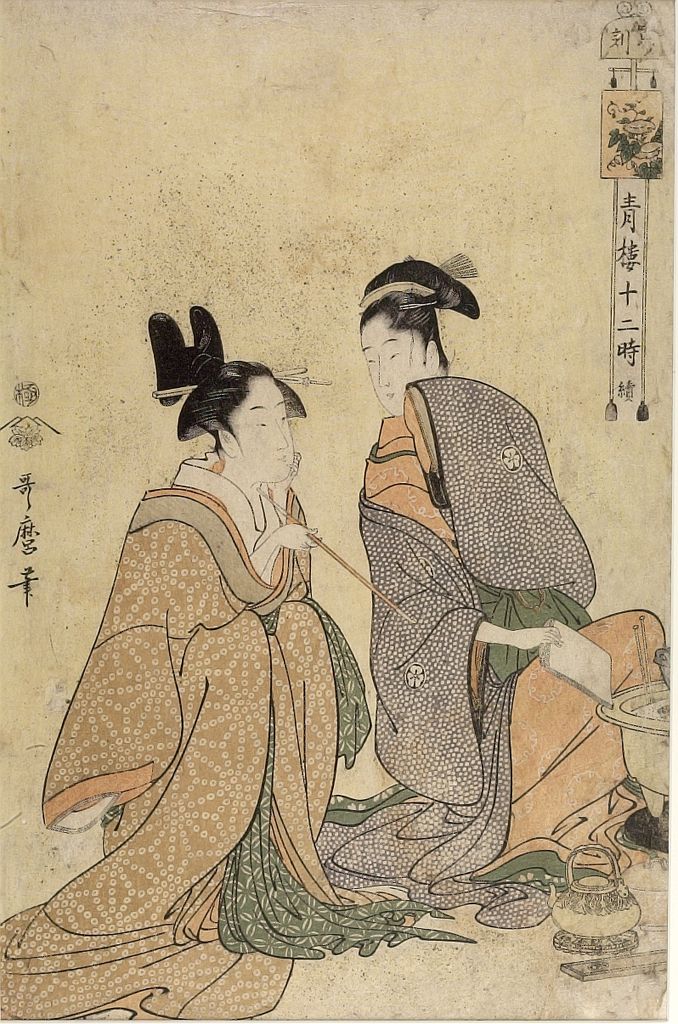
Hour of the Tiger (Tora no koku = 4 AM) from the series Twelve Hours in Yoshiwara (Seirô jûni toki tsuzuki), Late Edo period, circa 1794
Woodblock print
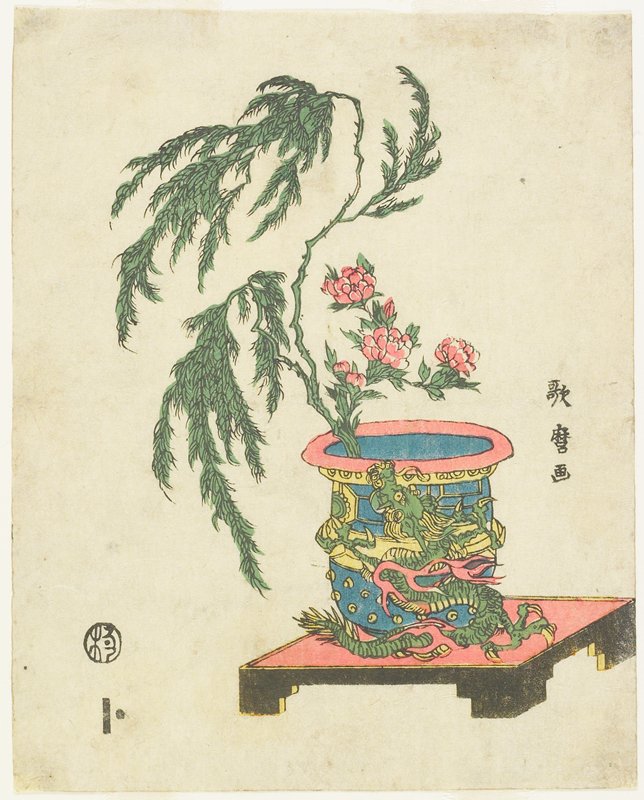
Ikebana arrangement of Peony and Willow in Dragon Pot
1781–1806
Woodblock print (nishiki-e), ink and color on paper
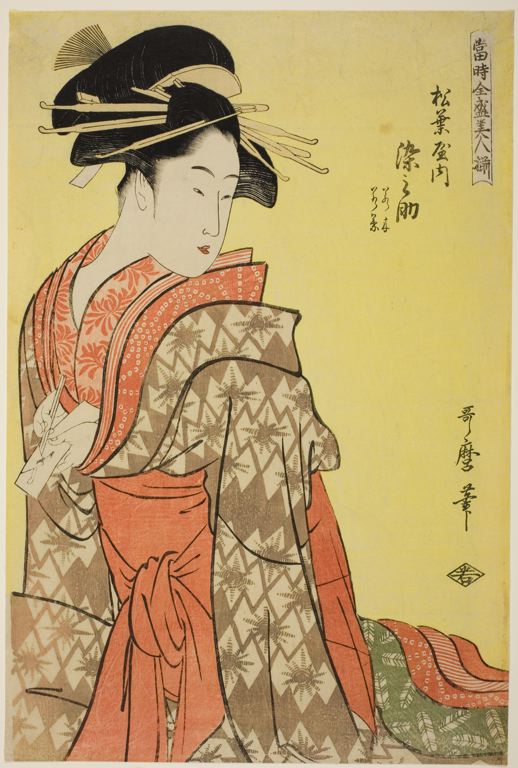
The Greatest Beauties of Our Time (Toji zensei bijin zoroe): Somenosuke of the Matsubaya with Attendants Wakagi and Wakaba
Woodblock print
More Moonlight Prints
![Mount Fuji on a Moonlit Night, Kawai Bridge (Tsukiyo no Fuji [Kawaibashi]), from the series "Selection of Views of the Tokaido (Tokaido fukei senshu)" by Kawase Hasui](https://www.artic.edu/iiif/2/d0960668-1e73-339a-b182-fb995a54bff0/full/843,/0/default.jpg)
Mount Fuji on a Moonlit Night, Kawai Bridge (Tsukiyo no Fuji [Kawaibashi]), from the series "Selection of Views of the Tokaido (Tokaido fukei senshu)"
1947
Color woodblock print; oban

Evening Moon at Nakanoshima, Sapporo (Sapporo Nakanoshima no yuzuki), from the series "Collection of Views of Japan, Eastern Japan Edition (Nihon fukei shu higashi Nihon hen)"
March 1933
Color woodblock print; oban

Matsushima in Moonlight (Tsuki no Matsushima)
1919
Color woodblock print

Kiyozumi Garden in Moonlight
January 1938
Woodblock print, ink and color on paper
Frequently Asked Questions
Moon-Mad Monk was created by Kitagawa Utamaro (喜多川歌麿) in 1789.
Moon-Mad Monk depicts moonlight.