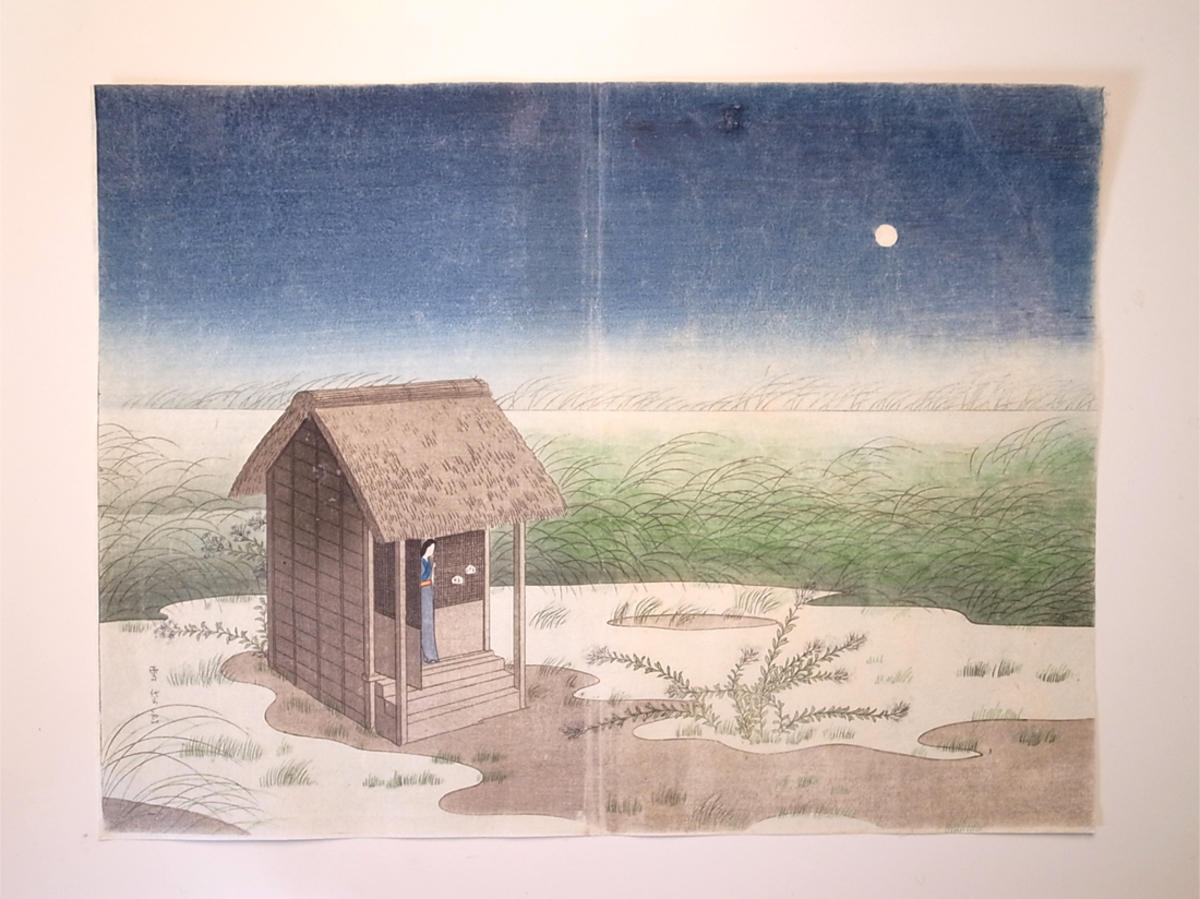
Mandarin Duck Notebook 2 — 鴛鴦帳
- Medium:
- Woodblock print
- Source:
- Japanese Art Open Database
- Image courtesy of
- Japanese Art Open Database
Description
Komura Settai (1887–1940) produced illustrated albums and prints in the kacho-e tradition, combining close observation of natural subjects with a refined compositional sensibility shaped by his training in nihonga. The second volume of the Mandarin Duck Notebook (鴛鴦帳) presents the oshidori—mandarin duck—a bird carrying strong symbolic resonance in Japanese visual culture as an emblem of conjugal fidelity, observed pairs being understood to remain together. Settai's treatment of the male would emphasize the elaborate plumage: rust-orange sail feathers, iridescent green and purple on the head, and white facial markings rendered through careful color separation and fine-line carving. The comparatively subdued female may be depicted in proximity, the contrast between their plumages a compositional given in oshidori imagery. The notebook format suggests a series of related studies gathered in consistent proportion, following precedents in Edo-period natural history albums. Settai's decorative handling of negative space and botanical setting aligns the work with the kacho-e lineage of Hiroshige and earlier masters.
More Prints by Komura Settai

More Birds & Flowers Prints
Featured in Collections
Curated cross-cuts that include this print.
Frequently Asked Questions
Mandarin Duck Notebook 2 — 鴛鴦帳 was created by Komura Settai (小村雪岱).
Mandarin Duck Notebook 2 — 鴛鴦帳 depicts birds & flowers.