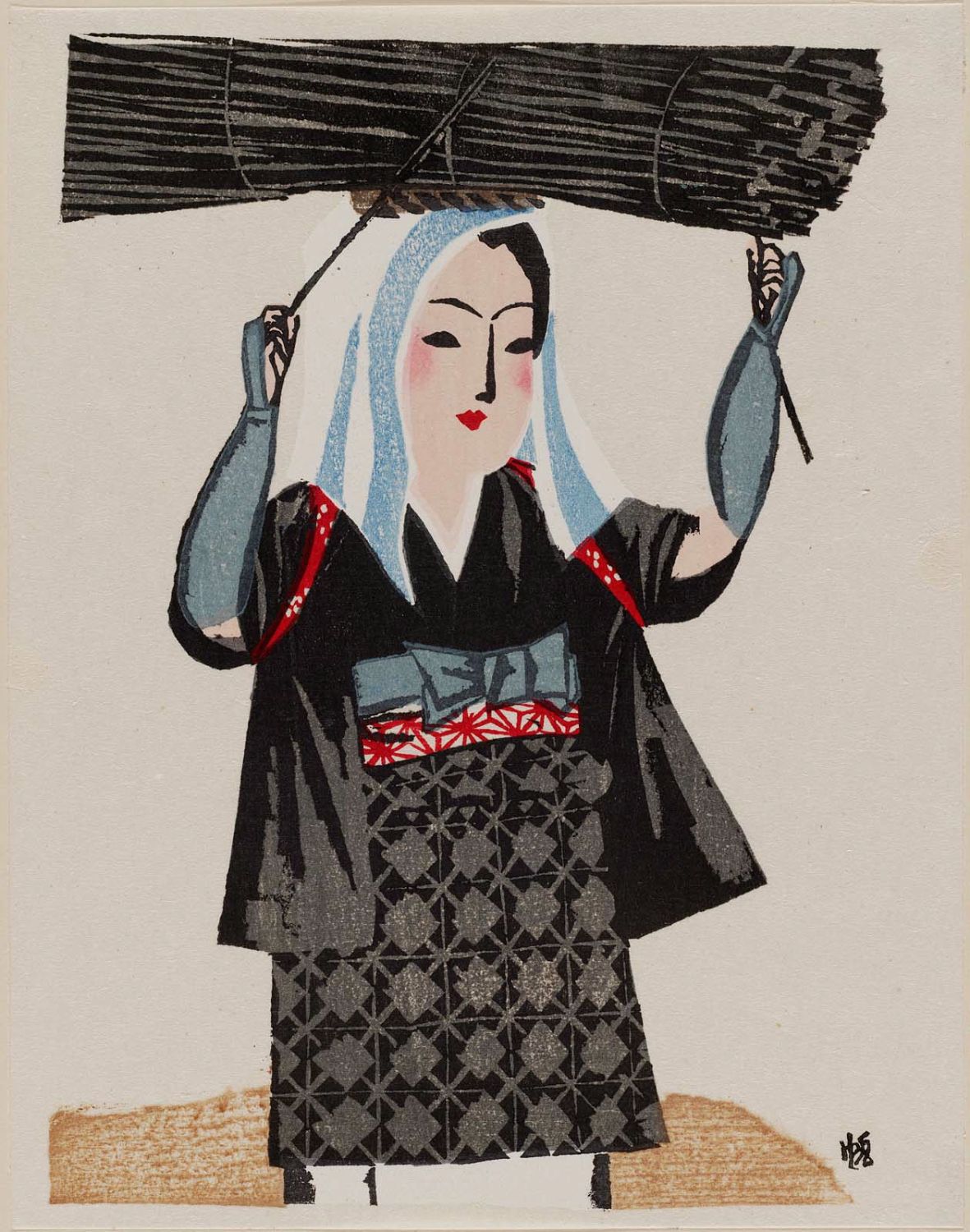
Ohara-me
- Medium:
- Woodblock print
- Edition:
- Self-printed
- Source:
- mfa
Description
The Ohara-me were the women of the village of Ohara, north of Kyoto, who traveled into the city carrying bundles of firewood, charcoal, or flowers balanced on their heads. Their distinctive dress—blue indigo cotton tunics and trousers, white head wrappings, and the carrying load itself—made them an enduring subject in Japanese visual culture from the Edo period onward. Senpan, a Kyoto native, knew the figure type from direct observation of his home region. The print depicts an Ohara-me figure with the visual clarity and warm characterization typical of Senpan's figural work, rendered in the flat color planes and visible carving of the sosaku-hanga manner. His approach to figures of working women favored a direct, sympathetic portrayal that found dignity and interest in unromanticized everyday people, distinguishing his work from both the idealization of classical bijin-ga and the polish of contemporaneous shin-hanga. Ohara-me imagery connected sosaku-hanga to a long tradition of Kansai genre subjects while reframing it through modernist sensibilities.
More Prints by Maekawa Senpan



More Figures Prints
Featured in Collections
Curated cross-cuts that include this print.
Frequently Asked Questions
Ohara-me was created by Maekawa Senpan (前川千帆).
Ohara-me depicts figures, daily life, and village scenes.