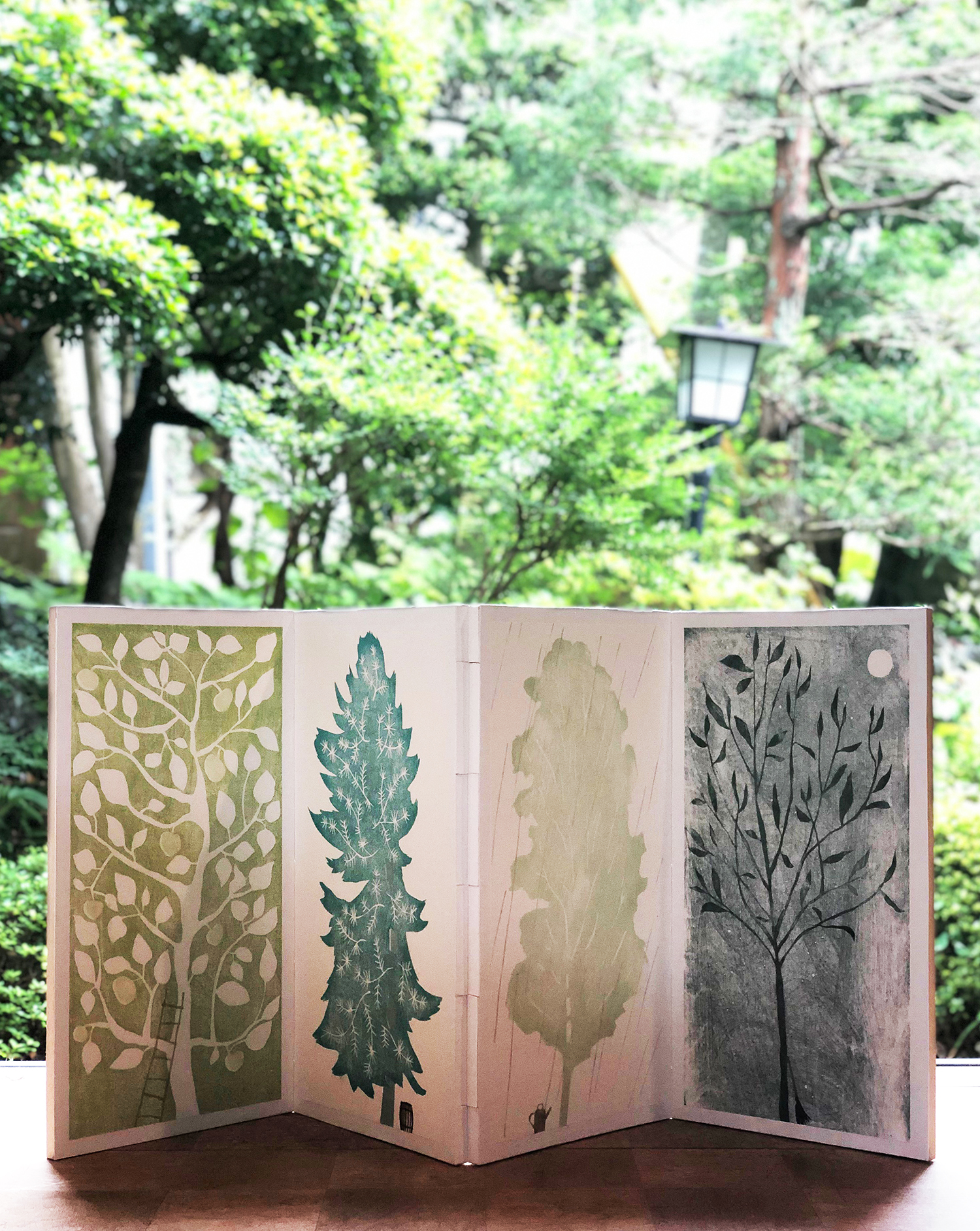
Mokuhanga Byoubu (Folding Screen)
by Mariko Jesse
- Medium:
- Mokuhanga on washi (four-panel folding screen)
- Image courtesy of
- Artist Website
Description
A four-panel folding screen stands on a table outdoors, each panel printed with a single tree against a distinct ground colour: an olive-green panel with a pale, leaf-patterned tree and a small ladder at its base; a blue-green conifer with pale needle-like highlights and a small hut at its foot; a soft grey-green tree silhouette on a blush ground streaked with faint diagonal rain lines and a watering can beside its trunk; and a dark grey panel with a black bare-branched tree beneath a pale circular moon. The panels are bound in pale washi with visible cord hinges, and the screen is displayed against a blurred backdrop of green foliage and a lamppost. By Mariko Jesse, *Mokuhanga Byoubu (Folding Screen)*, mokuhanga on washi, four-panel folding screen, year unknown.
More Prints by Mariko Jesse

More Figures Prints
Frequently Asked Questions
Mokuhanga Byoubu (Folding Screen) was created by Mariko Jesse.
Mokuhanga Byoubu (Folding Screen) uses Washi, on mokuhanga on washi (four-panel folding screen).
Mokuhanga Byoubu (Folding Screen) depicts figures and interiors.